
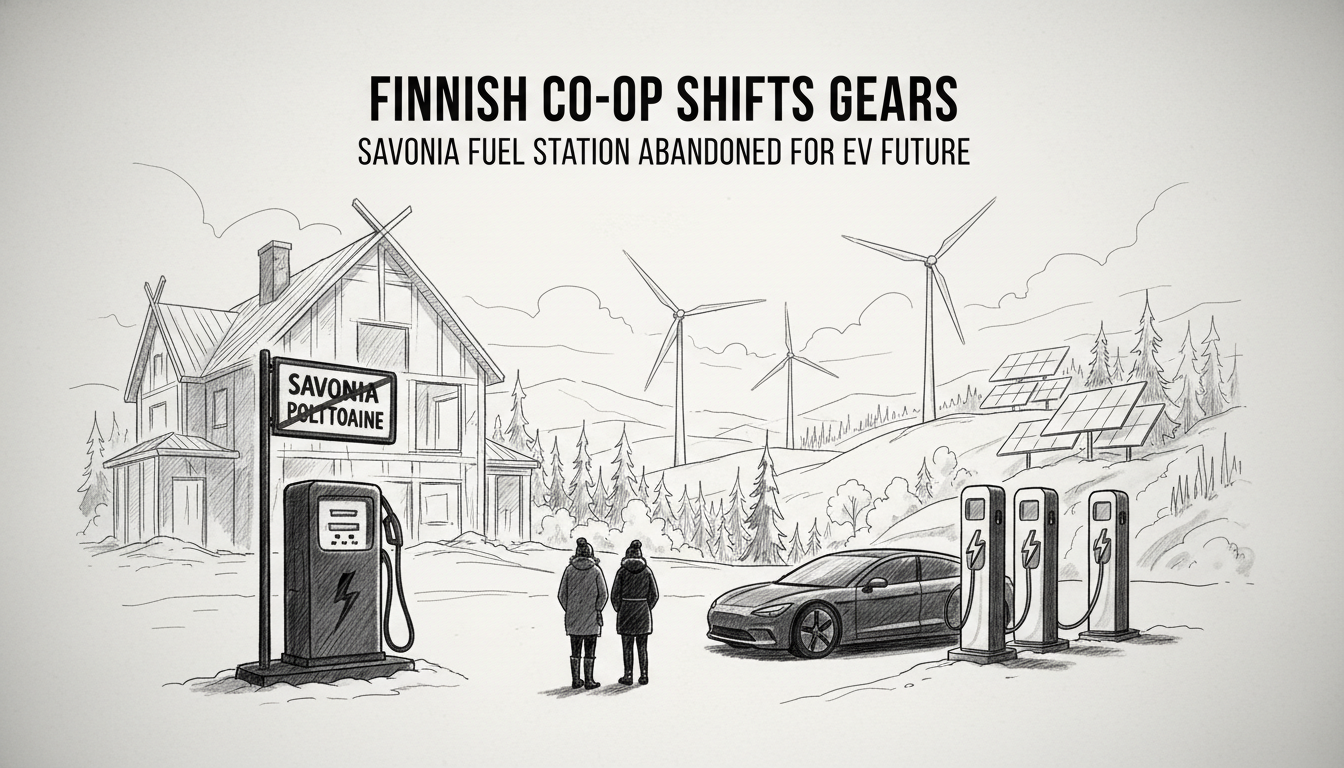
The Suur-Savo Co-operative has cancelled plans for a new fuel station and marina in Ristiina, Savonia. Company officials stated the project was no longer economically viable. They will now redirect investment toward expanding electric vehicle charging infrastructure across their network. This decision reflects broader shifts in Finnish regional development and national energy policy.
The proposed station would have served as an ABC service point with marine fuel pumps for the local harbour. Its cancellation leaves Ristiina without a planned modern refuelling hub. The co-operative operates across North Savo and South Savo regions, serving numerous municipalities. Its investment choices signal priorities for rural Eastern Finland.
This move aligns with Finland's national transport decarbonisation strategy. The government has set ambitious targets for phasing out fossil fuels in transport. Public and private investments are increasingly flowing toward electric mobility solutions. The Finnish Climate Change Act mandates substantial emissions reductions across all sectors, including transport.
Co-operative representatives said the financial analysis for the Ristiina project showed insufficient returns. They cited changing consumer patterns and fuel demand projections. The decision was made during the third quarter strategic review. All preliminary development work on the station has now ceased.
Instead, Suur-Savo will accelerate its EV charging network rollout. This includes installing fast chargers at existing service locations throughout their operating area. The co-operative aims to support the growing number of electric vehicles in rural Finland. Charging infrastructure remains unevenly distributed between urban and rural regions.
From an EU perspective, this shift supports the European Green Deal objectives. Finland receives Cohesion Policy funding for regional development that increasingly prioritises sustainable infrastructure. The Just Transition Mechanism provides additional resources for regions moving away from fossil fuel dependency. Finnish regions must align investments with EU climate neutrality goals.
Historically, Finnish co-operatives have played crucial roles in rural service provision. They maintain essential retail, fuel, and banking services where private companies might not operate. Their investment decisions directly impact local communities and regional development. The Suur-Savo decision illustrates how these traditional institutions are adapting to new realities.
The political context matters here. Finland's coalition government includes parties with differing views on rural development versus climate action. The Centre Party traditionally advocates for rural service guarantees, while the Green League pushes faster green transitions. This creates tension in policy implementation at the local level.
Ristiina municipality, part of the Mikkeli sub-region, faces typical challenges of rural depopulation and service consolidation. Losing planned infrastructure investments can hinder local development prospects. Municipal leaders must now seek alternative solutions for harbour development and visitor services.
What does this mean for Finland's energy transition? First, it shows market forces are accelerating changes sometimes faster than policy mandates. Second, it highlights the practical challenges of implementing national strategies in diverse regional contexts. Third, it demonstrates how traditional business models must adapt to survive.
The real story here is not just one cancelled fuel station. It is about how Finland's rural economy is transforming under multiple pressures. Demographic changes, climate policies, and technological shifts are reshaping service provision across the country. Co-operatives like Suur-Savo must balance member interests with economic realities and regulatory requirements.
Looking forward, similar decisions will likely occur elsewhere in Finland. Other regional co-operatives and fuel retailers will reassess their investment portfolios. The transition creates both challenges and opportunities for rural communities. Municipal planning must become more flexible and innovative in attracting sustainable investments.
For international observers, this case offers insight into Finland's practical approach to green transition. It shows how bottom-up business decisions interact with top-down policy frameworks. The Finnish model emphasises consensus and gradual change, but market realities sometimes force quicker adjustments. The Ristiina decision exemplifies this dynamic in action.