
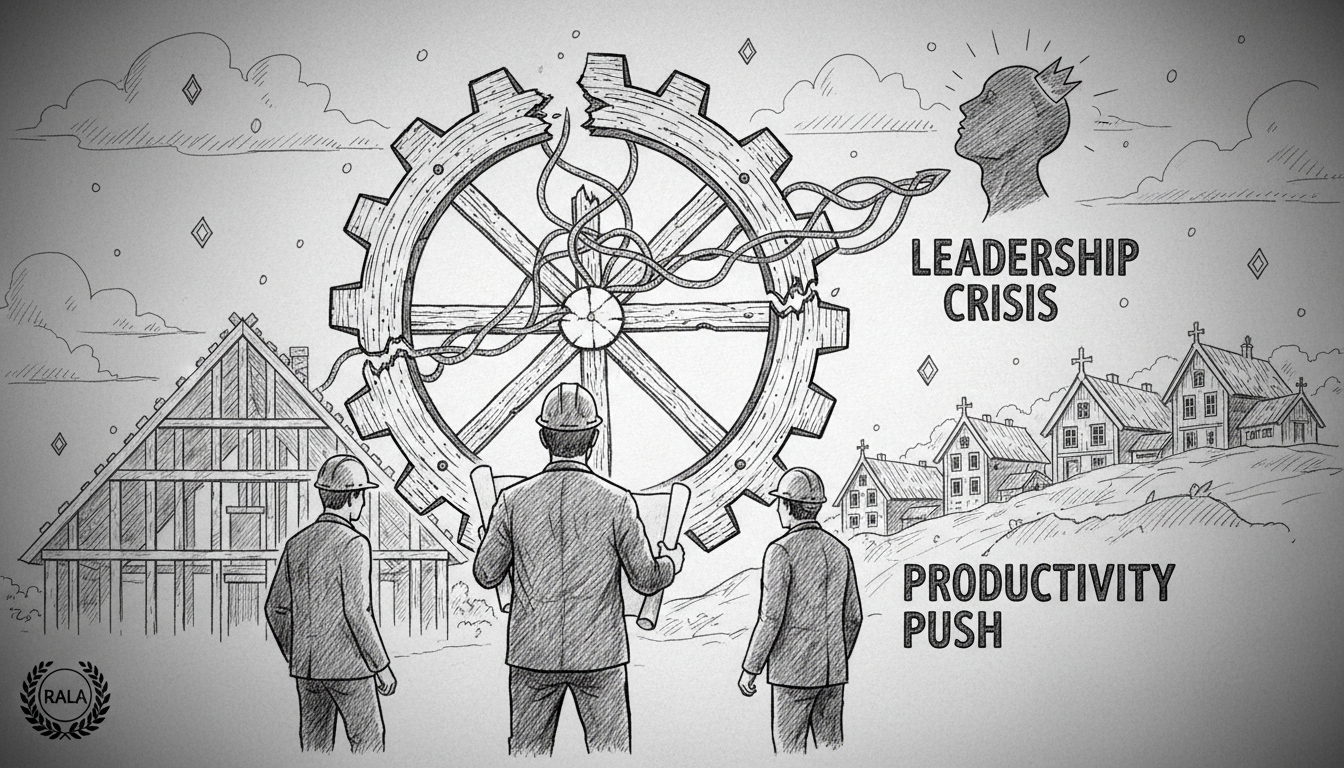
Finland's construction industry faces a profound leadership transformation as new research reveals systemic management failures hampering productivity and worker wellbeing. The Construction Quality RALA association has launched a pilot project targeting emotional intelligence development after identifying critical gaps in people management skills across building sites nationwide. Eighteen supervisors from across Finland will participate in the leadership competence initiative designed to address what experts describe as decades of stagnation in construction productivity.
The construction sector's traditional management approaches have focused excessively on cost control, schedules, and process management while neglecting human factors. Research indicates this narrow focus has created significant workplace challenges including unclear responsibility divisions, psychological safety issues, and problematic management practices. Construction Quality RALA CEO Johanna Holmström states that leadership culture transformation enables positive productivity development after prolonged stagnation.
Recent studies show only twenty percent of construction work directly contributes to results, with leadership deficiencies identified as the primary cause. The Ossi Aurante's Personnel Productivity in Construction research reveals enormous profitability differences between companies with strong versus weak personnel productivity indexes. These findings come as Finland's construction industry employs over five hundred thousand workers across construction, building product manufacturing, property management, and related services.
Industry management traditions historically derived from military structures or generational transfer no longer meet modern worklife and responsibility requirements. The sector now confronts additional challenges including sexual harassment, other harassment forms, and discrimination that recent studies indicate remain unfortunately common. Technical competence alone cannot elevate personnel productivity to peak levels without corresponding emotional intelligence development.
Construction Quality RALA emphasizes that supervisor emotional competence and fair leadership constitute crucial workplace wellbeing factors. Positive work environments and psychological safety do not emerge accidentally but require consistent, skilled leadership. Building trust, handling difficult situations, and proper human interaction skills must complement technical knowledge for meaningful productivity improvements.
Finland's construction productivity has remained stagnant for decades while other sectors have leveraged digitalization benefits and new operational methods to enhance efficiency. The leadership pilot project represents a strategic intervention addressing what industry observers describe as long-overdue modernization of construction management practices. When these human factors strengthen, effects manifest in both employee endurance and measurable productivity metrics.
The construction industry's transformation carries broader implications for Finland's economic competitiveness and workplace equality standards. As one of the nation's largest employment sectors, improved construction management practices could influence national productivity trends and set new standards for Nordic workplace development. The leadership initiative's outcomes will be closely monitored by policymakers and industry representatives seeking solutions to Finland's productivity challenges.