
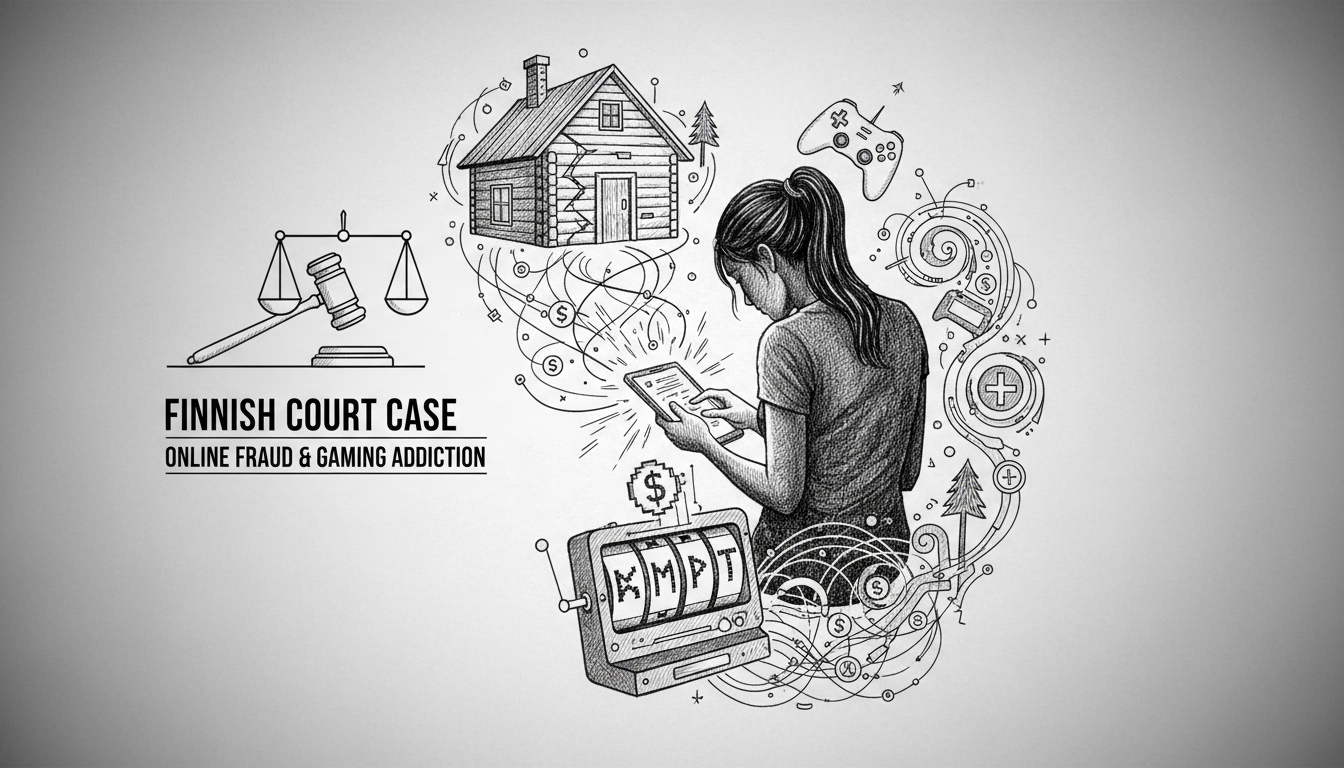
A Finnish court has sentenced a woman from Jyväskylä for 141 counts of online fraud. The Central Finland District Court handed down a conditional prison sentence. The woman admitted to deceiving people in online marketplace transactions over a multi-year period. She obtained approximately 6,000 euros in total. Individual frauds ranged from ten euros to several hundred euros. The case reveals a troubling intersection between technology, commerce, and personal addiction within the Finnish tech ecosystem.
The defendant sold various items online. These included shoes, clothing, sunglasses, toys, games, dishes, and phones. She would agree on a price with buyers and receive payment. She then failed to deliver the promised goods. All cases followed this same pattern of deception.
In court, the woman confessed fully to the charges. She provided a stark explanation for her actions. She stated the activity began as legitimate buying and selling. It then spiraled into fraud due to what she described as an uncontrollable gambling addiction. She used the fraud proceeds to fund her gambling. The defendant told the court she has now sought help. She attends regular treatment and is preparing for an institutional care period related to her addiction.
This case sits at a complex crossroads for Finland's technology sector. The country is a global leader in mobile gaming and digital trust. Finnish tech news often highlights innovation from Helsinki startups and Espoo innovation areas. Companies like Nokia and Supercell build products reliant on secure digital transactions. This fraud case, while a criminal matter, indirectly touches the core of that ecosystem—consumer trust in online platforms.
Finland has a robust social support and healthcare system. The defendant's access to treatment for gambling addiction is a typical feature. The Finnish legal system also often considers rehabilitation alongside punishment. The conditional sentence reflects this principle. It aims to prevent re-offending while acknowledging the personal circumstances presented.
What does this mean for the broader Finnish gaming industry and tech scene? The gaming sector, a pillar of the Finland technology sector, generates billions in revenue. It also faces ongoing scrutiny regarding responsible gaming features and player protection. This court case is a localized criminal matter. It nonetheless echoes larger, global conversations about digital responsibility. Finnish companies are at the forefront of developing parental controls and spending limits. This case shows why such tools are critically important, even on a societal level beyond their platforms.
For international observers, the case offers a glimpse into Finnish societal values. The legal process openly addressed the root cause of the crimes. The system provided a path for treatment alongside judicial consequences. This integrated approach is a hallmark of the Nordic model. It seeks to solve the problem, not just punish the act. The outcome likely prevents future victims while attempting to address the defendant's addiction.
The story is ultimately a cautionary tale. It shows how the very digital marketplaces that fuel Helsinki's tech hubs can be misused. It underscores the human cost of addiction, even in a highly connected and advanced society like Finland. The Finnish tech industry continues to grow, driven by gaming and telecommunications. This growth must be paired with continuous attention to the ethical and social implications of a digital life.