
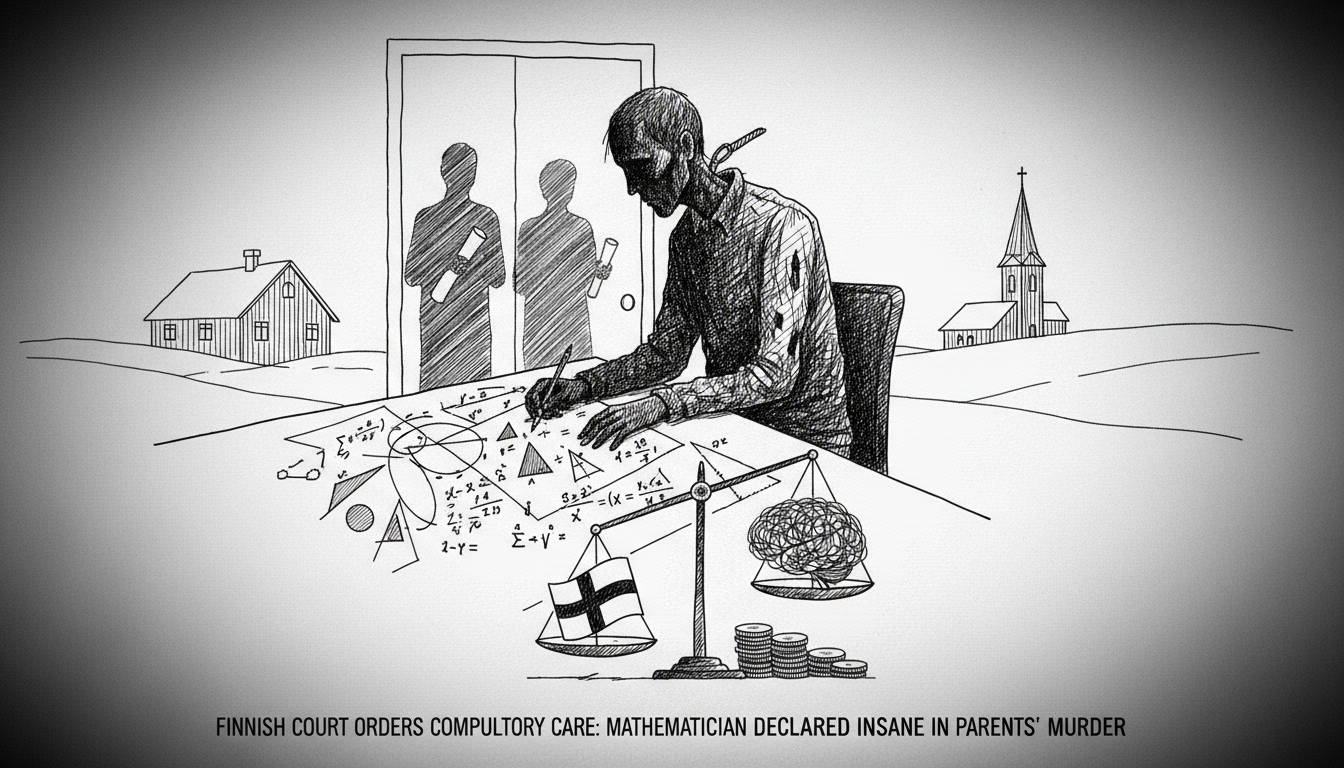
A Finnish district court has ruled that a 33-year-old mathematician was not criminally responsible for the murders of his elderly parents in Jyväskylä earlier this year. The Central Finland District Court delivered its verdict on Thursday, ordering the man into involuntary psychiatric care instead of prison. The court determined the man was legally insane at the time of the attacks, which occurred in January, and did not understand his actions or their consequences. This case highlights critical aspects of Finland's legal and mental health systems, particularly the threshold for intervention when families raise alarms.
The tragic sequence began when the parents, aged 74 and 75, grew concerned for their son's welfare on January 1st. They contacted emergency services, filing a formal concern report that did not trigger immediate intervention. The following day, the parents used their own keys to enter their son's apartment in the Kangaslampi district of Jyväskylä, a common practice as they had previously assisted him with an eviction and his fragile mental state. The son perceived this final visit as an unwelcome surprise, believing he needed no help.
The attack happened on the morning of January 2nd. The man first stabbed his father in the neck and back of the head with a knife. He then attacked his mother, stabbing her near the ear and slashing her neck before striking her head with a table grill plate. The mother's cries for help were heard outside the apartment, but a neighbor's emergency call was not placed until 12:22 PM. Police forced entry at 12:55 PM, finding the fatally injured father in the hallway and the deceased mother in the kitchen. The suspect sat calmly on his bed, appearing indifferent to officers. The father was pronounced dead at the hospital later that afternoon.
The court's ruling was based on extensive psychiatric evaluation ordered during pre-trial proceedings in June. The man, born in 1992, admitted causing his parents' deaths but denied murder charges. The court noted the violence was particularly brutal and cruel, as the neck injuries did not cause immediate death, prolonging the victims' suffering. Despite the brutality, the insanity finding was upheld. The man was found guilty of two counts of murder committed while non compos mentis.
Finland's legal framework for insanity defenses is strict, requiring proof the defendant completely lacked the capacity to understand the criminal nature of their act. This case raises difficult questions about societal safety nets. A formal concern report was filed but did not prevent the tragedy, pointing to potential gaps in crisis response protocols. The court also ordered the man to pay 15,000 euros in compensation for suffering to each of his two brothers, plus additional thousands for funeral and legal costs. The verdict is not yet legally binding and can be appealed.
The defendant was a mathematics student who had received grants for his doctoral studies, which remained unfinished. This detail adds a layer of complexity, challenging stereotypes about violence and academic achievement. The case serves as a grim reminder of the severe consequences when severe mental illness goes untreated or when warning signs from families are not acted upon with sufficient urgency. It will likely prompt discussions in political and medical circles about resource allocation for mental health services and the legal processes surrounding compulsory care orders in Finland.