
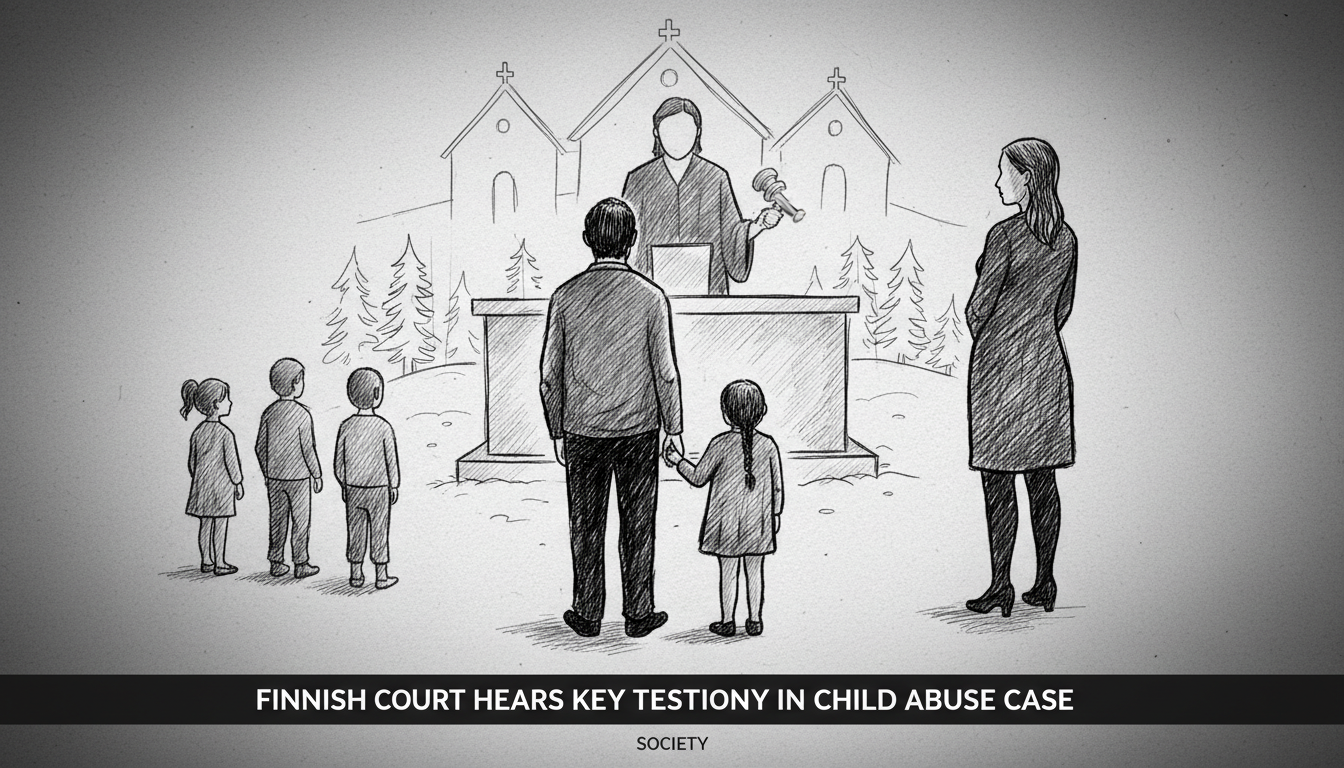
A Finnish district court is hearing crucial testimony this week from central figures in the long-running Anneli Auer child abuse investigation. The case, unfolding at the Varsinais-Suomen District Court, involves serious allegations of repeated sexual crimes and assaults against children. The proceedings highlight Finland's rigorous judicial approach to historical abuse cases and the complex challenges of witness testimony involving minors.
Today's hearing focuses on Auer's brother, who served as the children's foster parent for over a year before allegations surfaced. According to police interrogation records from September 2011, the brother described a household where the eldest child allegedly dominated and frightened siblings. He claimed the eldest child behaved threateningly, broke house doors, spread poison in the yard, and intimidated other children into silence about his actions.
When authorities moved the eldest child to a separate unit, the behavior of the remaining children reportedly changed immediately. The foster father stated the children's stories about murder nights and abuse emerged gradually, often in disjointed pieces they revealed during everyday situations without prompting. Children would interrupt their play to share new details or return to the same topic later in private conversations.
"During the summer of 2011, I understood for the first time that the children's stories might be true," Auer's brother told police during his interrogation. His testimony suggests the narratives began developing consistent features that convinced him the children were speaking truthfully.
The court also hears from Auer's former boyfriend Jens Kukka, who faces charges of repeated and exceptionally serious sexual crimes and assaults against children. Kukka has consistently denied all allegations. In his 2011 police interrogation, he stated, "I have never in my life sexually used a single child for my benefit, and I will never do so."
This case represents a significant test for Finland's child protection and judicial systems. The allegations involve multiple children and span several years, with testimony emerging through complex psychological processes. Finnish courts typically handle such sensitive cases with extensive expert testimony and careful consideration of minor witnesses' reliability.
The proceedings occur against Finland's strong legal framework for child protection, which includes mandatory reporting laws and specialized investigative protocols. Cases involving historical abuse allegations require particular care, as memories can evolve over time and be influenced by various factors.
Legal experts note the challenge of evaluating testimony that emerged gradually over years. The court must determine whether the children's narratives reflect genuine experiences or resulted from suggestion and pressure within the foster care environment. This balancing act between protecting children and ensuring fair trials defines many European child abuse cases.
Finland's approach combines thorough police investigation with judicial caution, reflecting broader Nordic trends toward more victim-centered justice in abuse cases. The outcome could influence how similar historical cases are handled across the region, particularly those involving foster care systems.
The Helsinki government district has monitored such cases closely as part of broader child protection policy reviews. While not directly involving current political debates, the proceedings remind policymakers of ongoing challenges in safeguarding vulnerable children within state systems.
International observers should note Finland's methodical, evidence-based approach contrasts with more sensationalized treatments elsewhere. The court's careful consideration of each testimony fragment demonstrates the Nordic commitment to procedural fairness, even in emotionally charged cases.
What happens next depends on the credibility assessments made during these hearings. The court must weigh contradictory accounts while considering the psychological dynamics of abused children. This case's resolution will affect not only the defendants but also Finland's ongoing efforts to improve child protection mechanisms.
The proceedings continue with additional witness testimony expected in coming days. The court's eventual ruling will provide important guidance for handling similar complex abuse allegations within Finland's respected but constantly evolving justice system.