
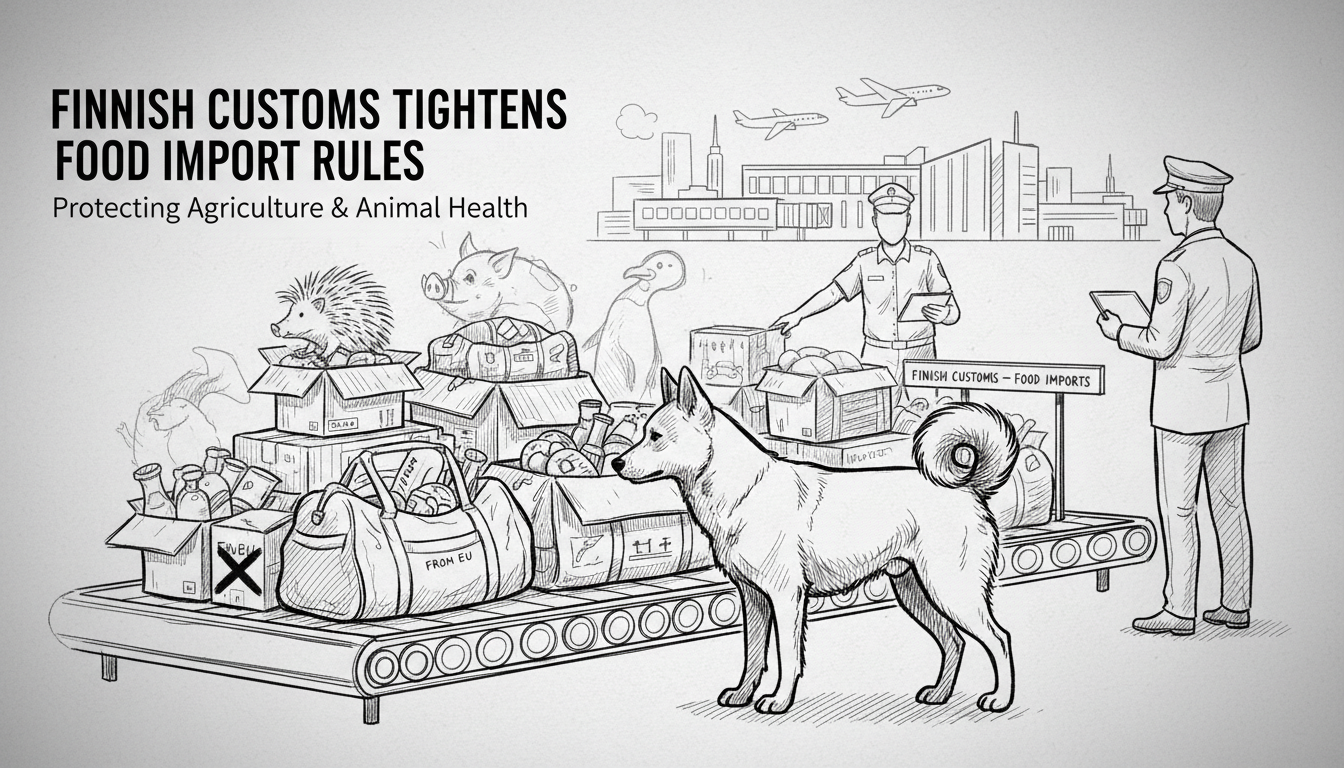
Finnish Customs has issued updated guidelines on prohibited food imports, detailing a comprehensive list of banned items for travelers entering the country. The restrictions aim to prevent the spread of animal diseases like African Swine Fever, which poses a severe threat to Finland's pig farming sector and national food security. A detection dog named Rico, working at Helsinki-Vantaa Airport with his handler, has uncovered over 8,600 kilograms of banned animal products in passenger luggage over a five-year period. His finds have included prohibited meats from camels, penguins, dolphins, and Cameroon brush-tailed porcupines, highlighting the ongoing challenge of biosecurity enforcement.
The rules form a critical part of Finland's national food safety strategy and are aligned with European Union regulations on the movement of goods. While travelers from within the EU face few restrictions on most foodstuffs, significant limits apply to meat, particularly pork and wild boar from countries like Estonia and other Baltic states. The Ministry of Agriculture and Forestry and the Finnish Food Authority frequently update these restrictions based on regional disease outbreaks, requiring constant vigilance from both authorities and the public.
For travelers arriving from outside the European Union, the rules are far stricter. The import of fresh fruits, berries, and vegetables is completely banned, meaning not a single apple, orange, or berry can be brought in from non-EU countries. This strict prohibition also applies to Norway and the Canary Islands, as they are not part of the EU's internal market. Notable exceptions exist for durable items like bananas, dates, pineapples, coconuts, and durians. Coffee, tea, and up to 125 grams of authentic caviar are also permitted.
Meat, milk, and dairy products from outside the EU are entirely forbidden, a rule that extends to pet food containing meat, chicken, or fish. Milk chocolate, however, is not classified as a dairy product for import purposes. The value of duty-free souvenirs is also capped, set at 430 euros for air or sea travelers and 300 euros for other modes of transport. These financial limits work in tandem with the product bans to regulate the flow of goods.
The policy reflects a clear political priority within the Helsinki government district: protecting Finland's agricultural sector is non-negotiable. The Eduskunta, Finland's parliament, has consistently supported robust biosecurity measures, viewing them as a frontline defense for the rural economy. The rules also serve Finland's commitments under EU veterinary and phytosanitary directives, which mandate strict controls to prevent cross-border contamination. For international visitors and expatriates, these regulations underscore a simple reality. Finland's remote northern ecology and valuable export-oriented agriculture are considered worth protecting through stringent border controls. Travelers who discover prohibited food items in their luggage upon arrival can surrender them to customs officials voluntarily without facing penalties, a system designed to encourage compliance over concealment.