
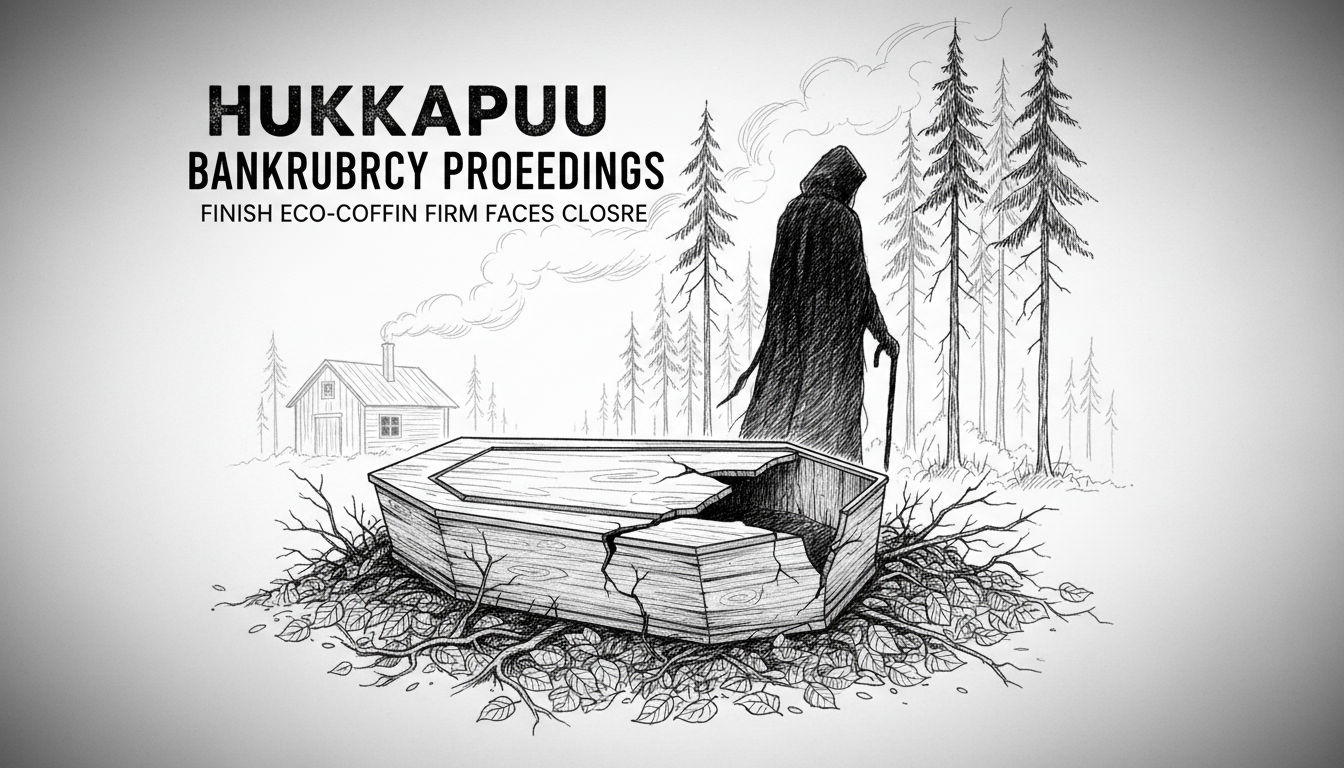
The Mikkeli-based company Hukkapuu, which specialized in manufacturing coffins and cremation urns from recycled wood, has filed for bankruptcy. Founder Niki Aholin cited personal health reasons as the primary factor behind the decision to cease operations. The company represented a niche but growing segment of Finland's funeral industry, focusing on sustainable alternatives to traditional burial products. Its closure highlights the challenges faced by small, specialized green businesses in a competitive and traditionally conservative market.
Finland's funeral sector, while stable, is undergoing a quiet transformation driven by environmental awareness and changing consumer preferences. The Nordic country has one of the highest cremation rates in Europe, creating demand for eco-friendly urns and coffins designed for cremation. Hukkapuu's model of using certified recycled wood tapped directly into this trend, appealing to a demographic seeking to reduce the environmental footprint of end-of-life arrangements. The company's products were often sourced from local forestry by-products, aligning with broader Finnish circular economy goals promoted at both municipal and national levels.
Despite the favorable market trends, small-scale manufacturing in Finland contends with high operational costs, strict regulatory compliance for burial goods, and the logistical challenges of a dispersed population. Aholin's statement points to a common reality for many Finnish entrepreneurs, where personal circumstances can directly determine a business's viability, especially without a deep pool of co-owners or investors. The bankruptcy process will now be administered through the Finnish Patent and Registration Office, with creditors notified according to standard insolvency procedures.
The story resonates beyond a simple business failure. It touches on Finland's ongoing balance between innovative green entrepreneurship and economic practicality. The government district in Helsinki frequently promotes the circular economy as a growth sector, yet individual enterprises like Hukkapuu can struggle without larger-scale support mechanisms. This case may prompt further discussion in the Eduskunta about safety nets for small businesses that align with national sustainability targets. For international observers, it serves as a microcosm of the Nordic green transition, where idealism meets the hard realities of running a company. The departure of such a specific manufacturer leaves a gap in the market, potentially to be filled by larger firms or new startups, but it also underscores the personal risks inherent in pioneering a niche industry.