
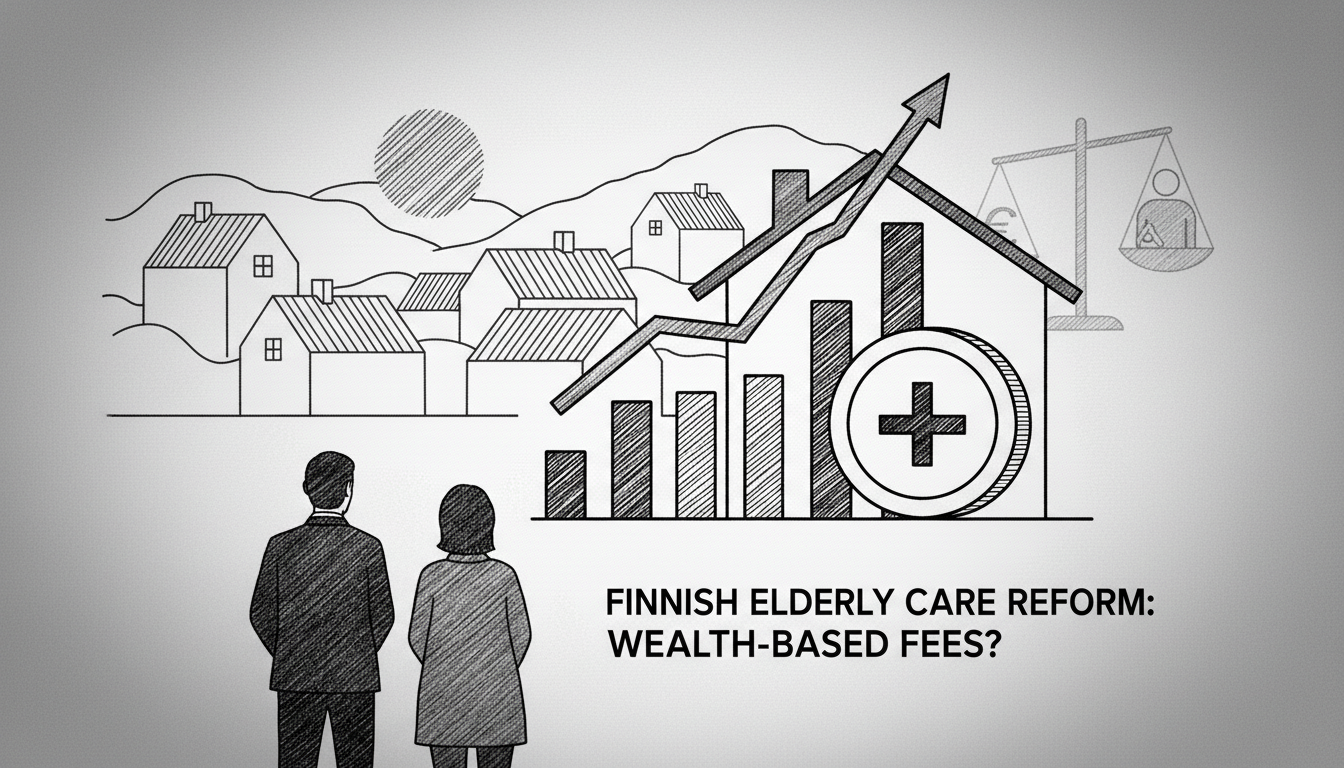
The Finnish government is examining a proposal to introduce wealth assessments for elderly care client fees, a move that could generate tens of millions in additional revenue but spark debate on fairness. A new report from the Finnish Institute for Health and Welfare (THL) suggests that including investment properties, funds, and stock holdings in means-testing could bring in an extra 45 million euros annually. This comes as public finances face sustained pressure, forcing a re-evaluation of how Finland's renowned welfare state funds long-term care for its aging population.
Currently, client fees for municipal elderly care are calculated based solely on an individual's income, not their total assets. The THL simulation proposes counting 15 percent of wealth exceeding 15,000 euros as part of annual income for the fee calculation. This policy shift, debated within the Helsinki government district, would directly impact how Finland manages the rising costs of its elderly care system, one of the most comprehensive in the Nordic region. The proposal aligns with broader EU discussions on sustainable social care models, though Finland has traditionally emphasized tax-based funding.
Crucially, the THL report excluded primary residences, summer cottages, and bank deposits from its analysis, citing incomplete registry data and practical difficulties. This means the proposed change would affect only about 14 percent of elderly care clients. For those impacted, monthly fees would rise by an average of 380 euros, with some increases reaching 830 euros. Even with these hikes, client fees would still cover only a fraction of the actual production costs, with the state and municipalities funding the vast majority through taxation.
A central tension in the debate is generational equity. The current working-age population bears the tax burden for care, while some elderly citizens hold substantial assets. The report notes that over a third of elderly Finns' total wealth was excluded from the review, primarily in the form of owner-occupied homes. This raises a practical question about forcing asset liquidation, which can be problematic if a spouse still lives in the home or if the property is in a depressed housing market.
Finland's approach currently differs from many European peers. According to the THL report, roughly a third of European countries, including the United Kingdom and Spain, already consider wealth in long-term care fee calculations. The potential for tax avoidance is a recognized downside, as individuals might transfer assets into exempt categories if the policy is implemented piecemeal. This creates a policy design challenge for the Eduskunta, Finland's parliament, which would need to legislate any change.
Political reactions are split along traditional lines. The governing coalition, led by Prime Minister Petteri Orpo's National Coalition Party, has shown openness to exploring new funding streams for welfare services. The opposition, particularly the Social Democrats and the Left Alliance, are likely to criticize the plan as undermining the universal principle of care based on need, not wealth. The Ministry of Social Affairs and Health will now review the report before any formal proposal is drafted.
This discussion is not happening in a vacuum. Finland's population is aging rapidly, placing long-term strain on public services. The search for sustainable funding is a constant theme in Helsinki politics today. While the 45 million euro figure is modest in the context of the overall care budget, it represents a symbolic shift in thinking. The final decision will test Finland's commitment to its Nordic welfare model and set a precedent for how other expensive public services might be financed in an era of constrained budgets. The policy details, once finalized, will need careful scrutiny to balance fiscal responsibility with social solidarity.