
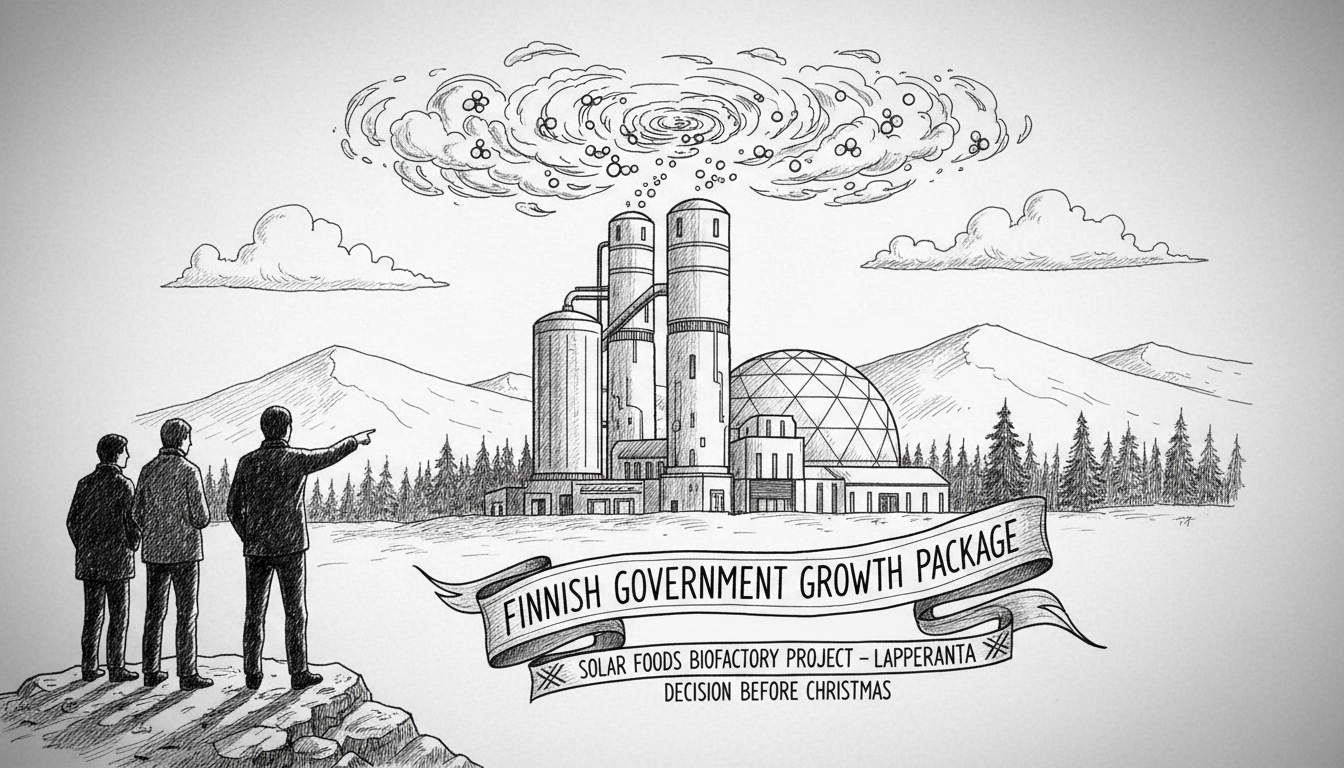
Finland's Ministry of Economic Affairs and Employment has prepared a new growth and employment package. The package aims to strengthen Finland's economic growth, accelerate investments, and improve employment. It includes investment subsidies that the Finnish listed company Solar Foods can apply for. The funding will be redirected from unused resources within the ministry's investment support programs. The total amount of available funds is estimated at 156 million euros. The government's new financing instrument fits the needs of Solar Foods exceptionally well. Background work has been done on many fronts.
The construction of Solar Foods' Solein protein factory in Lappeenranta took a step toward realization last week. The project hinges on securing this state investment aid. The company's CEO, Rami Jokela, commented on the development. He said state administration and the public funding agency Business Finland have recognized the need for financing such a project. Jokela noted this is a good thing and also suits their timeline. A decision on whether the factory will be located in Lappeenranta is expected before Christmas.
This move is a concrete part of the government's broader economic strategy debated in the Eduskunta, Finland's parliament. The coalition, led by Prime Minister Petteri Orpo's National Coalition Party, has prioritized stimulating private investment through state mechanisms. The redirection of existing funds, rather than new appropriations, reflects a fiscally conservative approach common in current Helsinki government district policy. It shows a clear intent to activate capital that is already allocated but not deployed.
The Solar Foods project represents a significant test case for Finland's bioeconomy and green transition goals. Solein is a protein produced from air and electricity, a technology born from Finnish research. Securing its first industrial-scale production plant is crucial for the nation's strategic interests in sustainable food systems. The government's support signals a commitment to commercializing domestic innovation. This is not just about one factory. It is about establishing Finland as a leader in next-generation food technology.
From an EU perspective, the investment aligns with the bloc's Green Deal and strategic autonomy goals in food production. State aid for such projects must navigate strict European Commission competition rules. The Finnish government likely argues this support fosters an important innovation with clear environmental benefits. This fits a pattern where Nordic governments use targeted subsidies to build competitive advantages in green technology sectors. The success or failure of this model with Solar Foods will be watched closely in Brussels and other member state capitals.
Historically, Finland has a strong record of state-backed industrial policy, from Nokia's rise to the forestry sector's development. The current government's package continues this tradition but within modern EU frameworks. The focus on leveraging existing budgetary items shows political pragmatism. It is a way to achieve growth-oriented spending without escalating political debates about new debt or taxes. The immediate implication is clearer visibility for Solar Foods' investors and the city of Lappeenranta, which stands to gain a major new employer.
The real test will be in the execution. Can the bureaucratic process deliver the funds with the speed that a cutting-edge company requires? Will the final investment decision be positive? The pre-Christmas timeline sets a clear deadline. This story matters because it sits at the intersection of climate policy, economic strategy, and regional development. It is a tangible example of how the Finnish government is attempting to translate political goals into concrete industrial outcomes. The coming weeks will reveal if the pieces come together.