
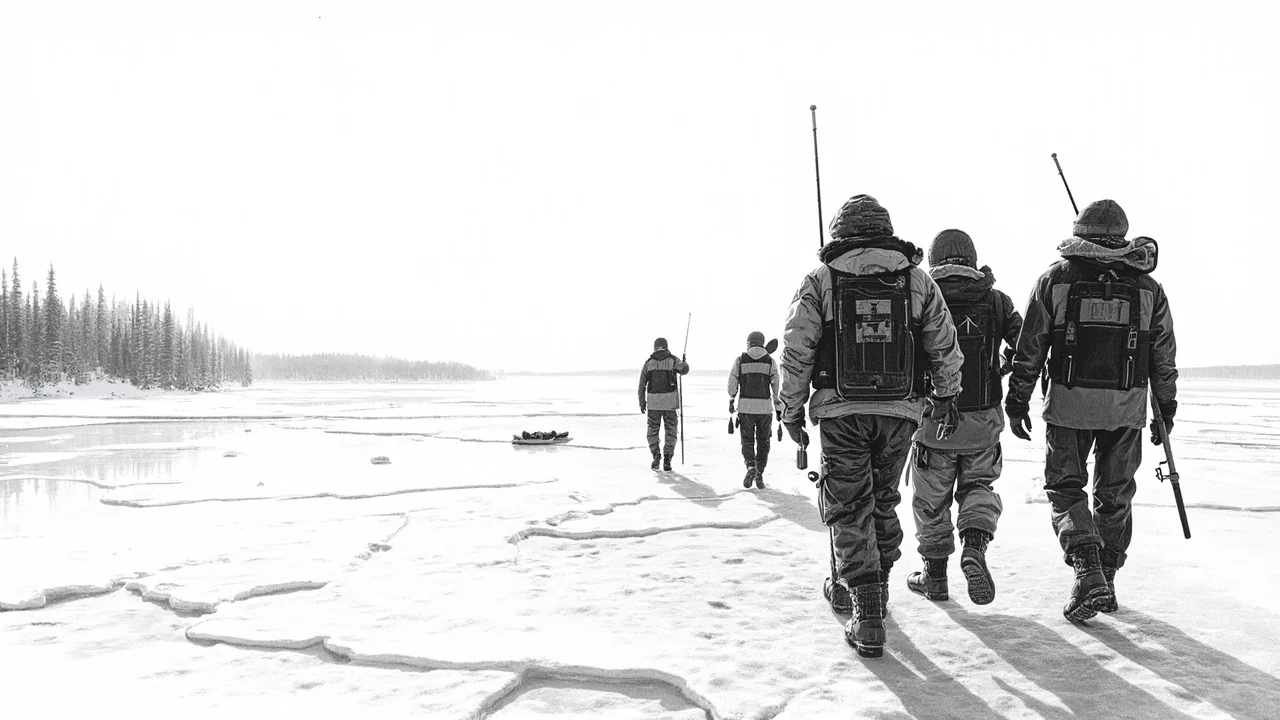
Finland's Arctic village of Savukoski recorded a bone-chilling -42.8 degrees Celsius last Friday, the winter's coldest official reading so far. Despite the extreme frost, an eager group of French tourists staying in the area insisted on venturing out for an ice fishing experience. Their local guide, Markku Karpeeki, would have much preferred to stay home tending his fireplace. This stark contrast between local weariness and tourist zeal frames a deeper story about Arctic hospitality and the global pursuit of authentic, harsh experiences.
Arctic Hospitality in Deep Freeze
Markku Karpeeki, entrepreneur of Lomakeskus Samperin Savotta, prepared his motor sled and gear on the ice of the Kemijoki river. He adjusted the usual program due to the severe conditions. Normally, clients are towed several kilometers on a sled to the fishing spot. That morning, he shortened the trip to just a few hundred meters from the hotel. Karpeeki even pre-drilled the ice holes and lit fires beforehand to minimize the group's exposure. "I think a few eager ones will come. They actually like this cold. A lot of people like the cold," Karpeeki estimated. His own preference was clear. "I'd rather be at home heating the cottage than out here in the freeze," he said.
The hotel staff had debated cancelling all outdoor activities. The ride on the sled behind the motor sled is brutal in such temperatures. Yet, Karpeeki adapted his service to meet the demand. He worked with bare hands for minutes at a time, dismissing any notion that he was freezing. "You can't say you get used to minus forty, but you manage with it. Then when it moderates to minus thirty, it feels like spring," Karpeeki explained. His resilience is born of a lifetime in Lapland. He grew up in Ruuvaojankylä, about fifty kilometers northeast of Savukoski's church village.
The Tourist's Quest for Authenticity
This incident highlights a growing trend in Arctic tourism where visitors actively seek out extreme weather conditions. For many, the severe cold is not a deterrent but the main attraction. It represents a tangible, raw encounter with nature that is unavailable in milder climates. The French group's insistence on ice fishing during a record cold snap underscores a desire for stories and experiences that feel genuine and challenging. Tourism experts note that such adventures are often marketed as tests of endurance and connection to pristine environments.
Karpeeki's personal history adds layers to this narrative. He lived in Helsinki before the turn of the millennium. He finds the damp, wind-chilled cold of the capital more biting than the dry, still freeze of eastern Lapland. His perspective bridges the urban and the Arctic, understanding both the comfort seekers and the adventure hunters. His anecdote from 1985, sledding with boys from Ruuvaojankylä in temperatures below -50°C until a sled ski broke, speaks to a deep, ingrained familiarity with the cold that tourists can only visit temporarily.
Economic Chill or Thrill for Lapland?
For remote communities like Savukoski, tourism is a vital economic lifeline, especially during the long winter months. Entrepreneurs like Karpeeki operate in a delicate balance. They must cater to tourist expectations for iconic activities like ice fishing while ensuring safety and managing their own comfort. The willingness to provide services in such harsh conditions is a testament to the professionalism and adaptability of local businesses. However, it also raises questions about sustainable tourism practices and the well-being of service providers in extreme environments.
This event occurs against a backdrop of Finland discussing the future of Lapland's tourism sector. There is an ongoing debate about diversifying offerings and managing seasonal peaks. The demand for extreme cold experiences shows a market niche that can extend the tourism season. Yet, it requires significant local expertise and resilience. Karpeeki's operation is a microcosm of this dynamic. He modifies his program, takes precautions, and relies on his intimate knowledge of the landscape and weather to deliver a memorable experience.
Cultural Resilience and Natural Extremes
The cultural dimension is equally important. For locals, enduring such cold is a matter of routine and identity. Karpeeki's casual demeanor about managing at -40°C reflects a cultural normalization of extreme conditions. This contrasts sharply with the tourists' perspective, where the same cold is a novel adventure. This interplay between everyday life and exotic experience is central to the tourism exchange. It offers visitors a glimpse into a way of life defined by resilience and adaptation.
Finland's climate policy and EU environmental directives also touch on these regions. Changes in winter patterns and temperature extremes can impact tourism models. While severe cold is currently a draw, shifting climate conditions could alter this. Local guides like Karpeeki are on the front lines, observing these changes firsthand. Their experiences provide valuable ground-level data on how climate variability affects traditional activities and tourism demands.
The Allure of the Frozen North
As the French tourists likely discovered, ice fishing in -43°C is more than just catching fish. It is a sensory experience dominated by crisp air, the sound of ice cracking, and the stark beauty of a snow-covered river. The physical challenge becomes part of the story they take home. For Karpeeki, it is another day of work in the conditions he knows intimately, albeit not his preferred choice. This dichotomy is at the heart of Arctic tourism: the visitor's fleeting adventure is the local's enduring reality.
The Finnish government, through agencies like Business Finland, promotes Lapland as a destination for unique natural phenomena. The midnight sun and winter extremes are key selling points. Stories like this one from Savukoski serve as powerful, organic testimonials to that brand. They demonstrate that even in record cold, Finland's tourism infrastructure and entrepreneurial spirit deliver. The Eduskunta has allocated funds for rural tourism development, recognizing its importance for regional economies.
What does the future hold for such extreme weather tourism? As global travel patterns evolve, the demand for authentic and challenging experiences may grow. Communities in Finnish Lapland will continue to navigate the demands of this sector. Guides like Markku Karpeeki will remain essential interpreters of the Arctic environment, bridging the gap between curiosity and survival. Their willingness to brave the cold, even reluctantly, ensures that the story of Finland's winter continues to be told. Will the pursuit of extreme experiences eventually test the limits of both tourists and locals alike?