
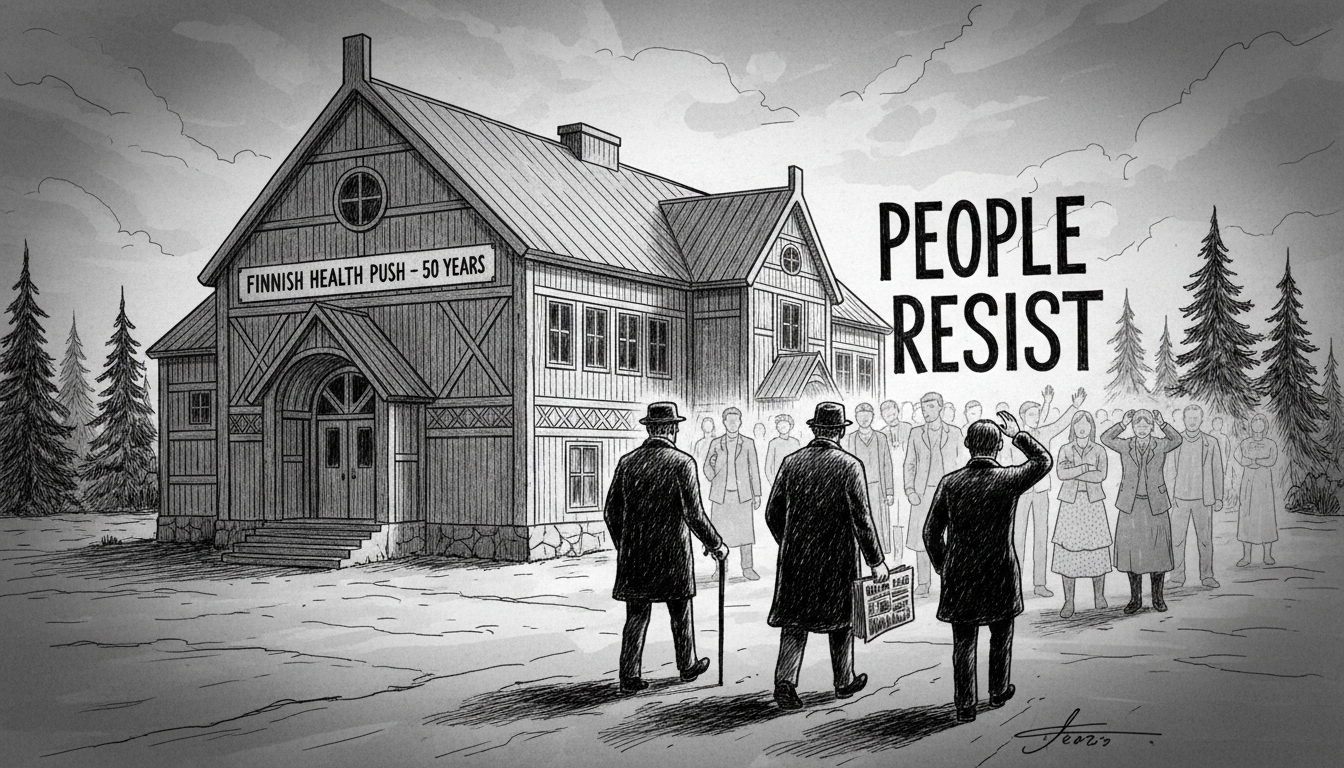
Finland's most enduring public health project began with a simple letter from a concerned governor. In 1971, the Governor of North Karelia wrote to Finland’s national health authorities, pleading for help to address the world’s highest rate of heart disease deaths among his region's men. This cry for action launched the North Karelia Project, a decades-long effort that would extend Finnish life expectancy by 15 years and create a template for global public health. Its leader, a young doctor named Pekka Puska, became a national figure synonymous with healthy living. Yet as Professor Puska celebrates his 80th birthday, his core health recommendations continue to provoke a unique blend of national pride and persistent public irritation.
From Dairy Farms to Dietary Fights
The project's initial battlefield was the Finnish kitchen and farm. In the 1970s, North Karelia's diet was heavy in saturated fat from whole milk, butter, and fatty meats. Puska's team, employing a then-novel community-based approach, worked with local dairy cooperatives to promote low-fat milk. They encouraged households to switch from butter to vegetable-oil based margarines and to increase berry and vegetable consumption. The project collaborated with food manufacturers and even launched its own 'healthy sausage'.
Resistance was immediate and visceral. "At village gatherings, the masters of dairy farms grumbled behind my back about the push to reduce fat consumption," recalls Professor Puska, speaking from his experience leading what became a national movement. The pushback was not just about taste. It struck at the heart of Finnish agricultural identity and post-war prosperity. For many, rich dairy products symbolized health and wealth, not disease.
A Model of Measurable Success
Despite the grumbling, the results became impossible to ignore. Coronary heart disease mortality among middle-aged men in North Karelia fell by 73% between 1972 and 1992. The project's strategies—combining public education, collaboration with industry, and primary healthcare interventions—were adopted nationwide. Finland transformed from a global leader in heart disease to a model of cardiovascular health.
Professor Pekka Puska's career grew with the project's fame. He served as Director General of Finland's National Institute for Health and Welfare from 2009 to 2013 and led non-communicable disease prevention at the World Health Organization. The North Karelia Project is now a staple case study in public health curricula worldwide, cited for its proof that population-level behavior change is achievable.
The Enduring Irritation with Official Advice
Paradoxically, the project's success embedded Puska's recommendations so deeply into Finnish state guidance that they became a source of everyday friction. The Finnish Nutrition Recommendations, advocating for limited red meat, increased plant-based foods, and low-fat dairy, directly descend from the project's findings. For every Finn who diligently chooses a skimmed piimä (sour milk), another feels a twinge of rebellion against what is perceived as nagging state-sponsored advice.
This friction reflects a broader tension in Finland's society, which highly values both personal freedom and collective welfare. The state has a strong, legitimate role in promoting public good, but its directives can chafe against individual choice. Nutrition science itself has also evolved, with debates over fats and diets adding public confusion. When official advice changes or is contested, it can erode trust in the very institutions the North Karelia Project helped strengthen.
Puska's Perspective on Public Pushback
In recent interviews, Professor Puska addresses the criticism with a veteran's calm. He notes that public health is inherently long-term and often clashes with commercial interests and short-term desires. "The feedback has been fierce at times, but it's part of the work," he has stated. He distinguishes between the noisy controversy of media debates and the silent, steady acceptance of healthier habits by millions.
He argues that the core principles of the North Karelia Project—community engagement, practical alternatives, and persistent messaging—remain vital. The current challenges of obesity, mental health, and health inequality, he suggests, require the same systemic, patient approach. The goal was never to dictate every meal, but to create an environment where the healthier choice becomes the easier choice.
A Legacy Beyond Life Expectancy
The ultimate legacy of Puska's work may be more cultural than statistical. Finland's identity is now intertwined with concepts of clean nature, functional food, and outdoor activity—concepts heavily promoted by the public health apparatus he helped shape. The annual celebration of Syysretki (autumn trek) and the national obsession with foraging for berries and mushrooms align perfectly with the project's original aims.
Yet, the persistent 'kimpaantuminen'—the agitation or irritation—towards health recommendations signals something healthy in itself: an engaged populace that questions authority. Finns may follow the advice more often than not, but they reserve the right to complain about it over a coffee and a pulla. This dynamic tension between the collective good and the individual is the ongoing story of Finnish society. As Pekka Puska turns 80, he leaves a nation living longer, healthier lives, but one that will likely never stop debating what's on its plate.
Will future public health initiatives need to foster more personal agency to avoid backlash, or does true population-wide change always require a degree of top-down guidance that provokes resistance? The Finnish experience offers no easy answers, but provides a critical case study for nations everywhere.