
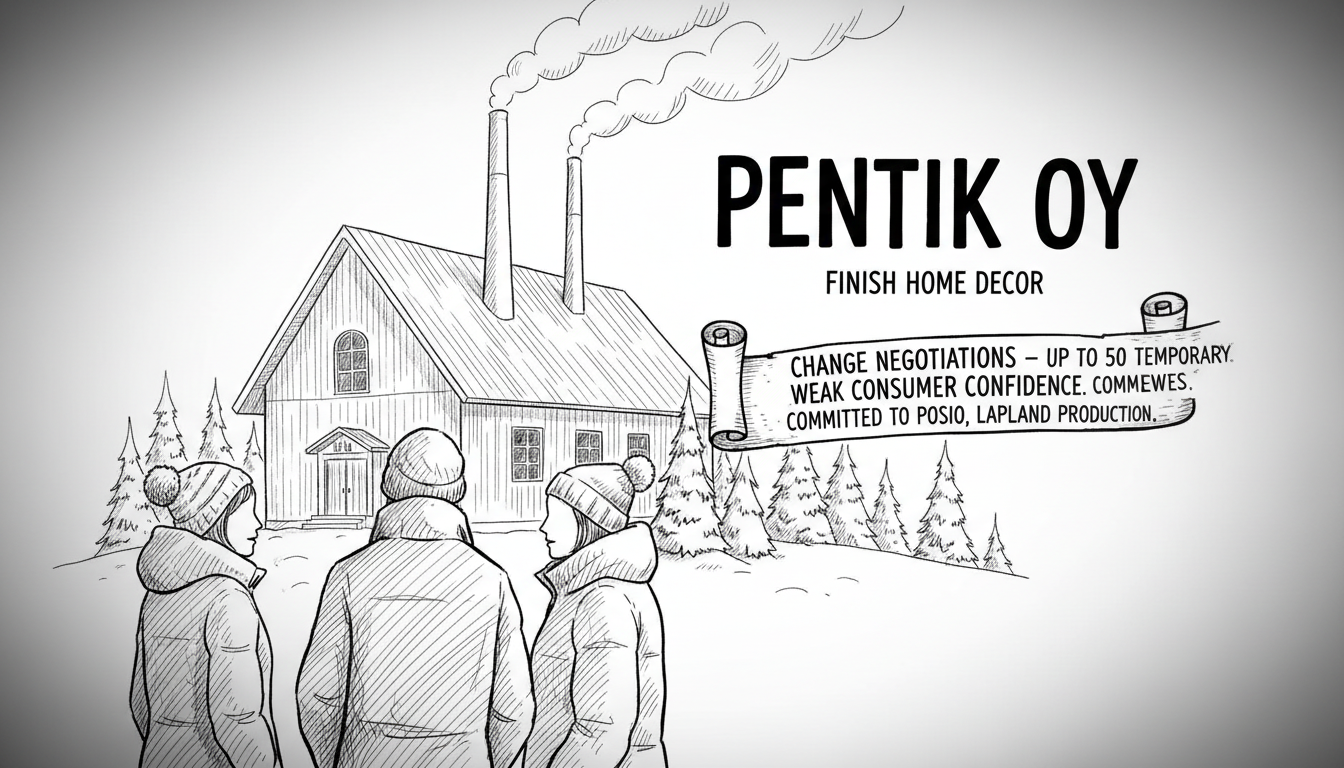
Pentik Oy, a well-known Finnish home decor and design company, has started change negotiations that could lead to temporary layoffs affecting up to 50 employees. The family-owned business, based in Posio, Lapland, is considering staff furloughs lasting up to 90 days next year as it navigates challenging market conditions.
Company CEO Pasi Pentikäinen confirmed the negotiations in a statement. He explained the company wants to prepare for potential demand fluctuations in the coming year. The discussions focus specifically on adjusting logistics and production capacity at their Posio facilities.
The change negotiations involve 45 to 50 employees. Pentikäinen emphasized these talks concern temporary layoffs rather than permanent job terminations. The final outcome remains uncertain as formal negotiations begin tomorrow.
Pentikäinen described consumer demand as passive in recent comments. He noted consumer confidence in the economy has been weak for several years, affecting purchasing behavior across the entire retail sector. The home decor company acknowledges it cannot escape these broader market trends.
Despite current challenges, Pentikäinen sees positive signs emerging. He observed slightly improved activity in company stores this year with more customers visiting. Still, he remains cautious about expecting major growth next year.
The company produces approximately 200,000 items annually in Finland. Pentikäinen firmly committed to maintaining production in Posio rather than moving manufacturing abroad. This decision supports local employment in northern Finland where manufacturing jobs provide crucial economic stability.
Change negotiations represent a standard Finnish labor market procedure allowing companies to adjust staffing levels during economic uncertainty. The process requires employers to consult with staff representatives before implementing workforce changes. This approach aims to balance business needs with worker protections.
Pentik's situation reflects broader challenges facing Nordic design companies. Many struggle with decreased consumer spending on non-essential items during economic uncertainty. The company's commitment to domestic production contrasts with trends of offshoring manufacturing to lower-cost countries.
The coming months will reveal whether temporary adjustments can help Pentik navigate current market conditions while preserving its workforce. The company's strong brand recognition and loyal customer base provide advantages during this transitional period. Many international consumers specifically seek authentic Nordic design from companies maintaining production in their home countries.
What does this mean for Pentik's future? The company appears to be taking proactive measures rather than reactive ones. By addressing potential challenges early, they may position themselves for stability when market conditions improve. Their commitment to Finnish manufacturing suggests long-term confidence in both their products and their workforce.