
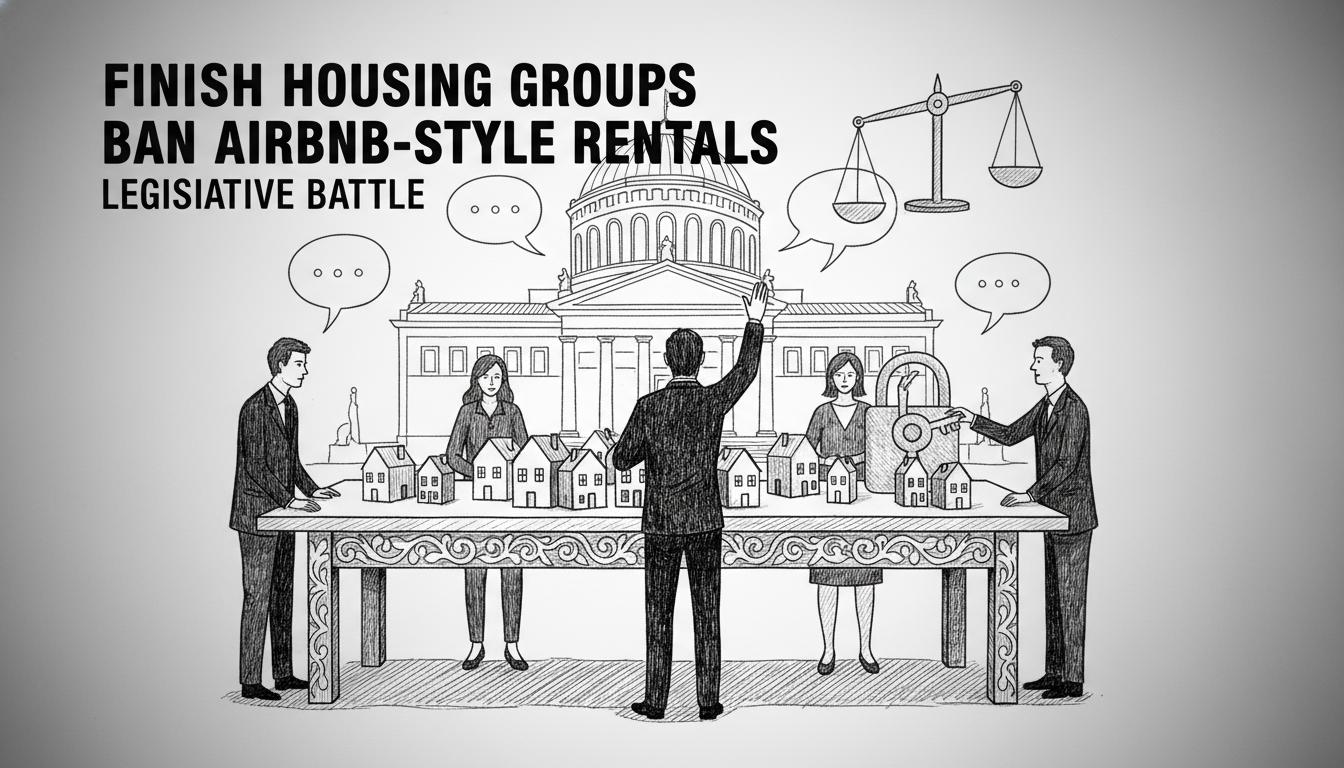
A clear majority of Finnish housing cooperative board members now want stronger legal tools to restrict professional short-term rentals in their buildings. This demand follows a recent survey of nearly three thousand board chairs and members across the Helsinki region. The survey reveals widespread frustration with current legislation that makes it nearly impossible for a housing cooperative to stop Airbnb-style activity if even one apartment owner chooses to engage in it. The issue centers on the fundamental conflict between an individual property owner's rights and the collective will of the residents in a shared building.
Under existing Finnish housing company law, the board of a housing cooperative cannot prohibit an owner from renting out their apartment. This legal framework, designed to protect private property rights, now clashes with the growing phenomenon of commercial short-term lets. Residents report problems with security, noise, and a loss of community when apartments function more like hotels. The survey indicates that boards are not seeking a blanket ban on all rentals but specifically want to curb professional, high-turnover operations that change the character of residential buildings.
This push for change has direct implications for urban policy in Helsinki and other major Finnish cities. Municipal governments grapple with housing shortages and rising rents. Some policymakers argue that unrestricted short-term rentals remove long-term rental apartments from the market. The debate also touches on tourism management, as cities like Helsinki balance economic benefits from visitors with the need to maintain viable neighborhoods for permanent residents. The Finnish Parliament, the Eduskunta, may soon face pressure to amend the law, a move that would require careful balancing of competing interests.
From an EU perspective, Finland's situation is not unique. Several member states, including France and Germany, have introduced stricter regulations on platforms like Airbnb. Any Finnish legislative proposal would need to align with EU principles on the free movement of services and the digital single market. However, member states retain significant authority over property and tenancy law, providing a pathway for national action. The Finnish government's approach will be watched closely as a case study in regulating the platform economy within a Nordic welfare state model.
The political dimension involves multiple parties. The survey was commissioned by Kiinteistöliitto Uusimaa, a regional property owners' association, signaling that industry groups recognize the problem. Centre-right parties traditionally champion property rights, while left-wing and green parties often emphasize housing security and community welfare. Finding a consensus will be complex. Any legislative change would need to pass through the relevant parliamentary committees, likely involving the Legal Affairs Committee and the Environment Committee, before a full Eduskunta vote.
The core of the issue is practical. Housing cooperative boards currently have very limited recourse. They can update house rules to address specific nuisances like excessive noise or improper waste disposal linked to short-term rentals. But they cannot enact a direct prohibition. This legal powerlessness fuels the demand for reform. The proposed change would likely grant boards the authority to vote on banning commercial short-term rentals, requiring a qualified majority, perhaps two-thirds of shareholders, to pass. This would shift the balance from individual discretion to collective decision-making within the housing company structure.
For international observers and expats in Finland, this debate highlights a key feature of the housing market. Most Finns live in owner-occupied apartments within housing cooperatives, a system distinct from Anglo-American condominiums. Understanding this collective ownership model is essential to grasping the conflict. The outcome will affect property investors, residents, and the tourism sector. It is a direct test of how a modern Nordic society adapts its longstanding legal and social structures to new digital economic models. The next steps involve formal proposals from industry bodies and potential government-backed legislative initiatives.