
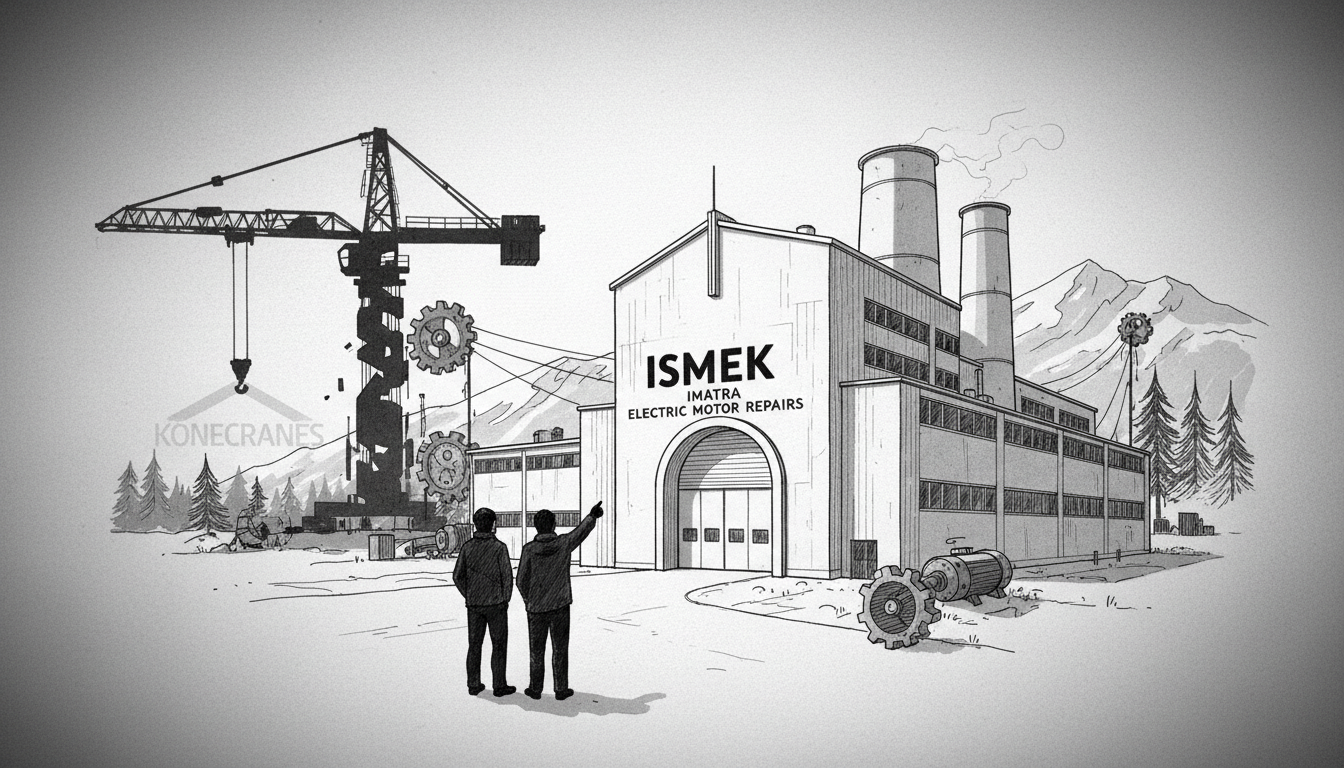
A Finnish industrial services company is expanding its operations into southeastern Finland, seizing an opportunity created by the departure of a major global manufacturer. Ismek, a Savonlinna-based firm specializing in metal recycling and processing, has established a new electric motor repair workshop in Imatra. The company moved into the former premises of Konecranes, the Finnish crane and lifting equipment giant, at the Vuoksenniska industrial area. The move directly addresses a local service gap identified after Konecranes ended its own repair operations at the site.
Company CEO Jussi Nousiainen explained the strategic decision. He said he was aware of ongoing local demand for electric motor repair services despite Konecranes's exit. 'I knew about the location, and when I heard Konecranes was ending operations, I decided to use the situation to our advantage,' Nousiainen stated. 'There was still considerable demand for electric motor repairers in the area.' The new venture operates under the name Ismek Service.
This expansion reflects a broader trend within Finland's industrial heartlands, where smaller, agile firms are filling niches vacated by larger corporations. The Finnish government has consistently emphasized the importance of supporting small and medium-sized enterprises, particularly in regions outside major urban centers like Helsinki. Industrial policy often focuses on maintaining technical expertise and employment in traditional manufacturing towns. Imatra, a city historically defined by its border location and heavy industry, represents exactly the type of community these policies aim to bolster.
The decision carries economic significance for the Imatra region. It preserves specialized industrial jobs and maintains critical service infrastructure for local factories and plants. When a multinational like Konecranes scales back local operations, it can create a ripple effect, leaving supply chains vulnerable. Ismek's investment mitigates that risk. It ensures that regional manufacturers do not need to send vital equipment for repair to distant centers, reducing downtime and logistical costs. This is a practical example of regional economic resilience.
From a policy perspective, this micro-level business activity aligns with national goals of distributed economic growth. The Finnish Parliament, the Eduskunta, frequently debates measures to stimulate business activity in all regions. While not a direct result of a specific legislative act, Ismek's expansion is the kind of organic growth that economic development officials seek to encourage. It demonstrates how local market knowledge and entrepreneurial initiative can effectively repurpose industrial assets. The company identified a clear market need and acted swiftly to meet it, a straightforward business logic that sometimes gets lost in broader political discussions about industrial strategy.
For international observers, this story offers a window into the adaptive nature of Finland's industrial sector. It is not solely about flagship technology startups in Helsinki. It is also about established firms in sectors like metals and machinery finding new paths for growth. These businesses form the backbone of the export economy. Their ability to adapt and seize opportunities contributes directly to national economic stability. Ismek's move into Imatra is a small but concrete sign of that ongoing adaptation, ensuring specialized industrial services remain available in Finland's regional hubs.