
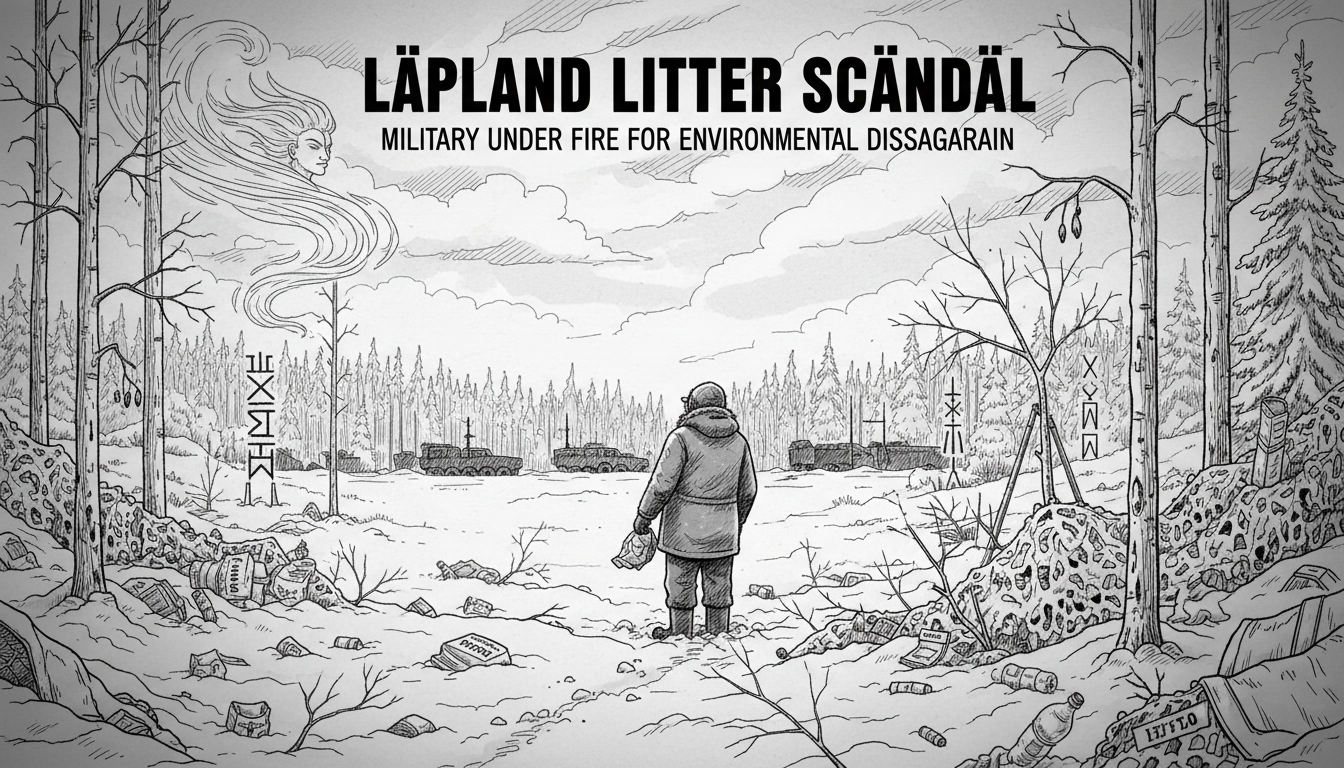
A major Finnish Air Force training exercise in Lapland has sparked public anger and a formal apology from military leadership after a local resident discovered significant litter left behind in nearby forests. The incident, involving over one thousand personnel, has raised serious questions about environmental discipline and oversight within the Finnish Defence Forces.
Jyrki, a resident living next to the forest near Rovaniemi, was dismayed to find the area strewn with empty candy and chip bags, energy bar wrappers, and canned food containers. He suspects the waste came from the Ilmavoimat's recent large-scale training operation, noting the Defence Forces had closed roads in the area the previous week. His complaint highlights a breach of the military's strict environmental guidelines, which mandate that all waste must be removed from training grounds.
Colonel Petteri Puusa, Chief of Staff of the Lapland Air Command, confirmed the incident in a written statement. He acknowledged that a 'clean-up patrol' was dispatched to the area immediately on Monday, December 1st, to collect the debris. Puusa expressed regret for the event, stating the Lapland Air Command had not received such feedback 'in living memory.' He explained the post-exercise clean-up inspections by supervising officers could not cover every part of the vast training area, which extended to Norvajärvi, approximately 14 kilometers from Rovaniemi airport.
The exercise in question was the Finnish Air Force's major collective training period finale, known as JPH225. It involved personnel living in field conditions across a wide swath of Lapland's wilderness. Colonel Puusa noted the case underscores a need to specifically remind conscript and reservist units, which often operate independently without direct personnel supervision, of their duty to collect all waste.
Jyrki, who served his own conscription in his youth, expressed deep disappointment. 'Soldiers really shouldn't behave like that,' he said, recalling that in his time, troops meticulously cleaned forest areas, with regular staff checks to ensure nothing was left behind. He questioned how much more litter might be scattered across the broader exercise zone, calling the behavior 'pretty piggish.' He added that no one wants such traces in their local woods, even if the land is state-owned forest.
This incident touches a nerve in Finnish society, where public access to nature and environmental responsibility are core national values. The concept of 'jokamiehenoikeus,' or everyman's right, grants everyone freedom to roam and enjoy forests, but it carries the reciprocal duty of leaving no trace. The Defence Forces, as a state institution, is held to an even higher standard of stewardship. While large-scale exercises are critical for national readiness, this episode reveals a potential gap between official policy and on-the-ground execution, particularly with independently operating units. It forces a public conversation about balancing military necessity with environmental protection in Finland's sensitive northern ecosystems. The military's prompt response and apology indicate institutional awareness of the reputational damage, but the public will judge the effectiveness of any new reminders or procedural changes by the cleanliness of the next training ground.