
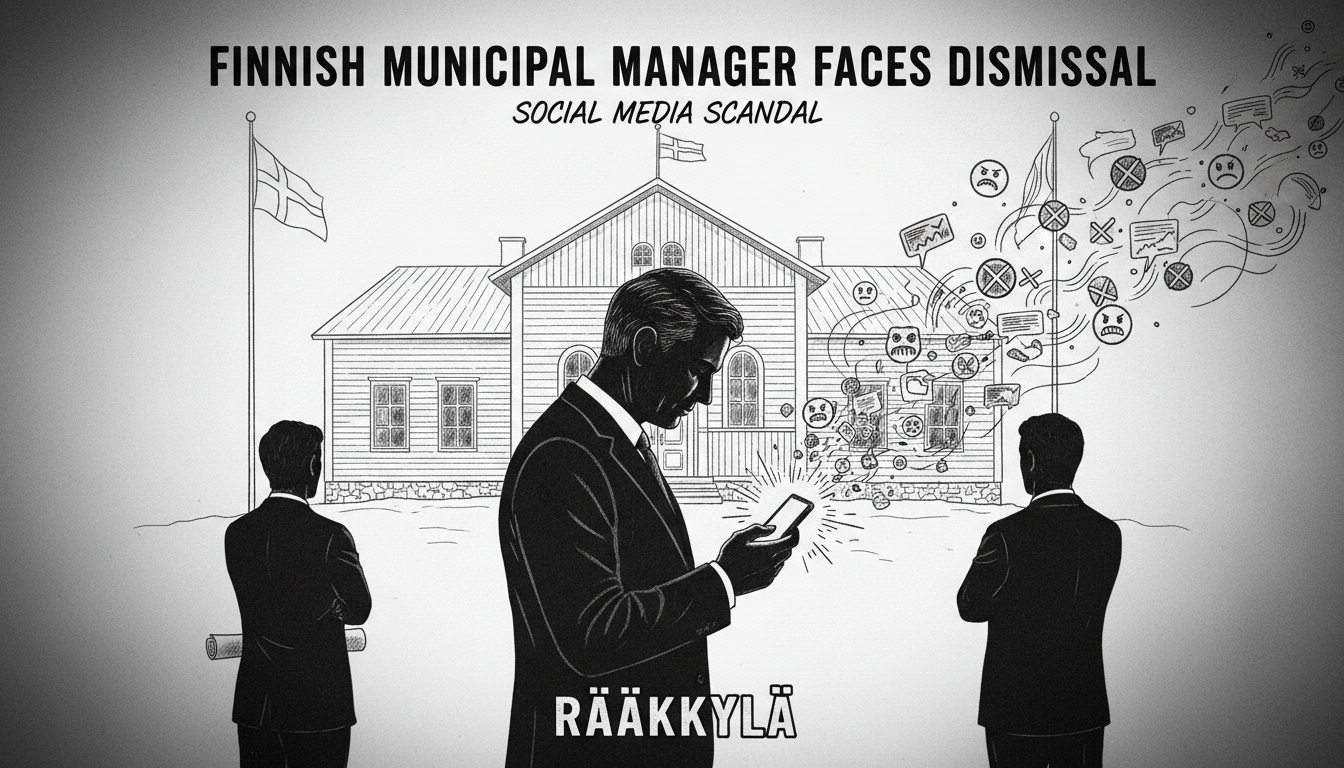
Rääkkylä municipal manager Esko Rautiainen faces termination proceedings following repeated controversies surrounding his social media communications. The Left Alliance and Centre Party council groups reached unanimous agreement during Sunday evening negotiations about removing the administrator. Council groups must now determine the specific dismissal procedure amid ongoing scrutiny of public officials' digital conduct.
Centre Party council group chair Pasi Laasonen acknowledged the likelihood of dismissal when questioned about deliberations. Left Alliance council group leader Asko Reittu confirmed the impending termination during recent discussions. This development marks the second major social media controversy involving Rautiainen within a brief period.
The municipal manager previously received an official warning for inappropriate messaging in early 2024. He publicly apologized for those communications at the time. Fresh allegations emerged recently regarding sexually suggestive comments made on Threads. Rautiainen responded to criticism by comparing his writing to coffee table conversations and lighthearted humor.
Rautiainen defended his communications through an official statement during the latest controversy. He argued that sexuality remains part of human identity regardless of professional position. The municipal manager asserted that humor constitutes normal social interaction rather than misconduct. Rautiainen maintains the recent messages don't qualify as inappropriate content.
Finnish municipal governance operates under strict ethical guidelines for public officials. The country's administrative system emphasizes transparency and accountability for those managing public funds. Rääkkylä's municipal board will address Rautiainen's case during their Wednesday meeting. The outcome could establish important precedents for social media governance among Finnish public administrators.
This situation reflects broader European debates about digital conduct standards for public officials. Finland's approach balances personal expression rights with professional responsibility expectations. The case demonstrates how social media boundaries continue evolving within Nordic public administration. Similar disciplinary cases have occurred recently in Swedish and Norwegian municipalities.
International observers should note Finland's consensus-driven political culture influences such proceedings. The quick agreement between center and left parties indicates serious perceived misconduct. Municipal managers in Finland wield substantial authority over local services and budgets. Their conduct typically faces greater scrutiny than private sector equivalents.
The Rääkkylä case highlights ongoing challenges in defining appropriate digital behavior for public figures. It raises questions about whether personal social media accounts reflect professional competence. Finnish employment law provides strong protections against arbitrary dismissal. The municipality must demonstrate proper cause through established legal procedures.
This developing situation offers insights into Finland's local governance mechanisms. The process showcases how coalition partnerships function in municipal decision-making. Foreign professionals in Finland should understand the high ethical expectations for public officials. The final decision could influence how other municipalities handle similar digital conduct cases.