
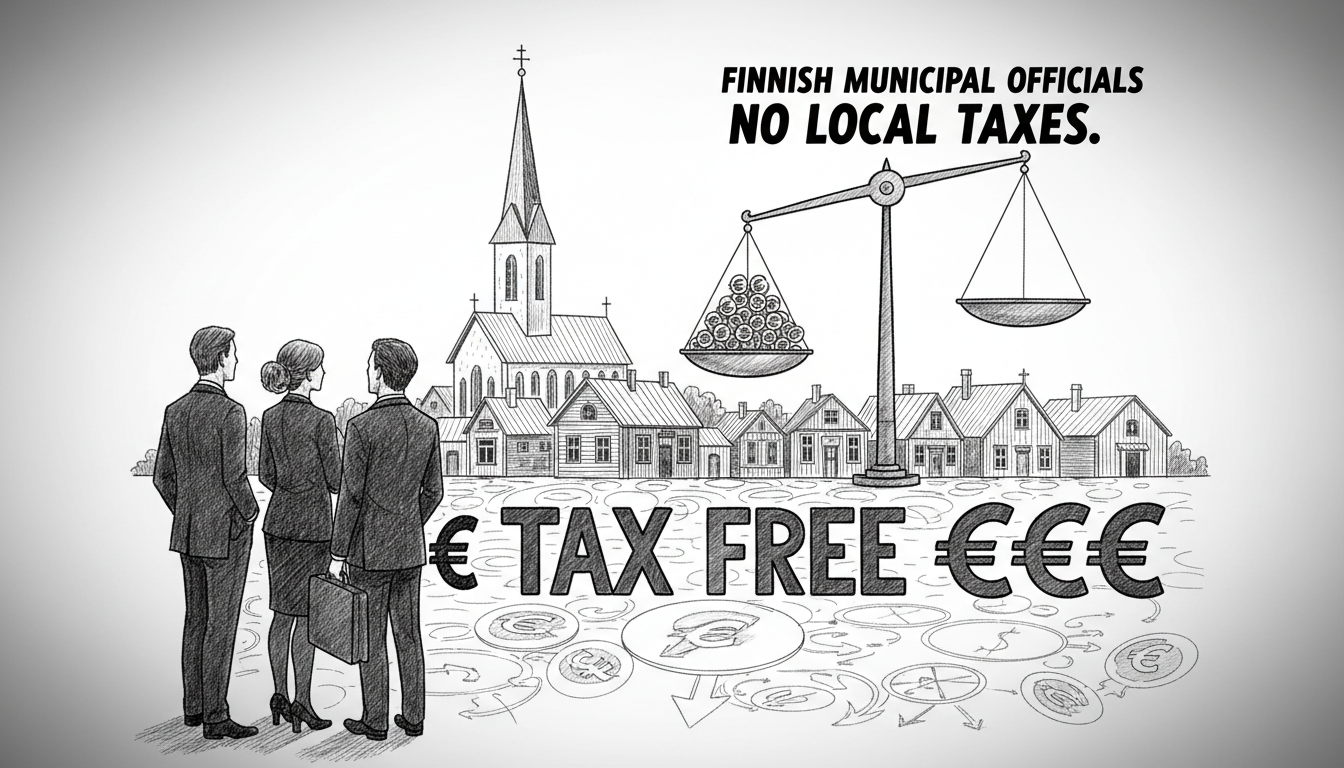
More than ten high-income municipal officials across Finland paid no local taxes last year despite earning substantial incomes. These officials serve on municipal councils and boards that decide how to spend taxpayer money in their communities.
Local tax revenue funds most municipal services in Finland. These include schools, healthcare, roads, and social services. The officials who avoided local taxes earned at least 120,000 euros in taxable income during the reporting period.
Jari Matinolli, a council member from Tyrnävä municipality, explained his situation. He said his personal circumstances mean he rarely uses municipal services. Other officials named in the report come from Liminka, Nakkila, Hattula, and Espoo.
This situation raises questions about tax fairness in Finland's municipal system. Council members make decisions about public spending while not contributing to the local tax base themselves. The revelation comes from an analysis of recently elected officials' income and tax data.
Finland's progressive tax system includes both national and municipal components. Municipal tax rates typically range between 16-23 percent across different regions. High-income earners normally pay substantial amounts to both national and local tax authorities.
Local taxation funds approximately two-thirds of municipal operations in Finland. The remaining funding comes from state subsidies and service fees. This makes local tax revenue crucial for maintaining public services.
Several factors can lead to high-income individuals paying no municipal taxes. These include deductible expenses, tax treaties, or residence in municipalities with special tax arrangements. The specific reasons for each official's situation remain unclear.
The disclosure highlights potential conflicts of interest in local governance. Officials who don't pay local taxes might approach budget decisions differently than those who do. This could influence spending priorities and service allocation.
Finnish municipal politics operates on a representative democracy model. Council members are elected every four years to make decisions about local services and taxation. Their decisions directly affect the daily lives of residents.
This situation may prompt discussions about tax policy and political accountability. Voters might question whether officials who avoid local taxes can properly represent taxpayer interests. The debate touches on fundamental questions about representation and shared responsibility.
Municipal officials in Finland typically receive meeting fees rather than salaries. These payments are taxable income, though the amounts vary by municipality size and meeting frequency. The system aims to encourage citizen participation in local governance.
The revelation about tax-free officials comes amid broader discussions about tax fairness in Finland. The country has one of Europe's most progressive tax systems, but exceptions and special arrangements sometimes create unexpected outcomes.
Local residents might wonder how this affects service quality and budget decisions. Municipal councils make crucial choices about schools, elderly care, and infrastructure. The tax status of decision-makers could influence these priorities.
The situation also raises questions about transparency in local politics. Voters typically know little about their representatives' personal finances and tax situations. This case might spark calls for greater disclosure requirements.
Finnish municipalities face ongoing challenges balancing budgets and maintaining services. An aging population increases pressure on healthcare and social services. Decisions about tax rates and service cuts remain politically sensitive.
This development could influence future elections and political accountability. Voters may pay closer attention to candidates' tax histories and financial transparency. The relationship between personal finances and public service deserves ongoing examination.