
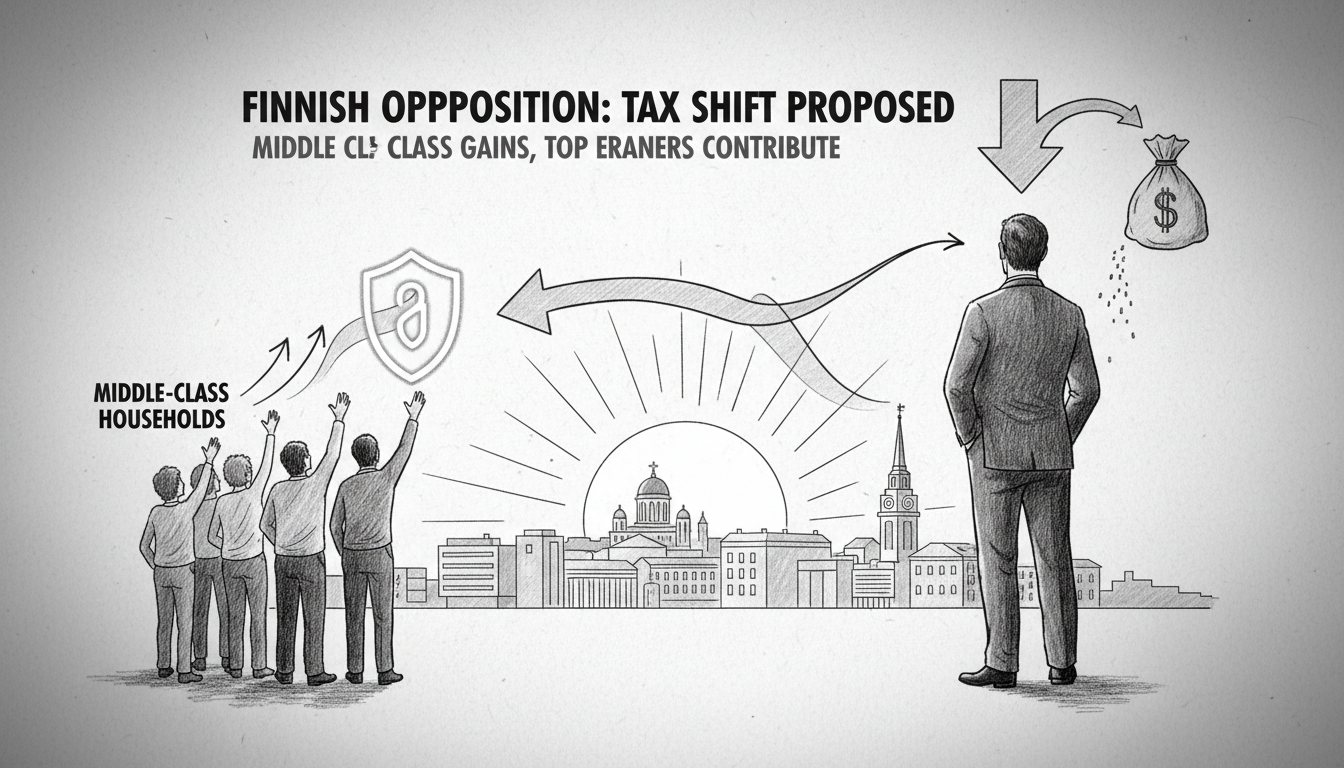
Finland's main opposition party has unveiled a comprehensive alternative budget proposal that would cancel tax cuts for top earners and redirect funds to middle-income households. The Social Democratic Party presented its shadow budget as a direct challenge to the government's fiscal plans, marking a clear ideological divide in Finnish economic policy.
The proposal would maintain current marginal tax rates for highest earners rather than reducing them to 52 percent as the government intends. Instead, the party would implement tax bracket index adjustments across all income levels, generating over 300 million euros in static savings. These funds would then boost work-related deductions for low and middle-income earners by 200 million euros more than the government's plan, with an additional 100 million euros targeting youth, long-term unemployed, and workers over 65.
Party chair Antti Lindtman and parliamentary group leader Tytti Tuppurainen emphasized their focus on supporting average Finnish families during Tuesday's announcement at the Eduskunta premises in Helsinki's government district. They argued their approach better addresses cost-of-living pressures while maintaining public services.
The budget alternative would restore social benefit protections that the government coalition intends to cut. This includes reinstating the basic deduction component in unemployment benefits and housing allowance, allowing recipients to earn limited additional income without losing benefits. The party would also reverse planned restrictions on tax deductions for trade union membership fees, home office expenses, and bicycle benefits.
To finance these changes, the Social Democrats propose familiar measures from previous alternative budgets. They would tighten dividend taxation for unlisted companies, tax investment insurance products, and impose taxes on investment returns of tax-exempt organizations. The party would also limit corporate interest deductions and maintain the current value-added tax rate of 14 percent rather than reducing it to 13.5 percent for food items.
According to Parliament's information service calculations, the proposal would increase disposable income for middle and lower-income deciles while significantly reducing take-home pay for the highest earners compared to the government's budget. Lower-income households would see improvements through social security enhancements, including reversing planned restrictions on basic social assistance.
The opposition budget includes hundreds of millions in additional investments for healthcare, education, climate and nature initiatives, and municipal funding. These spending increases would be funded through previously proposed savings measures, including earlier termination of industrial electrification subsidies, across-the-board cuts to business subsidies, reductions in social insurance reimbursements, limitations on home care allowances, and agricultural subsidy cuts for unproductive farms.
The government's budget proposal shows an 11.6 billion euro deficit for the coming fiscal year, with the opposition alternative projecting a similar scale but claiming their tax increases would reduce the deficit by several hundred million euros. This fundamental disagreement over taxation philosophy represents the core political division in Finnish economic policy, with the government arguing that high-earner tax cuts stimulate economic activity that eventually pays for itself through growth.
Finnish budget debates typically intensify through autumn as parliamentary committees review proposals, with final votes expected before year-end. The Social Democrats' alternative serves both as a policy statement and potential governing agenda should they return to power after next elections.