
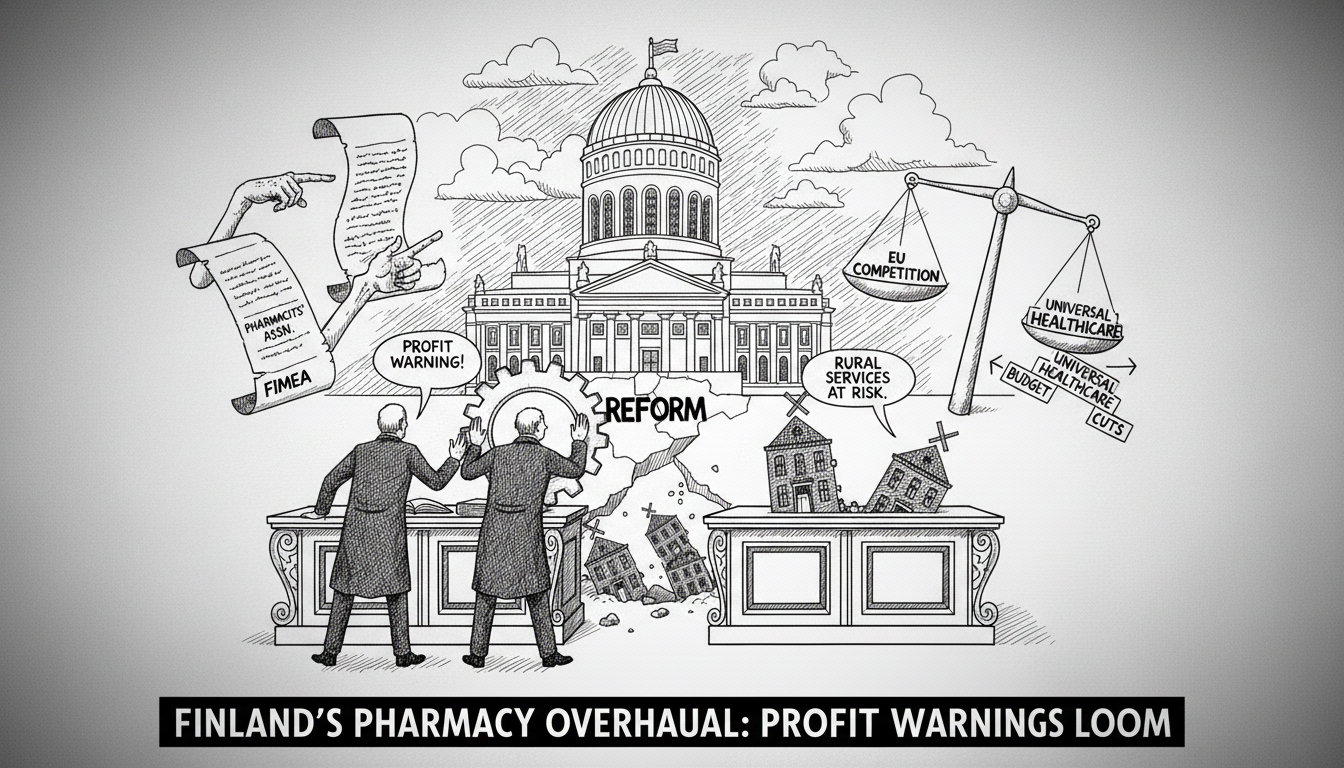
The Finnish government is advancing a contentious reform of the national pharmacy system, despite warnings from industry representatives that the changes could render over a hundred outlets unprofitable. The reform, which links deregulation measures directly to state budget savings, has already undergone significant revision following constitutional concerns raised earlier in the legislative process. The Finnish Medicines Agency, Fimea, now projects the policy will push profitability past the breaking point for many community pharmacies across the country.
According to the Finnish Pharmacists' Association, which advocates for pharmacy owners, the government made a critical error by attempting to change too many regulations at once. The association argues that combining structural reform with fiscal austerity targets creates an unstable foundation. The likely result, they warn, is a substantial increase in loss-making pharmacies, potentially affecting service availability in smaller municipalities and rural areas. This development follows a period of intense debate within the Eduskunta, Finland's parliament, where the original proposal faced sharp criticism for its potential impact on equitable healthcare access.
The core of the dispute lies in the government's dual objectives. On one hand, it seeks to modernize a highly regulated sector, potentially increasing competition. On the other, it demands concrete savings for the state treasury. Critics point out that these goals can be contradictory. Forcing cost reductions while altering the business model simultaneously places immense pressure on pharmacy operators. The situation is being closely monitored by EU officials, as it touches on directives related to the single market for services and the balance between national healthcare systems and competition law. Past Nordic reforms, such as Sweden's pharmacy deregulation over a decade ago, serve as a cautionary reference point for market consolidation and rural service reduction.
This policy struggle is centered in Helsinki's government district, where the ruling coalition, led by Prime Minister Petteri Orpo's National Coalition Party, is navigating complex negotiations. The Social Democratic Party and The Finns Party, key players in the coalition, have differing views on the pace and social impact of such reforms. The government maintains its savings target is non-negotiable, a stance that sets the stage for further conflict with healthcare providers. For international observers and expats in Finland, this signals potential changes to how prescription and over-the-counter medicines are dispensed, possibly affecting wait times and local pharmacy availability. The next phase will involve detailed committee scrutiny in the Eduskunta, where amendments to protect rural networks are expected to be proposed. The government's ability to reconcile economic goals with functional, nationwide healthcare infrastructure remains the central unanswered question.