
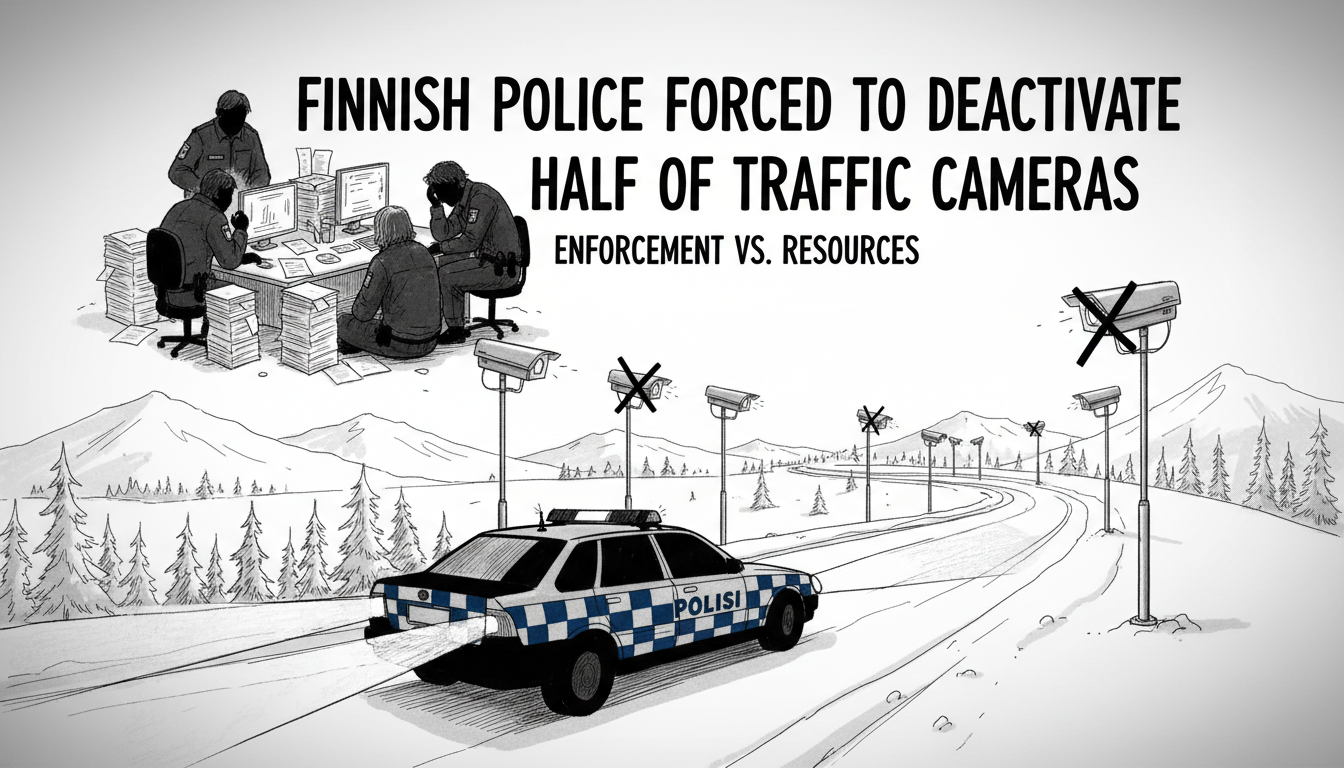
Finnish authorities have taken approximately half of the nation's traffic safety cameras offline due to overwhelming workload constraints. Police officials confirmed the dramatic reduction in operational speed monitoring devices stems from limited processing capacity for traffic violation fines. The situation reveals significant strain on Finland's traffic enforcement system despite recent efforts to increase road safety measures.
Police Inspector Tuomo Katajisto explained the practical reality facing law enforcement. He stated that only a limited number of traffic fine processors exist within the police organization. This staffing limitation directly forced the reduction of active cameras across the country. Current estimates indicate roughly half of previous camera capacity remains operational nationwide.
The camera deactivations come despite intensified monitoring policies implemented earlier this year. Finnish police adopted stricter enforcement thresholds during the summer months, eliminating previous tolerance for minor speeding violations. New operational guidelines distributed to police departments established lower thresholds for issuing speeding citations.
Police leadership identified concerning attitudes toward speeding among some Finnish drivers. Officials noted that some citizens genuinely believe certain levels of speeding remain legally permissible. This misconception prompted the enforcement policy adjustment to address what authorities described as overly lenient attitudes among both motorists and some law enforcement personnel.
The policy change generated substantial public discussion when first announced. Media coverage sparked vigorous citizen debate about speed enforcement practices. One focal point involved the so-called speedometer deduction, technically called a safety margin, designed to account for potential measurement device inaccuracies.
Police Inspector Heikki Ihalainen clarified that the safety margin remains in effect despite stricter enforcement. He explained that while no law specifically requires the deduction, equipment manufacturers often recommend it and police want to maintain public legal protections. The standard safety margin currently stands at three kilometers per hour.
Despite this allowance, the volume of speeding violations has increased substantially under the stricter policy. Individual camera units now produce roughly 50 to 100 percent more images than before the policy change, according to police estimates. This surge created the processing bottleneck that necessitated camera reductions.
The mathematical reality presents two clear solutions. Either authorities must increase the number of traffic fine processors or maintain reduced camera operations. Currently, no budget increases for additional staffing have been announced, suggesting the camera reductions will continue indefinitely.
This situation highlights the challenge of implementing stricter policies without corresponding resource allocations. The Finnish government faces balancing road safety objectives with practical enforcement capabilities. The camera reduction represents a temporary operational compromise, but long-term solutions remain uncertain as traffic monitoring technology advances and public expectations evolve.
International observers note similar challenges in other Nordic countries where automated enforcement systems face resource constraints. The Finnish case demonstrates how policy intentions can encounter practical limitations when implementation costs and staffing requirements exceed available resources. This dynamic deserves attention as other European nations consider expanding automated traffic enforcement systems.