
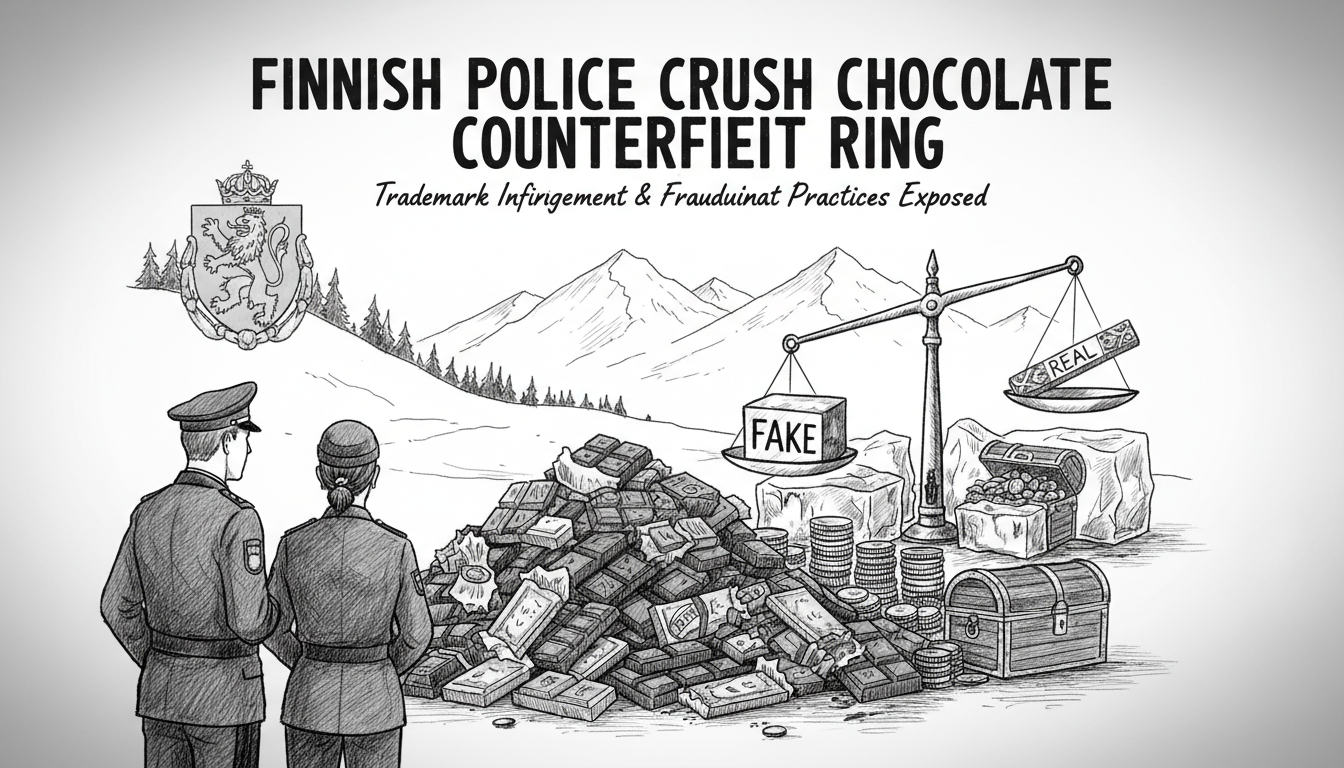
Finnish authorities have uncovered a sophisticated chocolate counterfeiting scheme involving a Ostrobothnian confectionery entrepreneur. Police suspect the business owner distributed and sold counterfeit chocolate products while illegally using another company's Santa's Break trademark during manufacturing and marketing operations in the final quarter of last year. The investigation has revealed hundreds of kilograms of fraudulent chocolate seized during preliminary inquiries.
Law enforcement officials are examining multiple serious charges including aggravated embezzlement, fraud, industrial rights violations, health offenses, and marketing crimes. The case now progresses to prosecution consideration phase following completed preliminary investigation. Helsinki District Court will handle any industrial rights charges according to established judicial procedures when prosecutors file formal accusations.
Additional suspicions involve sixteen separate counts of aggravated fraud or standard fraud related to repeated business sales transactions to various companies and private individuals. These separate allegations remain under active police investigation as authorities work to unravel the complete network of suspected illegal activities. The district court has imposed asset freeze measures worth approximately 150,000 euros on the entrepreneur's property following police requests during initial proceedings.
This case highlights Finland's rigorous approach to consumer protection and intellectual property enforcement. Finnish food safety authorities maintain strict oversight of confectionery production standards given the country's reputation for quality food manufacturing. The Santa's Break trademark infringement represents a serious violation of Finland's robust industrial rights protections that align with European Union intellectual property directives.
Nordic consumers typically demonstrate high trust in food authenticity and accurate labeling. This chocolate counterfeiting incident could potentially undermine consumer confidence in specialty food products across the region. Finnish police typically pursue economic crimes with particular diligence given the country's consistently low corruption levels and transparent business practices.
The case emerges amid ongoing European Union efforts to strengthen food authenticity regulations and combat product counterfeiting. Finland's implementation of EU food safety directives has created one of Europe's most comprehensive consumer protection frameworks. The suspected violations span multiple legal categories reflecting the complex nature of modern food industry fraud.
Legal experts note that successful prosecution could establish important precedents for handling similar cases involving food product counterfeiting within the Nordic region. The Helsinki District Court's eventual ruling will be closely monitored by both food industry representatives and consumer protection advocates across Scandinavia.