
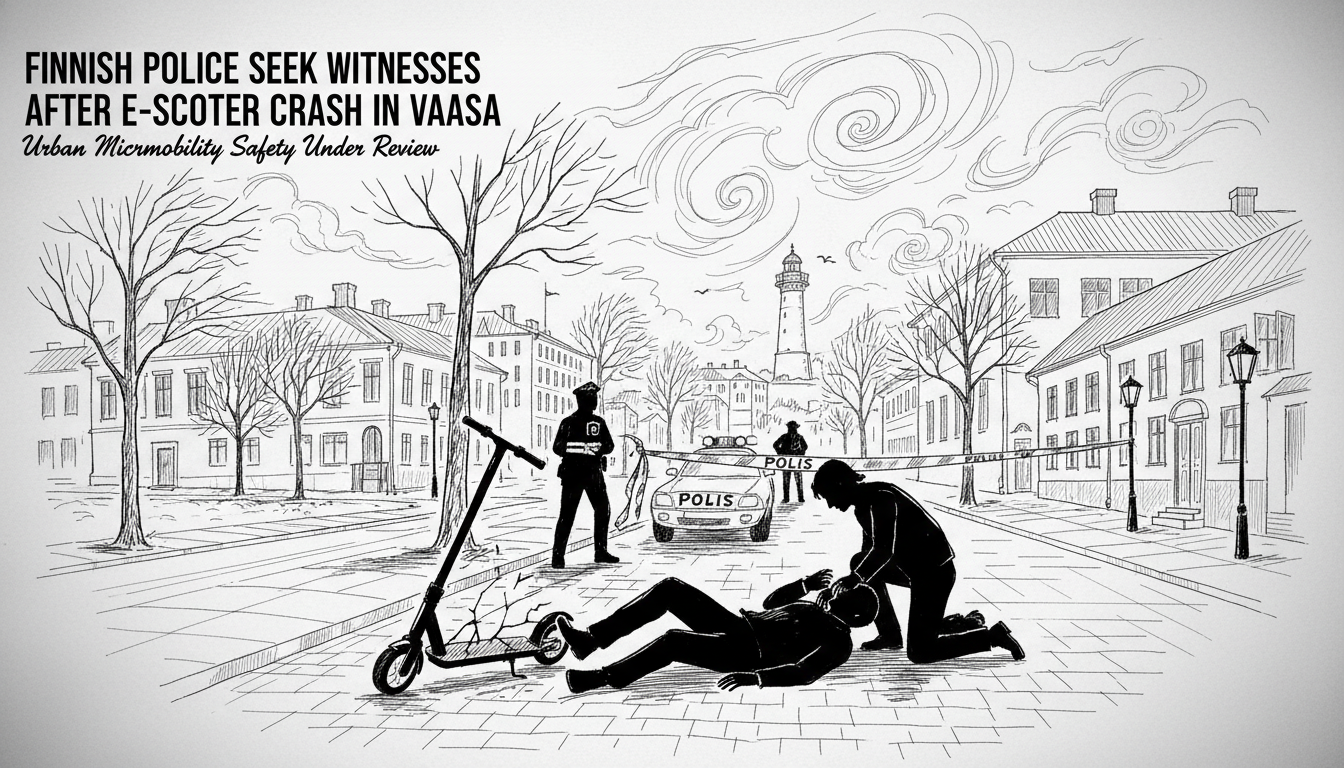
Finnish authorities are actively investigating a personal injury incident involving an electric scooter and pedestrian in Vaasa. The Ostrobothnia Police Department has issued a public appeal for information regarding the collision that occurred at the intersection of Konepajankatu and Ratakatu streets. Police reports indicate the incident happened around midday when a young female electric scooter rider collided with a pedestrian from behind.
The pedestrian sustained leg injuries while walking along Konepajankatu toward the Olympic Village district. Witnesses observed the collision scene, and investigators now seek both the rider's cooperation and additional witness statements. The electric scooter operator is described as a blonde girl approximately 12 to 18 years old. Police have provided dedicated contact channels including an email address and tip line for information sharing.
This incident highlights growing concerns about urban micromobility safety across Finnish cities. Electric scooters have transformed urban transportation patterns throughout Finland, but their rapid adoption has outpaced regulatory frameworks. Similar safety incidents have prompted municipal governments in Helsinki, Tampere, and Turku to reevaluate shared mobility regulations. The Vaasa collision represents precisely the type of accident that transportation officials seek to prevent through updated urban planning and traffic management strategies.
Finland's approach to micromobility regulation combines national traffic legislation with municipal oversight. The Finnish Transport and Communications Agency Traficom establishes technical requirements for electric scooters, while cities manage practical implementation through local ordinances. Recent parliamentary discussions have addressed potential age restrictions, mandatory helmet laws, and designated riding areas. The Eduskunta's Transport and Communications Committee continues monitoring accident statistics to determine if national legislation requires strengthening.
International readers should understand that Finnish traffic safety records typically rank among Europe's best, making individual incidents particularly noteworthy. The country's Vision Zero policy aims to eliminate traffic fatalities and serious injuries entirely. Each collision receives thorough investigation to identify systemic improvements. For expatriates and visitors, this case demonstrates Finnish authorities' proactive approach to public safety and their reliance on community cooperation in investigations.
Electric scooter companies operating in Finland face increasing pressure to enhance rider education and implement technological safety features. The industry has responded with geofencing solutions that limit speeds in crowded areas and improved reporting mechanisms for hazardous riding. Municipal transport departments now routinely incorporate micromobility considerations into urban infrastructure projects, recognizing that segregated lanes and clear signage benefit all road users.
The Vaasa investigation continues as police gather witness statements and examine the circumstances surrounding the collision. Authorities emphasize that timely public cooperation significantly enhances investigation effectiveness. This case will likely influence ongoing policy discussions about balancing transportation innovation with public safety priorities in Finnish urban environments.