
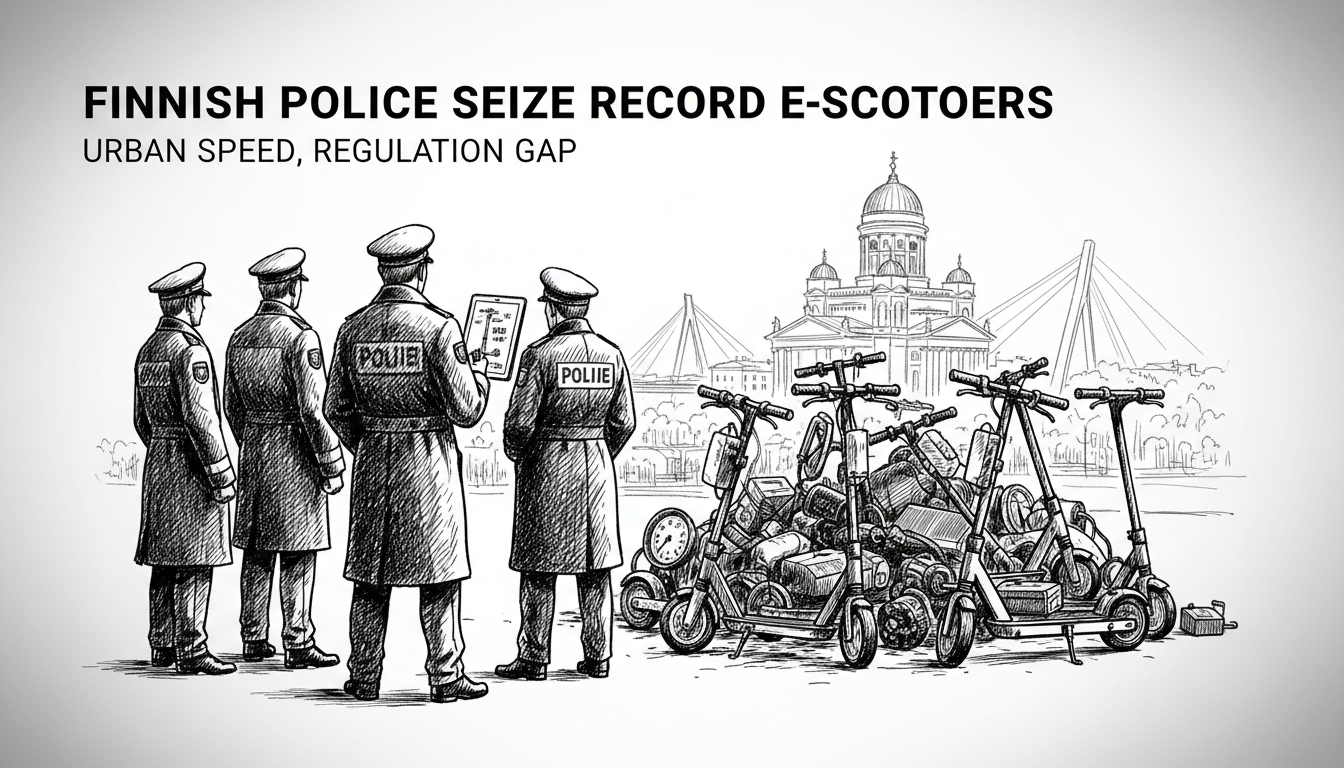
Finnish police now encounter modified electric scooters approximately five times per month, a sharp increase from isolated annual cases just a few years prior. Police Inspector Heikki Kallio from the National Police Board confirmed the trend, noting the scooters can reach speeds up to seventy kilometers per hour. This surge presents a clear challenge for urban traffic enforcement and public safety in Helsinki and other major cities.
The rise of these high-speed scooters coincides with a national debate over urban mobility and the adequacy of current transport regulations. The Finnish Parliament, the Eduskunta, has previously discussed micromobility frameworks but has not passed specific legislation targeting performance modifications. This regulatory gap leaves police to apply general traffic laws, which often prove insufficient for these novel vehicles.
From an EU perspective, Finland's situation reflects a broader continental struggle. The European Union has issued directives on vehicle type-approval and road safety, but these frameworks primarily address manufacturer standards, not post-purchase modifications by private citizens. This creates a complex enforcement landscape where national police forces must interpret EU-wide rules for locally emerging problems.
The political dimension is unavoidable. The current Finnish government, a coalition operating from Helsinki's government district, has prioritized digital transformation and green transport. Modified e-scooters, however, sit awkwardly within this agenda. They are electric but represent a misuse of technology that endangers pedestrians and cyclists. Ministers from the Social Democratic Party and the Centre Party have made cautious statements, calling for responsible use but stopping short of proposing new bans.
Historical context matters here. Finland has a strong tradition of personal transport freedom, balanced with a deep respect for regulatory frameworks that ensure collective safety. The rapid adoption of e-scooters, first as rental services and now as privately owned devices, has tested this balance. The police seizure data indicates the system is under strain.
What happens next? The National Police Board will likely submit a report to the Ministry of the Interior. This could trigger a legislative initiative, potentially aligning Finnish law with stricter approaches seen in some other Nordic capitals. Any new law would need to pass through the Eduskunta's Transport and Communications Committee, where party positions will solidify. The outcome will signal whether Finland chooses stricter control or continued reliance on user responsibility for its evolving streetscape.
The core issue is one of speed and anonymity. A scooter traveling at seventy kilometers per hour in a bike lane is a lethal projectile. The ease of modification, often via cheap software unlocks purchased online, makes prevention difficult. Police can confiscate the scooter and issue a fine, but the deterrent effect appears limited. This is a classic case of technology outpacing law, and Finnish authorities are now playing catch-up.
For international readers and expats in Finland, this is a practical warning. Using a modified e-scooter carries real legal risk. It also undermines the public acceptance of micromobility, a sector crucial for sustainable urban development. The coming months will show if Finland can craft a smart response that curbs danger without stifling innovation.