
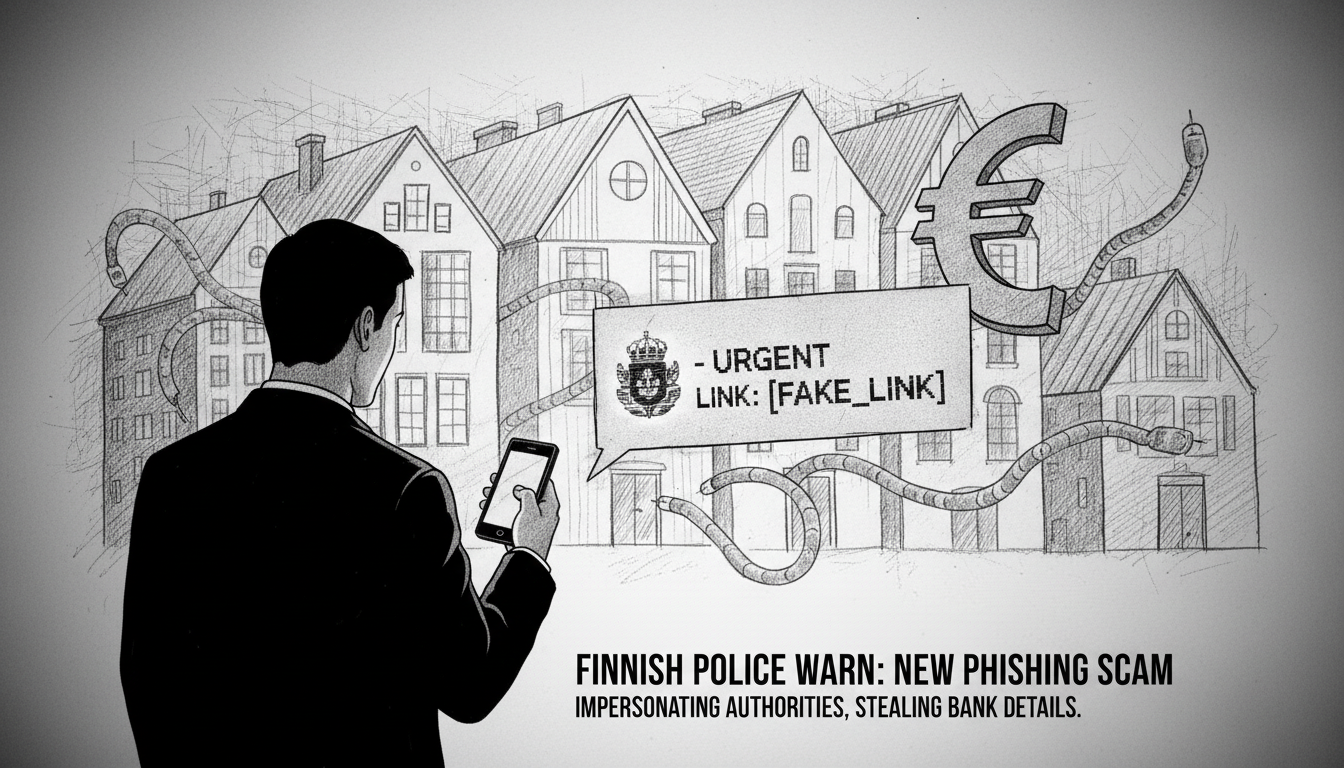
The Finnish National Police Board has issued a direct public warning about a new wave of sophisticated phishing messages circulating under the guise of official police communications. The alert, published on the official police service portal, details a scam where criminals send text messages appearing to originate from the police. These messages contain malicious links designed to harvest victims' online banking credentials. The scam represents a notable escalation in digital fraud tactics targeting Finnish residents and coincides with broader EU-wide efforts to combat cybercrime under the revised Network and Information Security Directive.
Authorities specify that the fraudulent messages often display a sender name containing the word 'POLIISI' but with additional letters or symbols appended. This is a critical distinction from genuine police communications. Official messages from the police electronic service and licensing authority's photo service will only ever display 'POLIISI' without any extra characters. Messages from the police appointment booking system contain no textual sender information at all. The phishing attempts typically use a pretext, such as requesting the recipient to log in to a linked page to clarify some matter with the police. These messages are sent in large, random batches to thousands of numbers, and they often lack personalized recipient details.
This development is not an isolated incident but part of a persistent trend in Nordic digital security. Finland, with its highly digitized society and near-universal use of online banking, presents a lucrative target for cybercriminals. The Finnish approach to cybersecurity is deeply integrated with EU frameworks, requiring constant vigilance from both the National Cyber Security Centre and the police. The Eduskunta has previously debated strengthening legal penalties for digital fraud, reflecting a cross-party consensus on the threat. For international observers and the expat community in Helsinki, this warning underscores the importance of digital literacy. The police advice is unequivocal: do not click links in suspicious messages, delete them immediately, and never enter banking credentials on sites reached through unsolicited links.
The practical implications are clear for anyone living in or doing business with Finland. This scam exploits the high level of trust citizens have in national institutions. The police reminder serves as a crucial public service announcement in a country where official digital communication is commonplace. From a policy perspective, this event may fuel further parliamentary discussions on consumer protection and the resources allocated to the National Bureau of Investigation's cybercrime units. The seamless operation of Finland's digital infrastructure is a cornerstone of its economic model, making such threats a direct concern for national competitiveness and security. The public is advised to treat any unexpected message requesting action or login details with extreme skepticism, regardless of how official it may appear.