
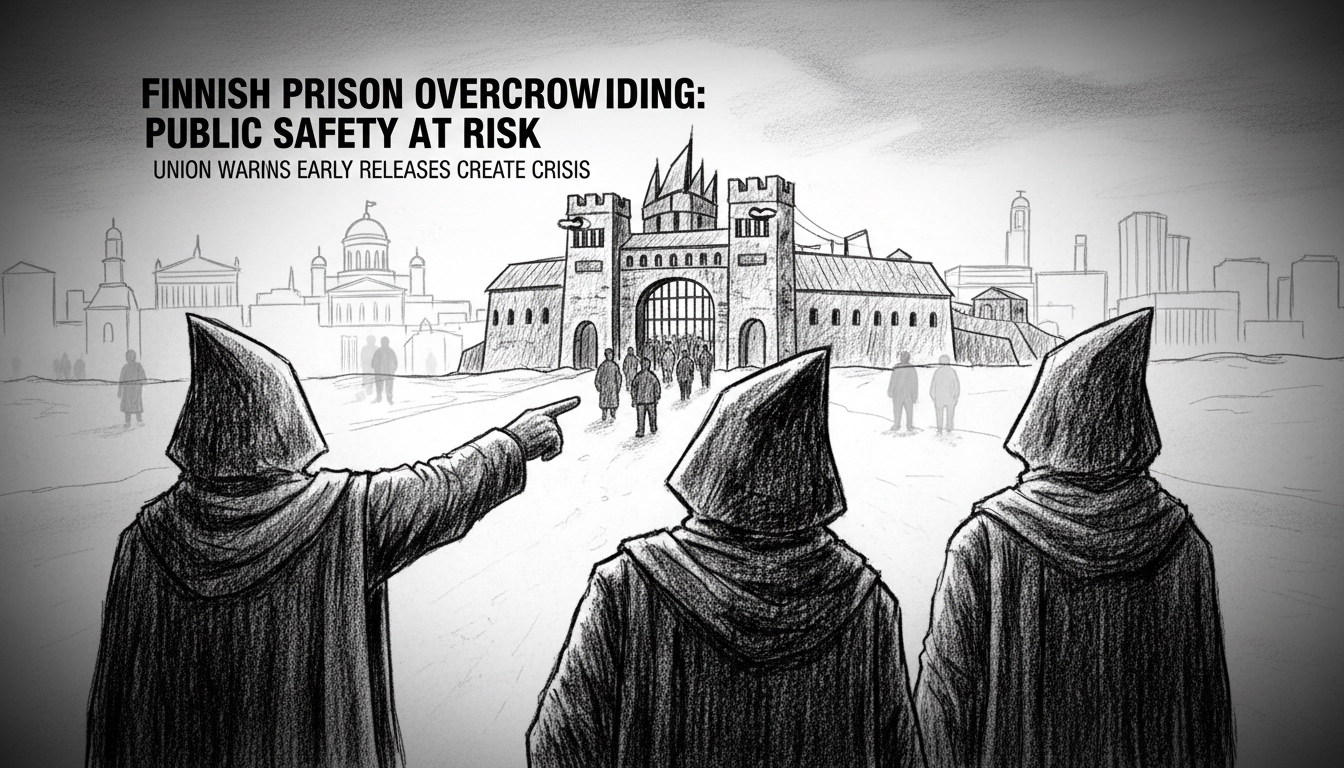
Finland's Prison Officers' Union issued a stark warning about a growing public safety threat. The union directly links severe prison overcrowding and the resulting increase in supervised probation to heightened risks for citizens. The situation stems from a critical shortage of prison staff and a record number of inmates, forcing the system to release prisoners into community supervision programs earlier than recommended. This creates a dangerous gap where adequate monitoring is impossible with current resources.
The union's statement describes prisons operating at absolute maximum capacity. This internal pressure forces the placement of inmates into open prisons and supervised probation prematurely. Officials state that organizing sufficient oversight for these community-based sentences is impossible with the present staffing levels. The union argues this directly increases risks both within open prison facilities and across society at large.
Inside the closed prisons, the crisis manifests as increased danger for staff. Guards increasingly work alone while threat and hazard situations multiply. The union reports that employee work safety is under daily threat. The problems are visible across the entire criminal sanctions system, from prisons to community sanction offices. The root cause is identified as a decade-long reduction in guard training positions combined with a surge in prisoner numbers. While training slots have recently been increased, the union contends the system is now paying a harsh price for this past 'training debt'.
Staff well-being has deteriorated sharply due to the resource shortage. Within the Criminal Sanctions Agency, sickness absences are rising again. These absences are nearly double the average for the entire state administration. Continuous rush, increasing workloads, and severe overcrowding cause intense psychosocial strain on personnel. The agency itself has previously reported on the difficult situation in Finnish prisons.
This crisis presents a significant challenge for the Finnish government's justice and interior policies. Finland has long prided itself on a rehabilitative penal system with low recidivism rates. The current overcrowding threatens to undermine that model, pushing the system toward a more punitive and less secure operational mode. The issue sits at the intersection of budget allocations, sentencing policies, and public security—a complex puzzle for the Eduskunta to solve.
For international observers, the situation offers a cautionary tale. Even robust Nordic welfare states face operational strain in critical public safety institutions. The Finnish case shows how long-term underinvestment in training and infrastructure can create sudden, acute crises. The government must now balance fiscal responsibility with the fundamental duty to protect both its citizens and the prison staff tasked with a difficult job. The coming parliamentary debates on the justice budget will be crucial, with implications for Finland's social stability and its reputation for effective governance.