
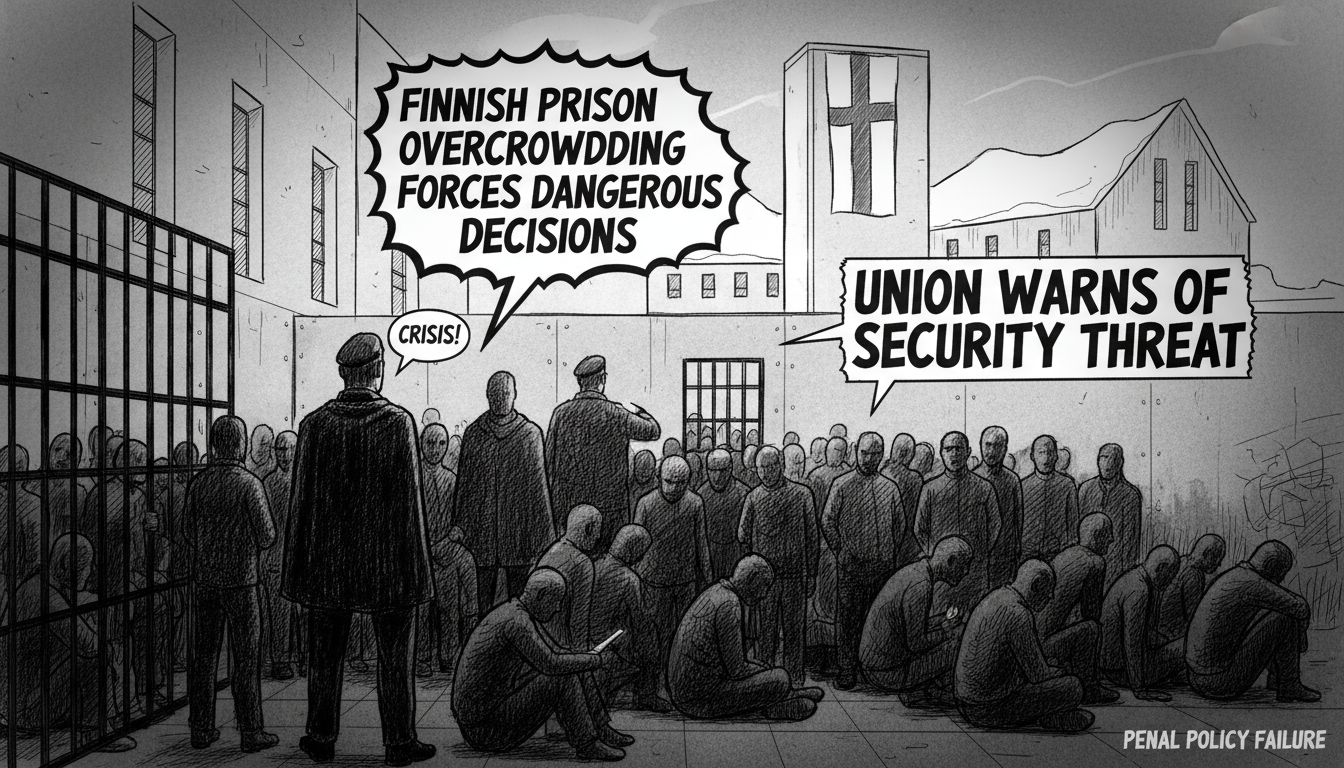
Finland faces a mounting crisis in its prison system, with severe overcrowding forcing dangerous compromises in inmate placement and supervision. The Prison Officers' Union issued a stark warning that chronic understaffing and excessive occupancy rates are degrading safety and staff well-being. This situation presents a direct challenge to the government's stated goals of maintaining a secure and humane penal system.
The union's report details a system under immense strain. Every closed prison and most open prisons currently hold more inmates than their designed capacity. This means cells and wards are packed beyond their intended limits. The practical consequence is that officials are compelled to place inmates in open prisons or supervised probation in situations deemed less than ideal from a security standpoint. 'Organizing sufficient supervision for open prison placements with the current staff numbers is impossible,' the union stated bluntly in its release.
This crisis did not emerge overnight. It stems from a complex interplay of policy decisions and demographic trends. The Criminal Sanctions Agency (Rise) previously reduced the number of training slots for prison guards, based on a now-proven flawed assessment of future needs. This has created a critical staffing shortfall just as the inmate population has swelled. The problem is cyclical: poor working conditions and high stress, fueled by overcrowding, make recruitment and retention of qualified officers exceptionally difficult.
The implications extend far beyond prison walls. Compromised security in open institutions and probation increases potential risks to the broader society. It also raises serious questions about Finland's ability to fulfill its rehabilitative goals for offenders. Effective rehabilitation requires adequate resources and a stable environment, both of which are currently in short supply.
From a political perspective, this crisis lands on the desk of the Minister of the Interior and the government coalition. It tests their capacity for long-term planning in the justice sector, an area often overshadowed by more immediate economic debates. The situation also has a European dimension, as member states are expected to uphold certain standards for detention conditions under the European Convention on Human Rights. A systemic failure here could attract scrutiny from European bodies.
Historical context is important. Finland was once hailed for its progressive, rehabilitation-focused penal policy with relatively low incarceration rates. The current overcrowding suggests a shift, potentially reflecting tougher sentencing laws or failures in social policy upstream. Solving this will require more than just building new cells. It demands a comprehensive review of sentencing guidelines, investment in alternative sanctions, and a major boost to recruitment and training for prison staff. The government must act before a manageable problem becomes a full-blown emergency that compromises public safety and Finland's reputation for a functional justice system.