
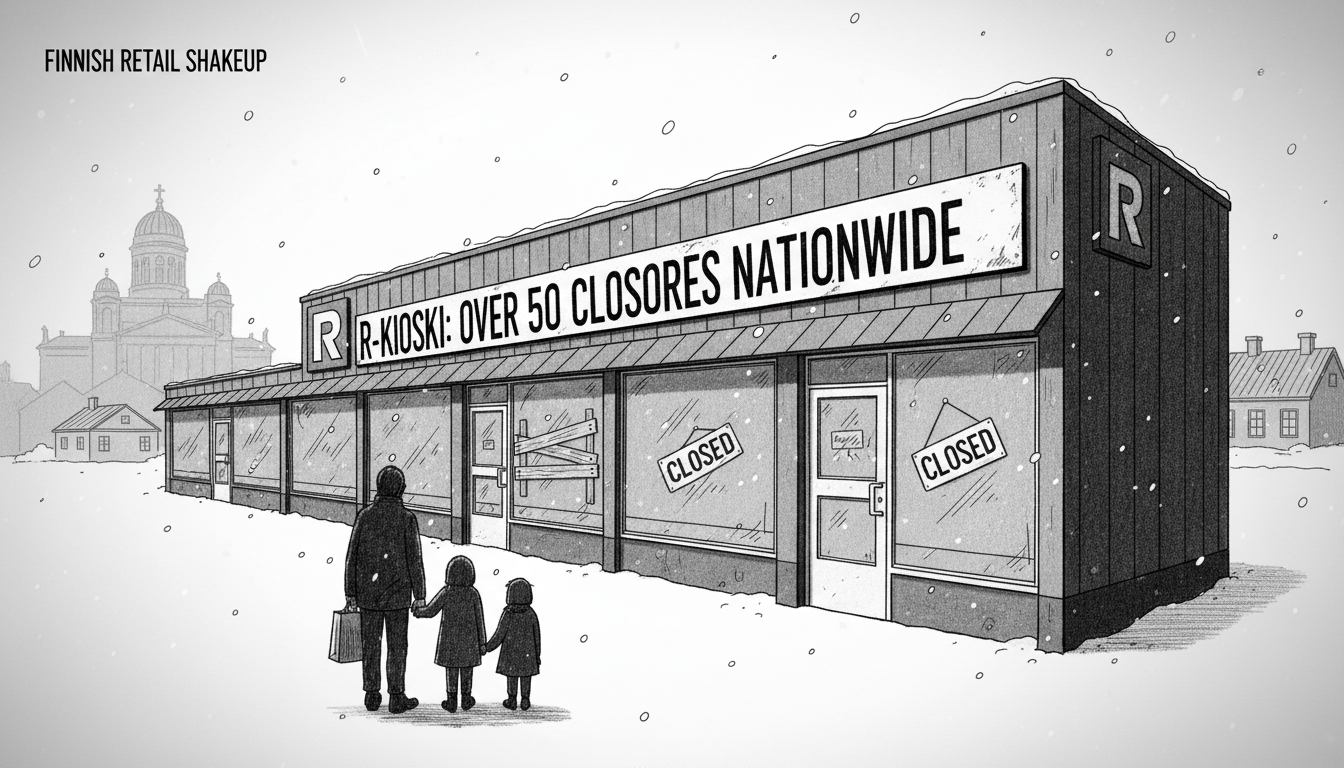
The Finnish convenience retail sector faces a substantial contraction as Reitan Convenience, operator of the R-kioski chain, confirms plans to shutter more than 50 outlets across the country. This strategic review of the network, driven by profitability assessments and evolving consumer demand, will see locations from Helsinki's Mannerheimintie to smaller municipalities like Kausala close their doors between early December and late August. The announcement signals a significant shift in Finland's retail landscape, impacting local access to services and employment in dozens of communities.
The closures are not isolated to any single region, with a detailed list published by the company showing a widespread geographic impact. In the capital region, prominent Helsinki locations including Kallio, Ruoholahti, and Vuosaari will cease operations, alongside sites in Espoo and Vantaa. Major urban centers like Tampere, Turku, Oulu, and Jyväskylä will also lose central kiosks, while the plan extends to towns such as Forssa, Hämeenlinna, and Iisalmi. The Kausala kioski, a focal point in the original report, is scheduled for closure on January 26.
This restructuring follows a years-long trend of rationalization within the R-kioski network, particularly in cities like Kouvola. Local reports indicate multiple closures there in recent years, including locations in Mansk, Myllykoski, and Kuusankoski. The company, which operates approximately 300 kiosks nationwide, stated it is continuously evaluating its network's performance and the demand for its services. The move reflects broader challenges in brick-and-mortar retail, including changing shopping habits and increased operational costs, pressures felt across the European Union's single market.
From a policy perspective, the wave of closures presents immediate questions for municipal governments and the national parliament, the Eduskunta, regarding local service provision and commercial vacancy rates. While the Finnish government has championed digital transition and innovation, the physical decline of neighborhood retail hubs poses a tangible social challenge. Ministers from the coalition government, including those from the National Coalition Party and the Finns Party, have previously emphasized market-driven solutions, but concentrated local job losses may prompt renewed debate about regional economic support mechanisms.
The implications extend beyond Finland's borders, touching on EU-wide discussions about the future of urban and rural commerce. The shift away from traditional retail formats aligns with broader digital single market trends, yet it also tests the EU's cohesion policies aimed at balanced regional development. For international observers and expatriates in Finland, this development is a concrete example of the rapid transformation occurring within the Nordic service economy, where even iconic chains must adapt aggressively to remain viable in a competitive and high-cost environment.