
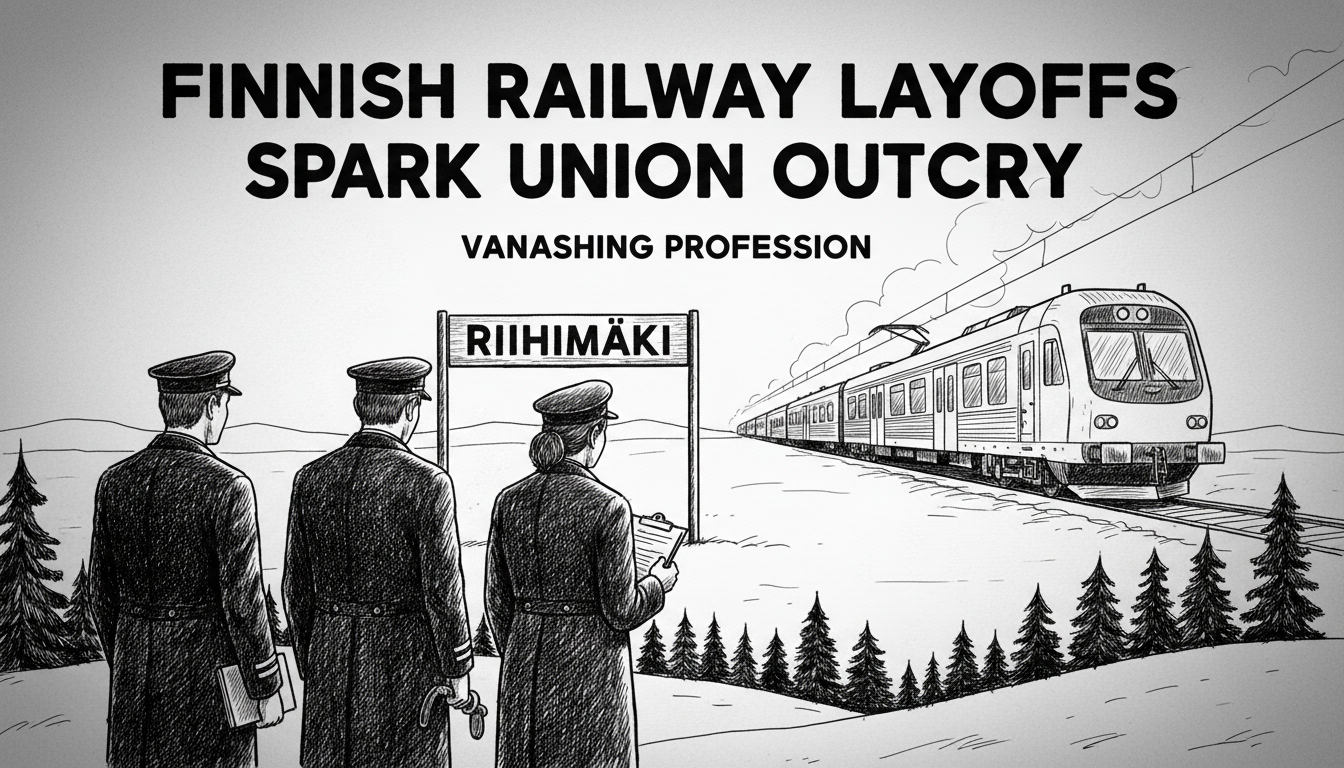
The state-owned railway operator VR has issued formal redundancy notices to dozens of local train conductors based in Riihimäki, a key railway town north of Helsinki. The move has ignited fierce criticism from the Trade Union for the Public and Welfare Sector (JHL), which represents the affected workers. A senior union negotiator described the situation as a cold business calculation that threatens an entire professional group with extinction. This development signals a major shift in Finland's public transport sector and raises questions about the future of rail jobs under state-owned enterprises.
VR, which holds a monopoly on passenger rail services in Finland, is restructuring its local transport operations. The layoffs at the Riihimäki depot are part of a broader efficiency drive. Union officials argue the company is prioritizing cost-cutting over service quality and worker retention. The conductors facing redundancy are specialists in Helsinki region commuter services, a network used by hundreds of thousands daily. Their removal suggests a move toward more automated ticketing and customer service systems, a trend seen across European railways.
This is not an isolated incident but part of a pattern in Finnish state-owned companies. Similar workforce reductions have occurred in other sectors like forestry and energy. The political dimension is clear, as VR's strategy must align with the government's ownership policy directives. The current center-right coalition has emphasized profitability and market principles in state enterprises. These layoffs test the balance between commercial efficiency and the social responsibility expected of a publicly owned service provider.
For international observers, the case highlights a tension common in Nordic economies. Finland maintains a strong tradition of social dialogue and worker protection. Yet global competition and digital transformation pressure even state monopolies to adapt. The JHL union will now enter negotiations with VR, with the potential for labor action if talks fail. The outcome will set a precedent for other transport workers and public sector employees across the country. The disappearance of the conductor role would mark the end of an era for Finnish railways, changing the fundamental character of train travel.
What happens in Riihimäki matters for all of Finland. The town's economy is deeply connected to the railway. These job losses could have ripple effects in the local community. Furthermore, the debate touches on core questions about the purpose of state ownership. Is VR's primary duty to taxpayers as shareholders seeking profit, or to citizens as passengers and workers seeking reliable service and good jobs? The government, as sole owner, will face increasing pressure to clarify its position as this conflict develops.