
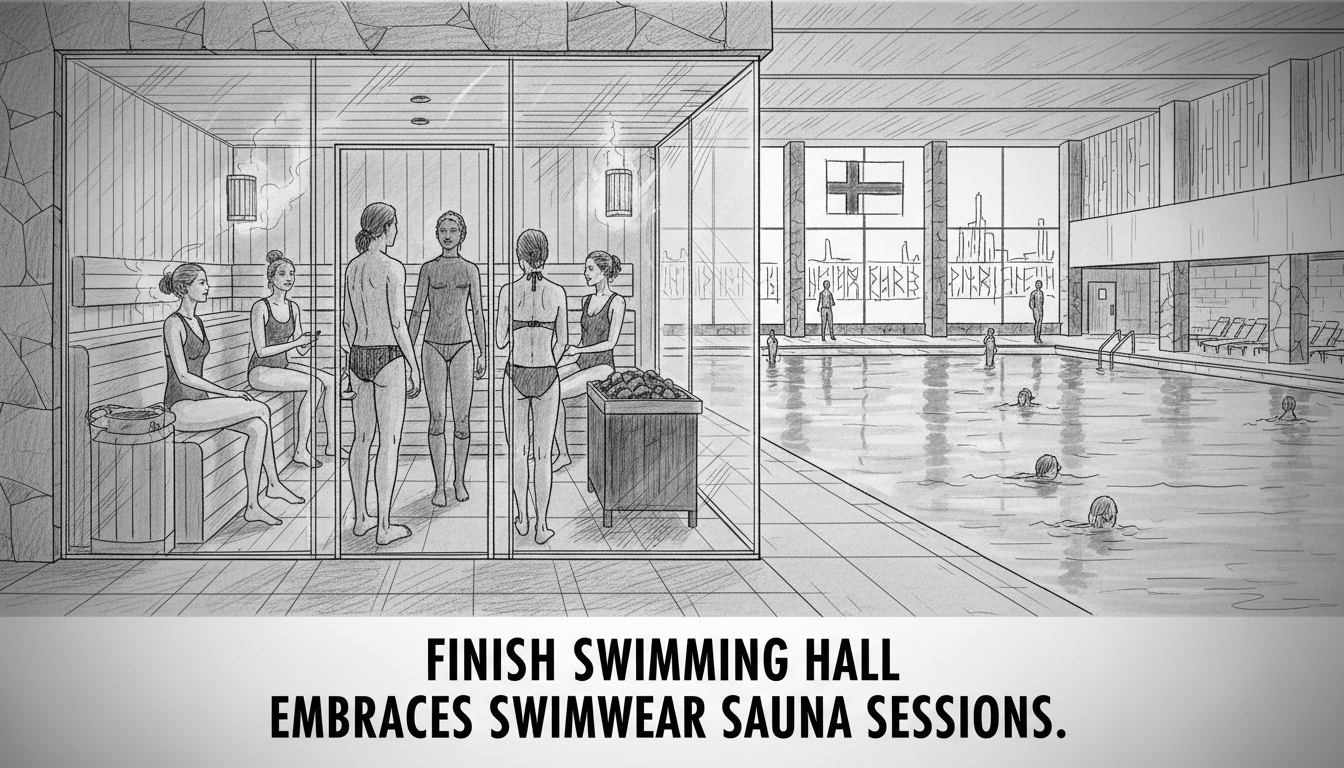
A Finnish swimming center has made a permanent change to its sauna policy after a successful trial period. The Neidonkeidas swimming hall in Lohja now allows visitors to use saunas while wearing swimwear. The decision aims to make the facility more accessible to people who feel uncomfortable with traditional nude sauna bathing.
Facility manager Jukka Vienonen explained that younger visitors in particular had expressed difficulties with nude bathing. The summer trial received positive feedback from multiple age groups. Vienonen noted that while some traditionalists initially voiced concerns, those complaints have since disappeared.
The policy shift reflects changing attitudes toward body image and public nudity in Finnish society. Finland has a deep-rooted sauna culture where nude bathing has been the norm for generations. This represents a significant departure from tradition in a country with approximately 3 million saunas for its 5.5 million residents.
Customer numbers have remained stable or even increased slightly since the policy change. Vienonen emphasized that the main achievement has been removing a barrier to swimming hall access. Most swimmers still prefer traditional nude sauna use, but younger visitors particularly appreciate the swimwear option.
Health authorities have clarified that wearing swimwear in saunas doesn't pose significant health risks. The national supervisory authority confirmed that swimwear doesn't release dangerous amounts of chlorine compounds when heated. The greater risk comes from improper cleaning if bathers enter pools without properly washing after sauna sessions.
The Lohja facility has maintained good water quality throughout the trial period. Staff regularly remind all visitors about proper hygiene practices regardless of their sauna attire choices. This balanced approach respects tradition while acknowledging modern comfort levels.
This policy change represents a broader trend in Finnish wellness facilities becoming more inclusive. Other municipalities are watching Lohja's experience closely as they consider similar updates to their own facilities. The successful implementation suggests other communities may follow suit in adapting traditional practices to contemporary needs.