
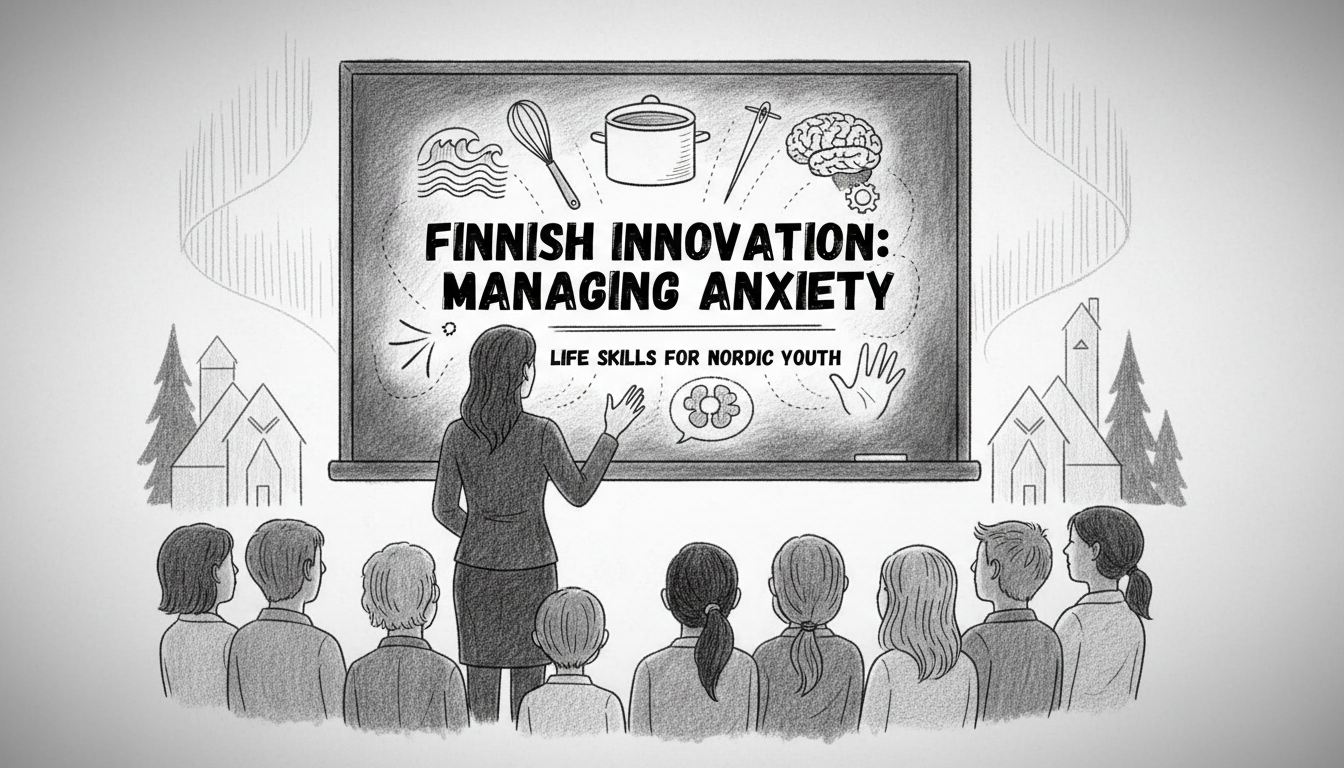
A teacher in Vantaa, Finland has developed an innovative school subject focused on helping students cope with anxiety and stress. Helena Hurme teaches the course at Korson koulu in Vantaa, where students learn practical life skills alongside emotional management techniques.
The Friday afternoon home economics class demonstrates the program's unique approach. Students gather around kitchen tables, discussing meal preparation using ingredients like pulled oats, ground meat, kale, peppers, onions, and carrots. This combination of practical cooking lessons with emotional support creates a holistic learning environment.
Finland faces growing mental health challenges among young people. Recent studies show anxiety rates increasing among teenagers across Nordic countries. The Finnish education system traditionally emphasizes academic achievement, but this new approach addresses student wellbeing directly.
Why does this matter for international readers? Finland consistently ranks high in global education assessments. Other countries often look to Finnish schools for innovative teaching methods. This anxiety management program could become a model for education systems worldwide.
Teachers report seeing positive changes in participating students. The course helps teenagers develop coping strategies for academic pressure and social challenges. Students learn to recognize anxiety symptoms and practice relaxation techniques.
The program operates within Finland's flexible curriculum framework. Schools can develop specialized courses that address local needs. This flexibility allows educators to respond quickly to emerging student issues.
What makes this approach distinct? It integrates mental health education with practical life skills. Students don't just learn about anxiety management—they practice it while cooking, cleaning, and working together. This hands-on method makes emotional learning more accessible and memorable.
Parents have noticed improvements in their children's ability to handle stress. The course provides tools that students use beyond classroom settings. These skills help young people navigate the complexities of modern adolescence.
Educational experts see potential for broader implementation. Similar programs might benefit students in other Nordic countries facing comparable mental health challenges. The approach aligns with growing recognition that student wellbeing supports academic success.
School administrators monitor the program's effectiveness through student feedback and teacher observations. Early results suggest reduced anxiety levels and improved classroom engagement. The course may expand to include more grade levels if current success continues.
This initiative represents a shift in educational priorities. Schools increasingly recognize their role in supporting student mental health. The Finnish model demonstrates how education systems can adapt to address contemporary youth challenges.
International educators watch these developments closely. As student anxiety becomes a global concern, Finland's proactive approach offers valuable insights. The program shows how schools can balance academic rigor with emotional support.