
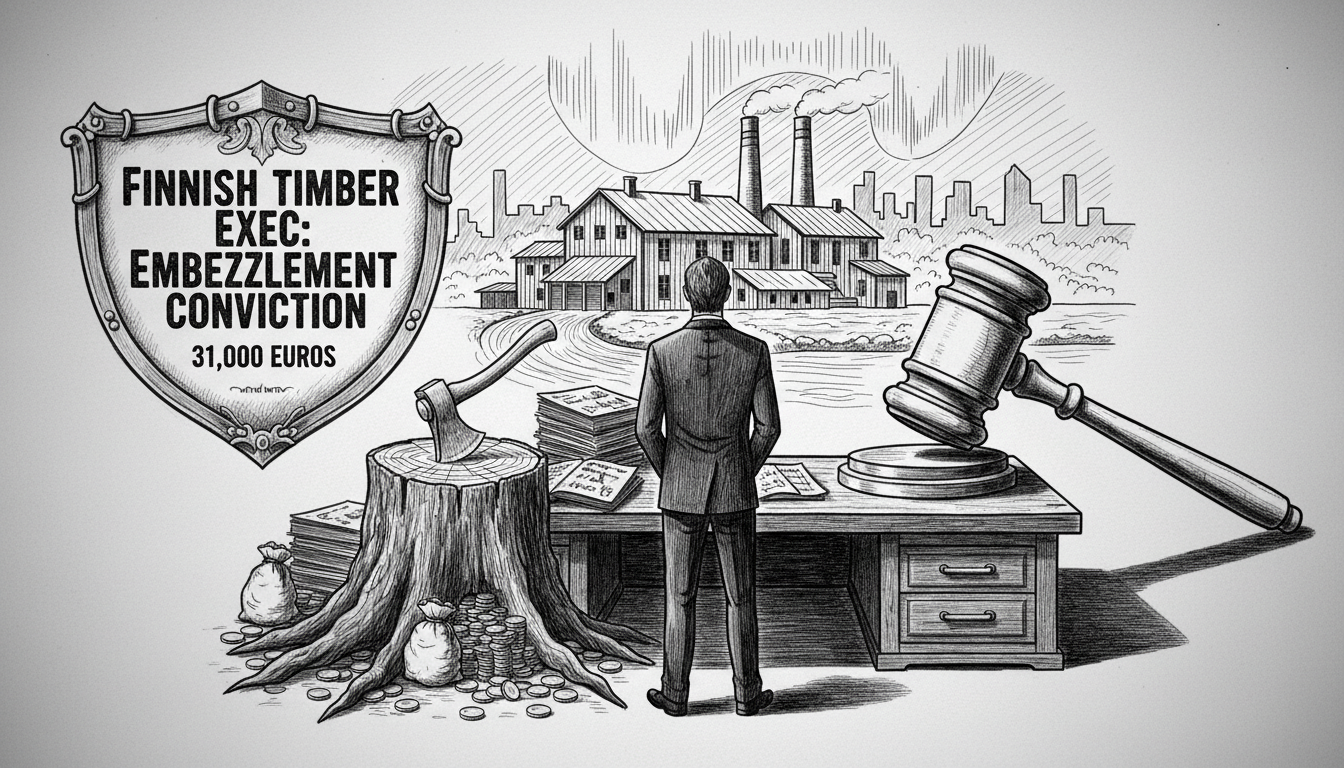
A board member of a Finnish timber wholesale company in Lappeenranta has received a suspended prison sentence for aggravated embezzlement. The sole board member transferred 31,000 euros from the company's accounts to his personal bank accounts over an 18-month period. The court found the actions constituted a serious breach of fiduciary duty.
This case highlights the strict corporate governance standards within Finland's forestry sector, a cornerstone of the national economy. The conviction demonstrates the effectiveness of Finnish legal mechanisms in addressing financial misconduct, even in smaller regional companies. Such prosecutions maintain investor confidence in a sector that contributes significantly to export revenues.
Finnish corporate law imposes high standards on board members, who bear direct legal responsibility for company assets. The Forestry Act and the Companies Act provide clear frameworks for financial management. This legal structure is designed to prevent the misuse of funds in an industry where supply chains involve substantial capital. The case proceeded through the District Court of South Karelia, a standard judicial path for economic crimes.
What broader implications does this have for Finland's business climate? It reinforces the principle that fiduciary duty is non-negotiable. The suspended sentence suggests the court considered mitigating factors, but the conviction itself carries a lasting mark. For international observers, it underscores Finland's low tolerance for corruption and its transparent judicial processes. This aligns with the country's consistent top rankings in global corruption perception indexes.
The timber and forestry industry operates under close scrutiny from both national authorities and EU regulations. Sustainable management and financial probity are intertwined. A breach in corporate governance can also raise questions about environmental compliance, though not alleged in this specific case. The case serves as a reminder to all Nordic businesses of the legal risks associated with financial mismanagement.
Looking forward, the company will need to restore governance structures. The conviction likely concludes the criminal case, but civil recovery of the funds may follow. This incident is a localized event, not indicative of systemic issues in Finnish forestry. It does, however, show the system works to correct individual failures. The message to executives across all sectors is clear: personal and company finances must remain strictly separate.