
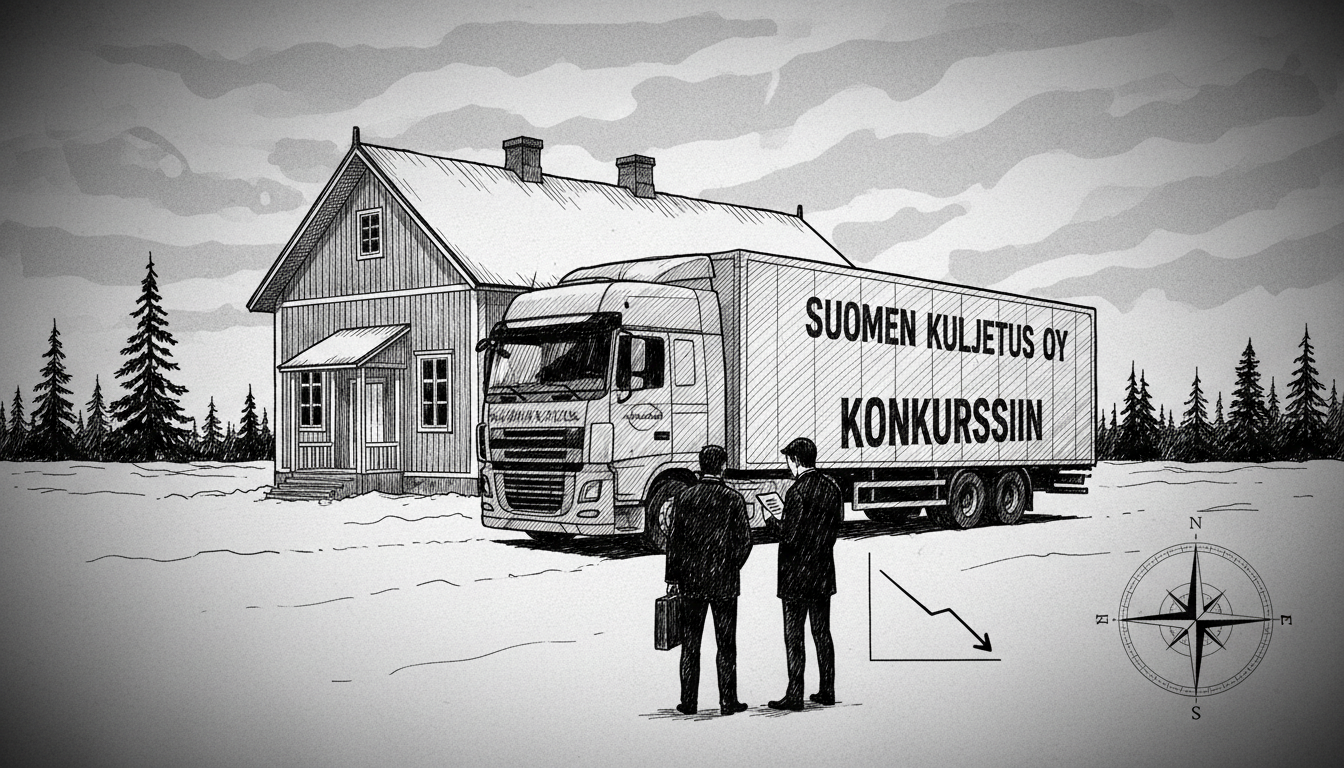
A district court in Central Finland has declared the transport company Karstulalainen Kuljetus V. Vesterinen Oy bankrupt. The Keski-Suomen District Court issued the ruling on Wednesday, citing the company's insolvency as the primary reason. The bankruptcy petition came from the mutual pension insurance company Varma, which holds receivables of just over 12,000 euros from the transport firm. These unpaid insurance premiums have been overdue since last December.
The case highlights the persistent pressures on small and medium-sized logistics enterprises across Finland. These companies often operate on thin margins and face intense competition, rising fuel costs, and complex regulatory demands. A single major client loss or a delay in payments can quickly push a small operator into financial distress. This bankruptcy is not an isolated incident but part of a broader trend affecting the regional transport sector.
Finland's bankruptcy process is a formal legal procedure administered by district courts. When a company is declared bankrupt, a trustee is appointed to liquidate its assets and distribute the proceeds to creditors in a legally defined order of priority. Secured creditors, like banks with collateral, are typically paid first, followed by priority claims such as employee wages and taxes. Unsecured creditors, which often include suppliers and service providers like Varma, receive payment from any remaining funds.
For international readers, it is important to understand the role of mutual pension insurance companies like Varma in the Finnish system. They are major institutional investors and providers of statutory earnings-related pension insurance. When a company fails to pay its mandatory pension contributions, it is a serious matter, as these funds are crucial for the national pension scheme. The pursuit of bankruptcy by a pension insurer indicates that other, less formal collection methods have likely been exhausted.
What does this mean for the Finnish economy and the region of Central Finland? The loss of any local business impacts employment and the local economic ecosystem. The transport sector is a backbone of industry, enabling other businesses to function. While one bankruptcy is a small event in national terms, a cluster of them can signal deeper regional economic challenges. Observers will be watching to see if other logistics firms in the area face similar pressures, particularly as energy costs remain volatile and consumer demand fluctuates.
The immediate next steps involve the court-appointed trustee taking control of the company's remaining assets, which may include vehicles, equipment, and any accounts receivable. The trustee will then attempt to sell these assets to generate cash for creditors. Employees of the firm will need to seek new employment and may have claims for unpaid wages through a wage security fund, a standard Finnish safety net. This process underscores the structured yet challenging reality of business failure within Finland's robust social and legal framework.