
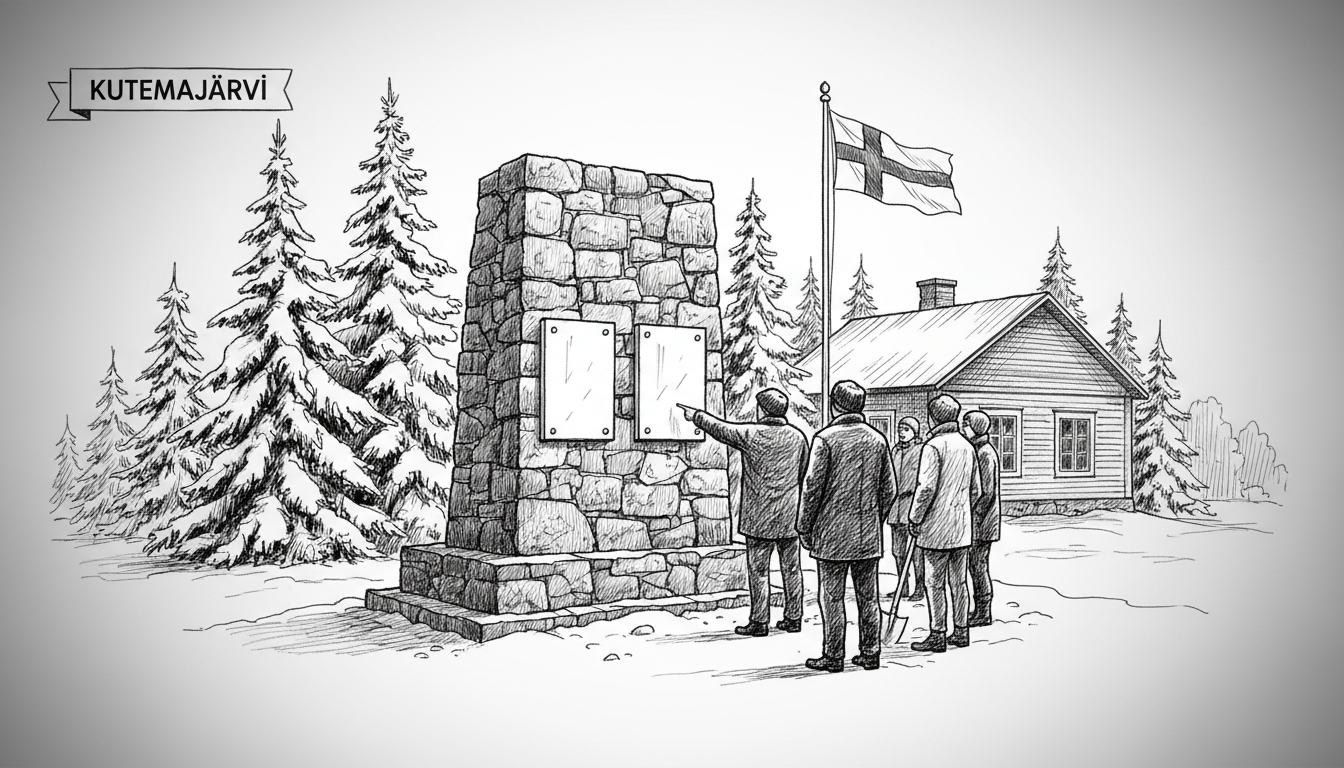
A small village in the Kangasniemi municipality is taking local initiative to honor its war dead after the closure of rural schools left commemorative plaques without a home. Residents of the Kutemajärvi village decided to construct a new memorial for their community's fallen soldiers from the last wars, proceeding with the project despite a lack of dedicated public funding. The effort highlights a grassroots response to changing rural demographics and the centralization of public services across Finland.
The project began after the Korhola school in Kutemajärvi closed its doors. That school housed two memorial plaques installed by the local village association in the 1980s. Similar plaques existed in small village schools throughout Kangasniemi, serving as focal points for remembrance. As these schools were shuttered in consolidation efforts, the physical artifacts of local memory faced an uncertain future. In Kutemajärvi, the idea to give the plaques a dignified new setting took root among villagers a few years ago.
This local act of remembrance occurs against a backdrop of national conversation about Finland's wartime history and its preservation. The last wars, referring to the Winter War and Continuation War against the Soviet Union, remain foundational to modern Finnish identity. Commemoration is often a shared duty between the state, represented by institutions like the Ministry of Education and Culture, and civil society. The Kangasniemi case shows civil society taking the lead when institutional pathways are slow or unavailable.
From a policy perspective, the situation touches on several areas of Finnish governance. The closure of rural schools is a result of municipal mergers and cost-saving measures, a trend debated frequently in the Eduskunta. Funding for cultural heritage and memorials often competes with other budgetary priorities at both municipal and national levels. While the government allocates resources for maintaining national war graves and major monuments, smaller local projects typically rely on municipal grants or private fundraising.
The village's decision to proceed without secured funding is a direct, pragmatic response. It reflects a common Finnish characteristic of 'sisu' – a form of determined perseverance. The villagers essentially concluded that the honor due to their community's fallen was not contingent on a budget line item. They are creating a tangible link to history in a landscape where the traditional anchors of community life, like the local school, have disappeared. This story is less about a single memorial and more about how communities actively maintain their historical narrative in a changing society.
For international observers, this offers a window into Finland's deep-seated culture of remembrance and the practical challenges of sustaining it in sparsely populated areas. It demonstrates how historical memory is managed not just in Helsinki's government district but in every municipality. The project also raises questions about the long-term sustainability of such community-driven heritage preservation as the population ages and villages shrink. The Kutemajärvi memorial, once completed, will stand as a testament to local agency and the enduring importance of place-based history in Finnish national consciousness.