
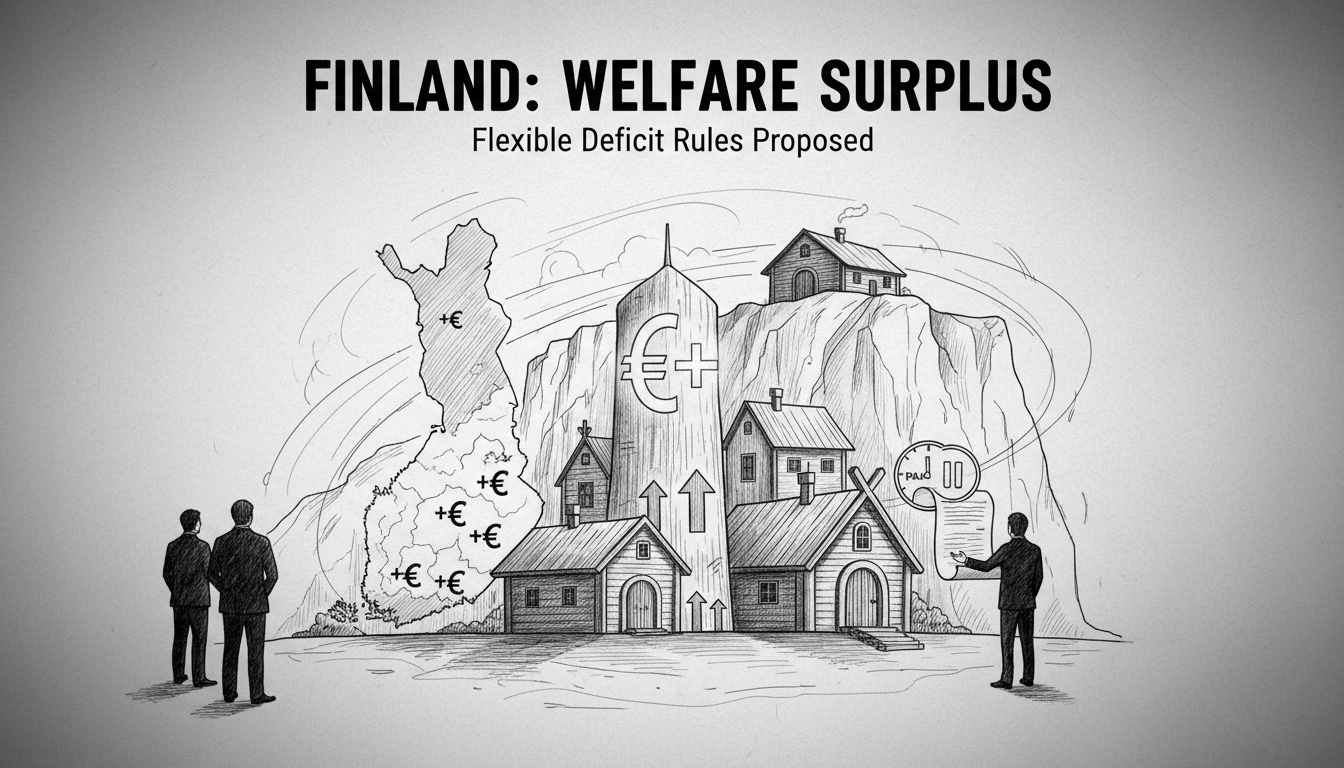
More than half of Finland's 21 welfare regions are projected to achieve a budgetary surplus for the current fiscal year according to fresh forecasts compiled by the Ministry of Finance. The data indicates that 12 welfare regions plus the city of Helsinki are expected to finish the year in the black. This marks a notable improvement in the financial health of the decentralized social and healthcare system which began operations just two years ago. The regions of Helsinki, Pirkanmaa, and Länsi-Uusimaa are leading the pack with the strongest positive balances. Several other regions including Varsinais-Suomi, Pohjois-Pohjanmaa, and Satakunta are also forecast to reach surplus territory. This positive trend emerges amidst ongoing national debates about the sustainability and funding of the welfare region model which replaced the old municipal system in a major structural reform.
The government in Helsinki has responded to these improving forecasts with a planned legislative amendment. The proposal would remove the strict requirement that a welfare region must be completely deficit-free this year to qualify for an extension to balance its books. Instead regions that post a surplus for the current year but carry forward older deficits will be allowed to apply for extra time. Minister of Local and Regional Government Anna-Kaisa Ikonen of the National Coalition Party confirmed the policy shift. She stated that extra time would be granted to regions in need that can present a realistic council-approved plan to cover their deficit by 2027 or 2028. This represents a pragmatic softening of the original fiscal rules acknowledging the varied starting points and economic challenges across different parts of Finland.
Government Counsellor Kirsi Ruuhonen from the Ministry of Finance noted that the number of regions with an improving economic situation has grown. The ministry's forecasts are based on the regions' own estimates but are subject to change. The legislative proposal is scheduled to be submitted to the Finnish Parliament the Eduskunta in December. If passed by lawmakers the applications for extensions would be considered in the spring of 2026 with final decisions made in the summer based on confirmed financial statements. Ruuhonen emphasized that any decision would involve a comprehensive case-by-case assessment of each region's overall economic situation and prospects. This tailored approach suggests a move away from blanket rules toward more nuanced fiscal management.
Despite the overall positive forecast significant challenges remain for several regions. Päijät-Häme, Etelä-Karjala, Lappi, and Keski-Suomi are among those still projected to be in deficit this year. For three regions in particular Itä-Uusimaa, Keski-Suomi, and Lapland the Ministry of Finance has already initiated a special assessment procedure. This process restricts the region's decision-making autonomy allowing the state to guide financial decisions more tightly. The move underscores the central government's role as a backstop and supervisor ensuring no region falls into a financial crisis that could threaten essential services. The divergent paths of the regions highlight Finland's regional economic disparities with urban and western areas generally faring better than some eastern and northern territories.
This development carries implications for Finland's relationship with European Union fiscal governance. While the welfare regions are sub-national entities their collective financial health impacts Finland's overall public expenditure. A stable and predictable social care system is also a cornerstone of the Nordic welfare model which Finland consistently promotes in EU social policy discussions. The government's flexible approach balancing fiscal responsibility with realistic timelines reflects a characteristically Finnish pragmatism. It aims to ensure the long-term viability of the reform without forcing abrupt and potentially damaging cuts to healthcare and social services in struggling regions. The coming parliamentary debate will test the coalition government's ability to maintain unity on this complex issue which touches on regional equality and the core function of the welfare state.