
Finland's regional governance model has taken a notable step toward greater youth inclusion with the formal appointment of Milja Kotilainen to the Central Finland Wellbeing Services County's youth council. Kotilainen, representing the municipality of Kannonkoski, began her term this autumn after being nominated by local school youth worker Tarja Alainen. The nomination process utilized the common Finnish school communication platform Wilma, highlighting the practical integration of digital tools in civic engagement. Kotilainen described her motivation in straightforward terms, stating the role seemed like a positive opportunity to engage with her community and participate in various tasks and events. Her primary objective is clear: to ensure young people's perspectives are heard in the decision-making processes that directly affect their services and communities.
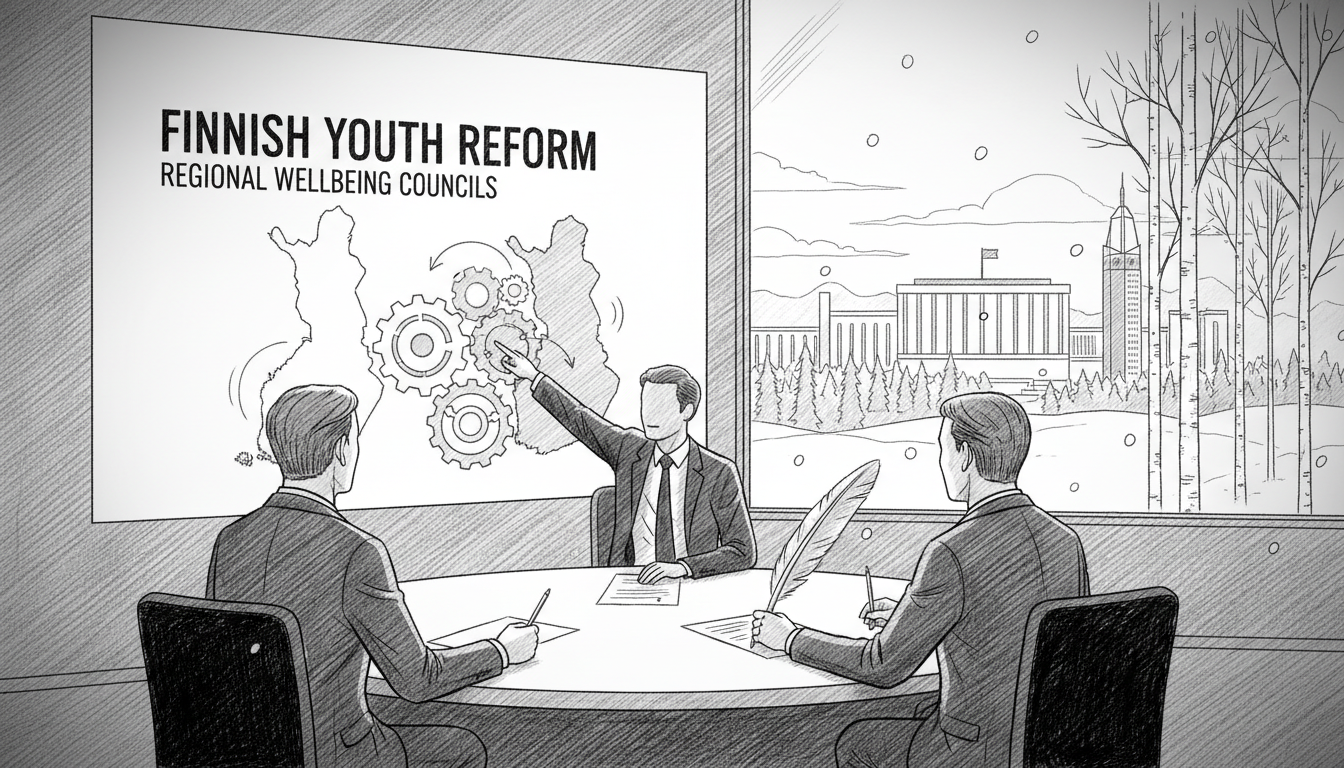
This development is not an isolated event but a structured component of Finland's sweeping social and healthcare reform, known as SOTE. The reform, which transferred responsibility for these services from municipalities to 21 larger wellbeing services counties, mandated the establishment of youth councils within each new regional authority. The councils serve as formal advisory bodies, granting young residents aged 13 to 23 a direct channel to influence policies on education, mental health support, leisure activities, and other local services. The move institutionalizes youth participation, moving beyond symbolic consultation to embedded governance structures.
From a political perspective, the initiative reflects a cross-party consensus in the Finnish Parliament, the Eduskunta, on the importance of preventative social policy and long-term civic engagement. Investing in youth platforms is seen as a strategy to bolster democratic resilience and address societal challenges early. For international observers, Finland's approach offers a concrete example of multi-level governance, where national legislation creates frameworks for regional implementation with local participation. The model deliberately connects hyper-local representation, like Kotilainen's from Kannonkoski, to county-wide policy discussions in Jyväskylä, the administrative center of Central Finland.
Analysts note the practical challenges ahead. The real test for these youth councils will be their tangible impact on budgetary decisions and service design within the wellbeing counties. Success depends on whether adult policymakers genuinely incorporate the councils' feedback or treat them as a procedural checkbox. Furthermore, the system must actively reach beyond the typically engaged youth to include diverse voices from different socioeconomic backgrounds. The Finnish government, based in Helsinki's district of Kruununhaka, will likely monitor these regional experiments closely, as effective local models can inform national youth policy and even influence discussions on citizen participation within the European Union's cohesion policy framework.
The story of Milja Kotilainen's appointment, while specific, underscores a broader Nordic commitment to structured participatory democracy. It demonstrates a policy-first approach where systemic change is designed to create lasting channels for influence, rather than relying on temporary initiatives. For expats and international professionals in Finland, it signals a governance culture that methodically seeks to integrate resident feedback, even from its youngest citizens, into the complex machinery of the welfare state.