
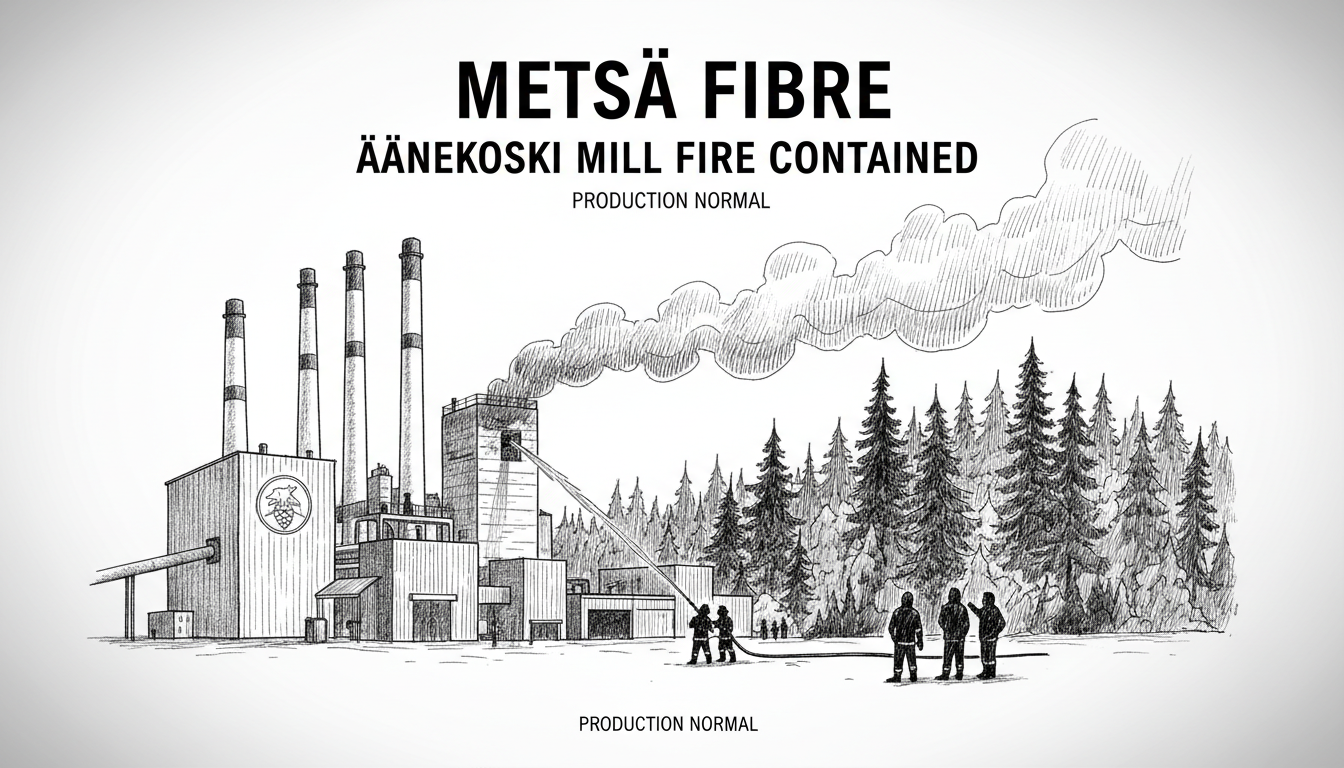
A fire broke out at the Metsä Fibre bioproduct mill in Äänekoski, Central Finland, on Wednesday afternoon. The Central Finland Rescue Department reported the situation was under control by the evening, with the fire contained to a single piece of equipment. The alarm came in around six in the evening, classified as a medium-sized building fire. Rescue units remained on site to monitor the situation.
Mill Director Janne Rantanen said the fire started in the bark dryer of the bioproduct plant. Employees initiated first-response firefighting and alerted the rescue services immediately. The quick actions by the mill's own personnel were crucial in preventing the fire from spreading. No injuries occurred, and the incident has not affected the mill's overall production. The dryer is out of operation, but the rest of the plant continues to function normally.
This incident highlights the robust safety protocols within Finland's critical forest industry sector. Metsä Fibre's Äänekoski mill is a flagship facility, representing a major investment in the Finnish bioeconomy. It is one of the largest wood product mills in the Northern Hemisphere. Industrial fires, while rare, pose a serious risk to local communities and national export revenue. The forest industry accounts for a substantial portion of Finland's exports, making the security of its infrastructure a matter of national economic interest.
The successful containment of this fire demonstrates the effectiveness of mandatory safety drills and on-site emergency preparedness plans required by Finnish and EU workplace safety directives. Finnish industrial safety regulations are among the strictest in Europe, often going beyond baseline EU requirements. These rules mandate regular equipment inspections, employee training, and coordinated response plans with municipal rescue services. The seamless transition from employee-led response to professional firefighting is a textbook example of this system working as intended.
For the local economy in Central Finland, the mill's uninterrupted operation is vital. It provides hundreds of direct jobs and supports thousands more in the supply chain. Any prolonged shutdown would have immediate ripple effects. The fact that production continues is a relief for the region. The incident will likely trigger a standard investigation by the rescue department and the mill's own safety team to determine the exact cause and prevent recurrence. This is standard procedure after any industrial fire, no matter how small.
Looking forward, the mill will need to assess the damage to the dryer and plan for repairs or replacement. This may involve temporary adjustments to production lines. The company's swift and transparent communication following the event is typical of major Finnish corporations, which prioritize stakeholder confidence. For international investors and clients, such events test the resilience of supply chains. The minimal disruption reported here reinforces the sector's reputation for reliability, a key factor for Finland's trade-dependent economy.