
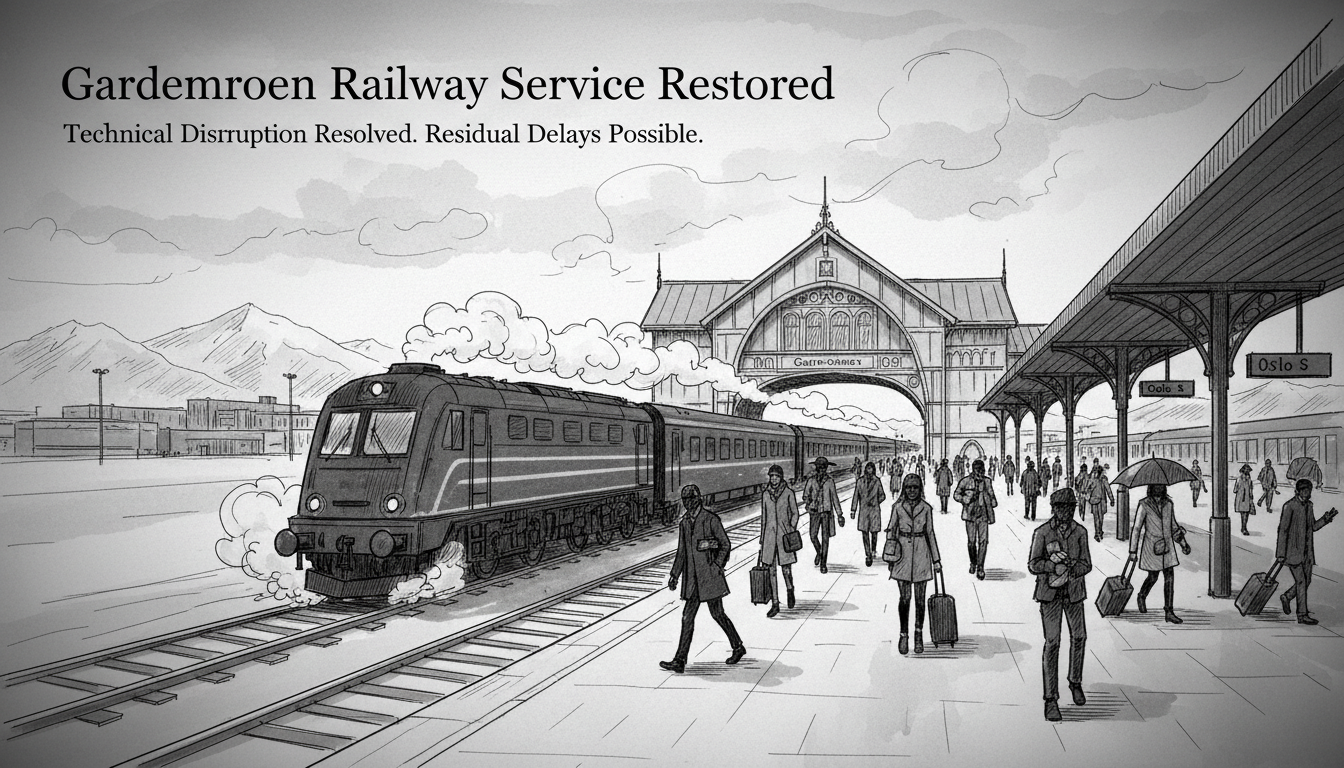
Rail operator Bane Nor has confirmed full restoration of service on the Gardermoen Line following technical repairs. The critical airport connection now operates normally, though some residual delays may affect commuters and international travelers. This railway serves Oslo's main international gateway and Norway's busiest air travel hub.
The disruption temporarily impacted Norway's transportation network during peak travel season. The Gardermoen Line carries approximately 15,000 daily passengers between Oslo Central Station and Oslo Airport. These travelers include business commuters, international tourists, and government officials traveling to important meetings.
Norway's railway infrastructure faces particular challenges during winter months. The country's mountainous terrain and harsh climate conditions require specialized maintenance approaches. Bane Nor manages over 4,000 kilometers of track across the Norwegian landscape, from southern coastal regions to Arctic territories.
Transportation reliability remains crucial for Norway's economic activity and international connectivity. The Gardermoen Line specifically supports Norway's oil and gas sector by transporting energy executives to important meetings in the capital. Many industry professionals use this route when traveling between government offices in Oslo and operational sites across the country.
Norwegian authorities continue investing in rail infrastructure modernization. The Parliament recently approved substantial funding for railway improvements nationwide. These investments reflect Norway's commitment to sustainable transportation solutions despite the country's challenging geography.
Rail transport plays a vital role in Norway's climate policy objectives. The government promotes train travel as an environmentally friendly alternative to short-haul flights and road transportation. This aligns with broader European Union transportation initiatives, though Norway maintains its independent approach to infrastructure development.
International visitors should note that Norwegian railways generally maintain high punctuality standards. Temporary disruptions like this recent incident remain relatively uncommon in Scandinavia's well-regarded transportation networks. Travelers can check real-time updates through official railway applications and station displays.
The swift resolution demonstrates Norway's technical capabilities in addressing infrastructure challenges. The country's engineers and maintenance crews work efficiently to minimize service interruptions across all transportation modes, from railways to maritime routes and Arctic logistics corridors.