
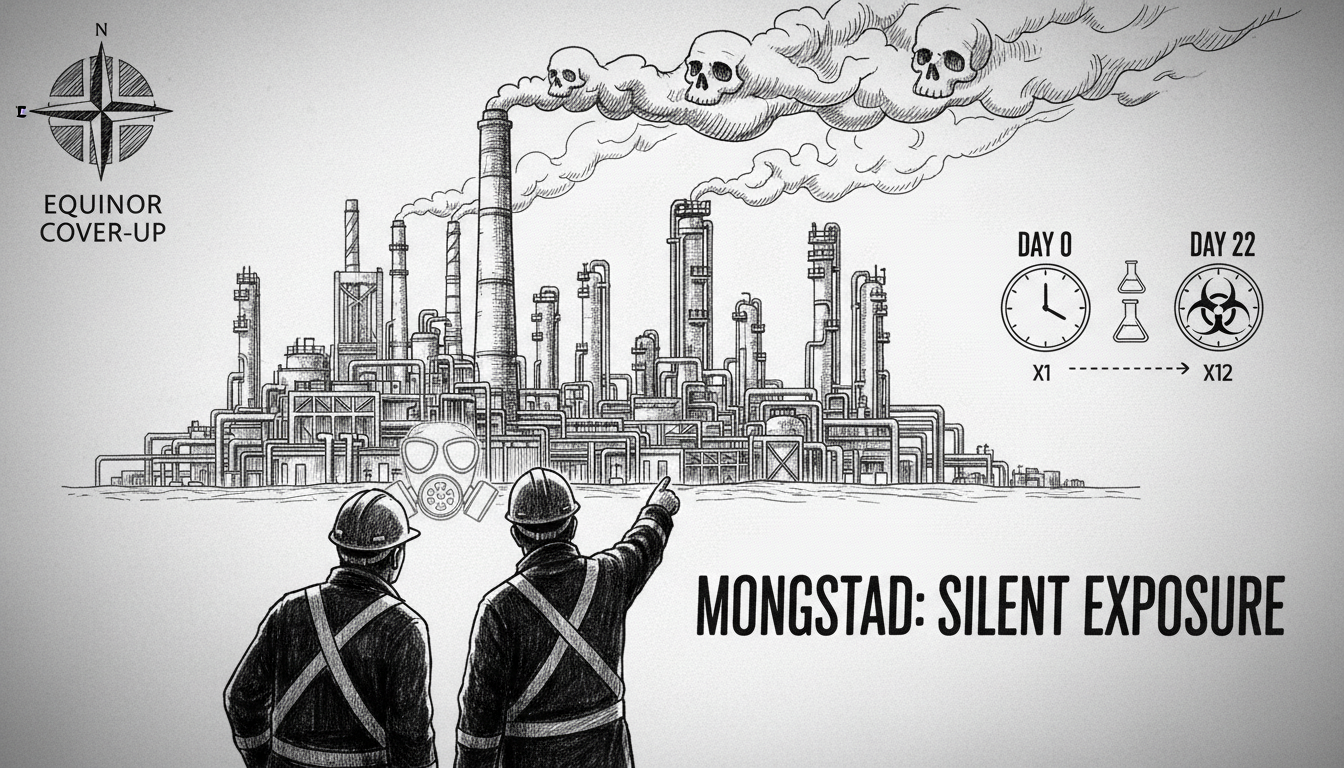
A serious gas exposure incident at the Mongstad oil refinery in Norway has prompted a major internal investigation. Two workers were exposed to high levels of toxic fumes while performing a calibration task in late October. The event has raised significant questions about safety protocols and communication at Norway's only oil refinery, operated by the state-owned energy company Equinor.
The workers were carrying open 10-liter buckets containing naphtha, a volatile petroleum product. Naphtha easily vaporizes into gas and contains benzene, a known carcinogen. The workers performed this task for five hours. Initial reports to authorities stated gas concentrations measured 60 parts per million (ppm). However, a follow-up email from Equinor revealed the actual measurement at the start of work was 756.8 ppm, over twelve times higher than first reported.
The concentration was so high it caused the gas monitor to fail shortly after. The monitor's manual indicates it fails at concentrations of 5,000 ppm, suggesting the true exposure could have been even greater. A company spokesperson stated the information is based on what was reported at the time and will be part of an ongoing investigation. Equinor acknowledged its routines appear to have failed but declined to specify what exactly went wrong.
Benzene exposure is the core concern. Even a conservative estimate of 1% benzene in the gas mix means the workers were exposed to dozens of times more benzene than Equinor's internal safety limit. If concentrations exceeded the monitor's failure point, exposure could have been hundreds of times over the limit. The workers wore masks that filter surrounding air, but Equinor told authorities there was uncertainty about the correct protective equipment for this specific task.
Regulatory authorities are treating the matter as very serious. Equinor has escalated the investigation from a local review to a corporate-level inquiry. The company took 22 days to notify authorities after the incident occurred. Documents show Equinor had not conducted prior measurements to determine typical benzene levels for this type of work, a point heavily criticized by union safety experts.
A veteran occupational hygienist with the Safe union has long criticized Equinor for not doing enough to protect workers from benzene. He argues this incident is another example of the company failing to answer basic safety questions. Equinor responds that it has worked extensively to map benzene sources at Mongstad and reduce exposure, claiming this work has lowered risks. The company notes benzene is naturally present in oil and gas and cannot be completely eliminated.
This incident occurs against a backdrop of similar reports concerning worker gas exposure at other Equinor facilities in Norway. It highlights the persistent challenge of managing inherent hazards in the hydrocarbon industry. The corporate-level investigation will now determine the root causes of the procedural failures and what systemic changes are required to prevent recurrence. The health monitoring of the exposed workers will be critical, as benzene damages DNA and increases cancer risk, though not every exposure leads to disease. The case underscores the tension between industrial productivity and absolute worker safety in complex, high-risk environments.