
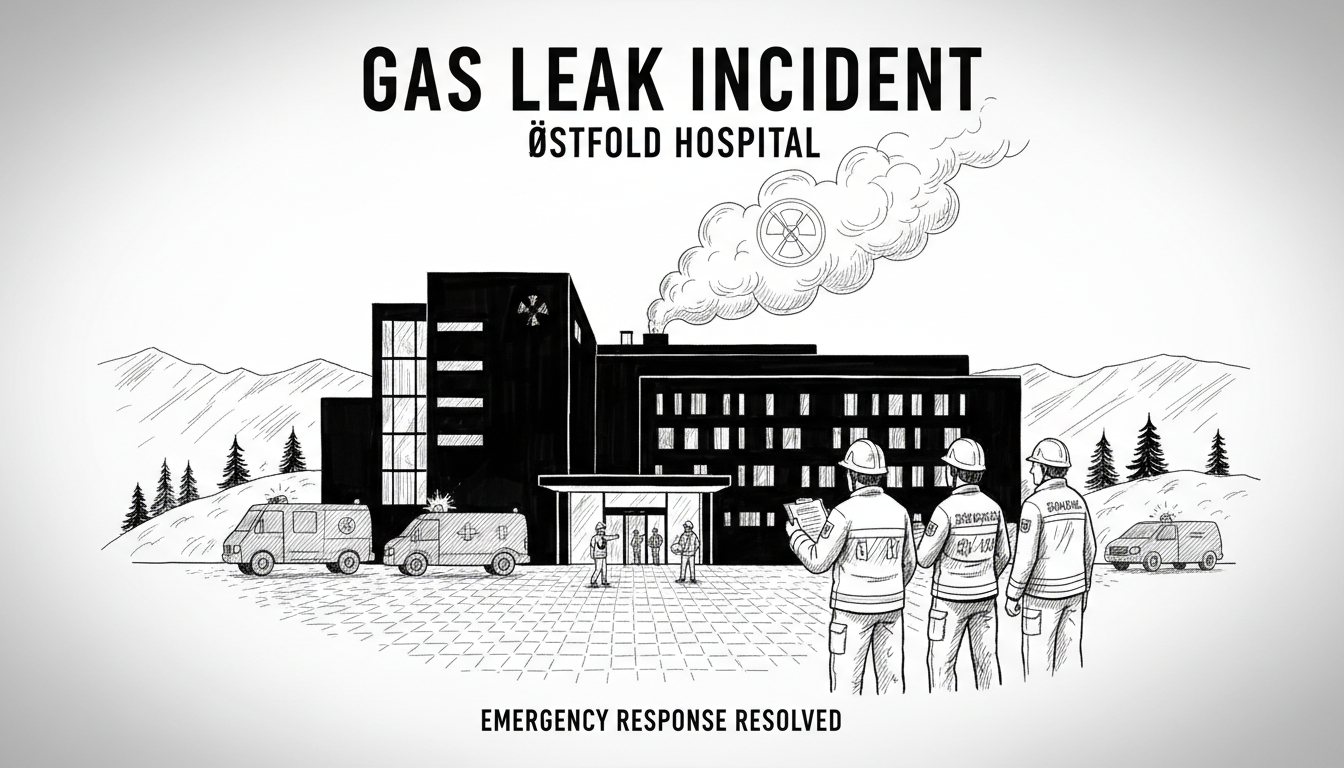
Emergency services responded to a reported gas leak at Østfold Hospital Kalnes. The incident caused a temporary disruption to operations in one building. Authorities confirmed the gas was not harmful to health or flammable. The situation was resolved within hours, with normal hospital operations resuming.
Initial reports described a propane smell detected on the third floor of the hospital. The hospital's own assessment suggested the gas originated from outside the building. It then seeped into Building 8, requiring ventilation. Hospital officials limited activity in that specific area as a precaution.
Operations Manager Melissa Krag stated the cause of the reported odor was not found. She confirmed the hospital returned to normal readiness and standard operations. The police reported the smell had dissipated by late morning. Emergency services then concluded their on-site presence.
Fredrik Friberg Femtehjell, the hospital's preparedness chief, addressed safety concerns directly. He said it was not dangerous to be in the building. He also expected the gas smell to be cleared within a reasonable timeframe. The hospital activated its yellow alert level, indicating a heightened state of readiness.
The fire department worked to locate the source of the leak. Their search did not immediately identify the origin. This type of rapid, multi-agency response is standard in Norwegian emergency protocols. It highlights the integrated safety systems common across Scandinavian public institutions.
This incident underscores the critical infrastructure challenges facing modern hospitals. They must balance continuous patient care with immediate safety responses. While the event ended without injury, it reveals the vulnerability of large facilities. Proactive maintenance and sensor-based monitoring are becoming priorities for Nordic tech startups focused on smart infrastructure.
Oslo innovation news often highlights technology developed for such public safety applications. The Norwegian digital transformation in the healthcare sector includes IoT sensors for air quality. Scandinavian tech hubs are actively developing solutions for facility management. This aligns with broader Nordic technology trends emphasizing preventative safety and operational resilience.
The efficient resolution of this incident reflects Norway's strong emergency coordination. It also points to a potential market for tech that provides faster leak detection. For international observers, it shows how Nordic societies prioritize transparent communication during public incidents. The direct statements from officials aimed to prevent public alarm while acknowledging the ongoing investigation.