
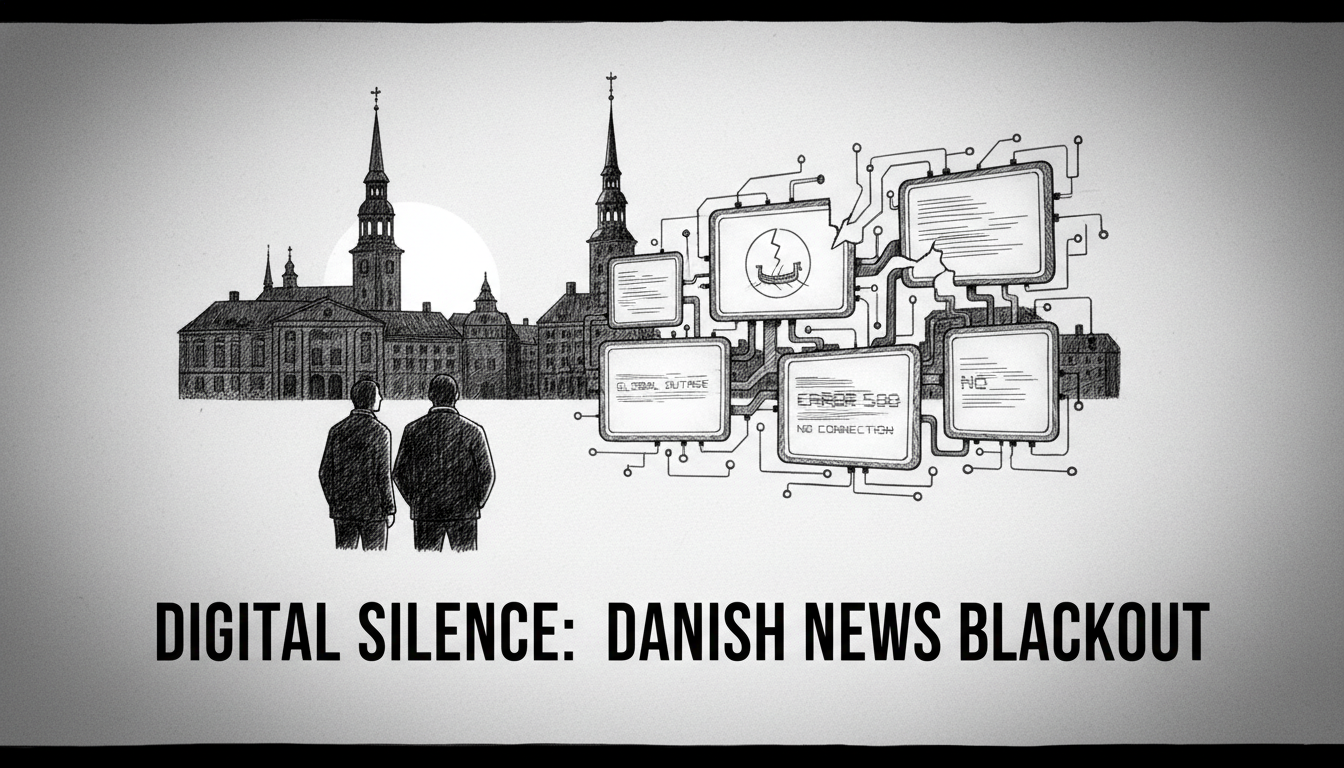
A widespread technical failure at a major global internet infrastructure provider caused significant disruptions for several prominent Danish media outlets on Friday morning. Websites for major newspapers and their affiliated platforms became inaccessible or unstable for users across Denmark. The incident highlights the fragile digital dependencies within modern media ecosystems and raises questions about resilience in an increasingly centralized online world.
The problem originated with Cloudflare, a company that manages nearly one-fifth of all global web traffic. The firm acknowledged the issue on its public status page, noting it began investigating just after 10:00 AM local time. Initial attempts to implement a fix followed minutes later, but the outage had already impacted service. This event serves as a stark reminder of how centralized critical internet infrastructure has become, where a single point of failure can ripple across continents and industries.
For Danish society, the immediate effect was a disruption in the flow of news and information. Readers attempting to access digital editions of leading newspapers were met with error messages. This outage occurred during morning hours, a peak time for news consumption as people check updates before starting their day. The timing amplified the impact, cutting off a primary channel for public discourse and civic engagement. In a country with high digital literacy and reliance on online news, such interruptions are more than mere inconveniences.
The integration of technology into daily Danish life is nearly total, making system-wide failures particularly disruptive. Denmark's social policy often emphasizes digital solutions for public services and citizen engagement. This incident, while technical, touches on broader themes of accessibility and reliability within the Danish welfare system's digital framework. When core information channels fail, it tests the robustness of the digital public square that Danish integration and social policies increasingly depend upon.
Community leaders and digital rights advocates have long warned about over-reliance on a small number of global tech giants for essential services. A spokesperson for a digital advocacy group in Copenhagen noted that this event should prompt a conversation about digital sovereignty and backup systems. Municipalities and social centers, which often direct residents to online news for official announcements and community updates, also felt the indirect impact of the blackout.
What does this mean for the average person in Denmark? It underscores a vulnerability. News organizations, like many other sectors, outsource critical infrastructure to achieve scale and security. Yet, this model can concentrate risk. The Danish media landscape is known for its diversity and high quality, but its digital distribution channels are subject to global forces beyond its control. This outage did not involve a cyberattack, but it exposed a similar weakness in continuity planning.
Looking ahead, media analysts suggest news organizations may need to invest in more diversified technical architectures. This could mean redundant systems with different providers or clearer contingency plans for rapid communication during outages, perhaps using social media or public broadcasting alerts. The event is a case study in modern risk management. For a society that values transparency and information access, ensuring the resilience of news distribution is not just a technical issue, but a foundational one for an informed democracy.
The broader implication for Denmark's immigration policy and integration efforts is subtle but real. Newcomers to Denmark often rely heavily on digital news to understand local events, learn the language, and follow societal debates. An outage that silences major news outlets can inadvertently isolate those who depend on these platforms for connection and context. It is a reminder that digital inclusion is a multifaceted challenge, requiring not just access, but consistent and reliable access to credible information sources.