
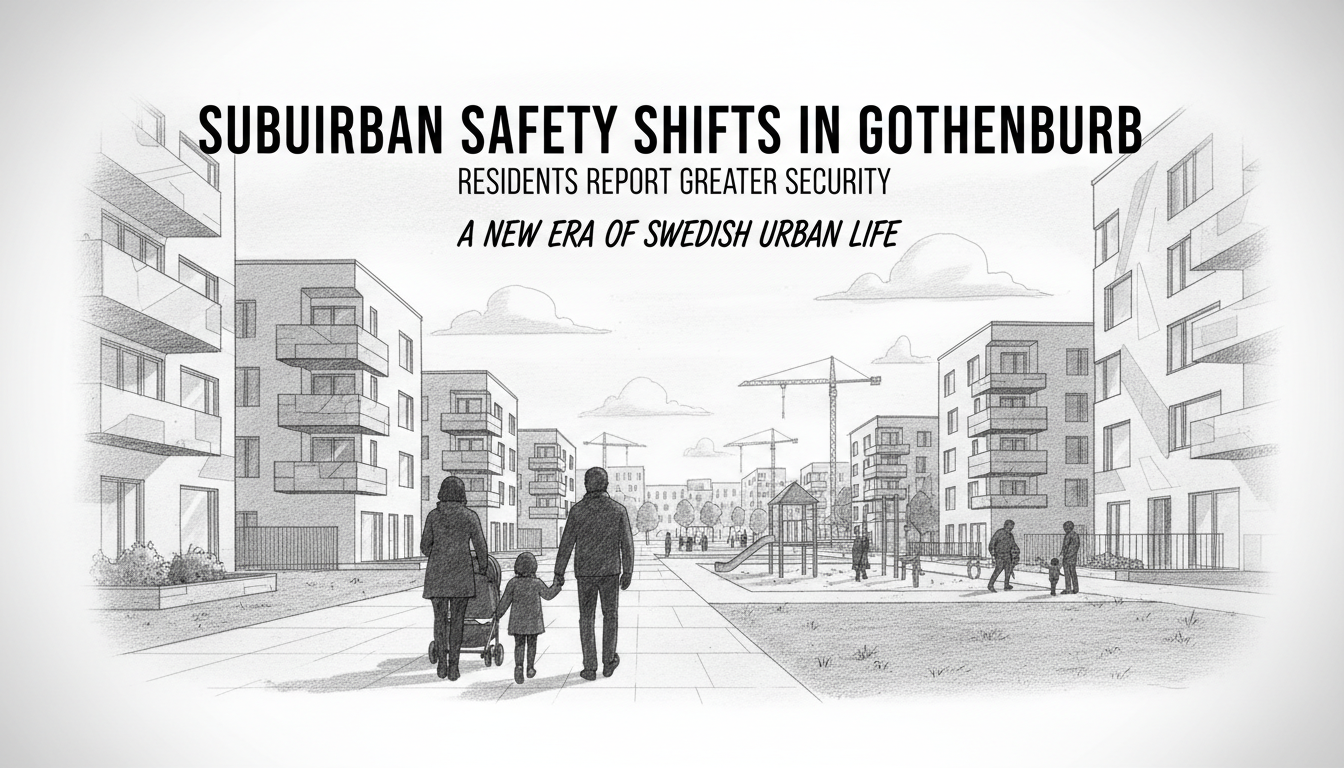
A surprising shift is reshaping perceptions of safety in Sweden's second city. Residents in Gothenburg's designated 'vulnerable areas' now report feeling more secure than other city dwellers. This finding comes from a major new tenant survey. It suggests a multi-billion kronor housing company investment is paying off. The results challenge long-held public narratives about these suburbs.
Chia Awakhti, a resident of the Hammarkullen district, describes the change. 'Last year there was a lot of commotion, but now it's calmer,' she says. Her simple statement reflects a broader trend. Hammarkullen, like Angered and Biskopsgården, has often been in national headlines for crime. The new sense of calm there is significant.
This shift did not happen by accident. Housing corporations have poured billions of kronor into these neighborhoods. The funds target physical upgrades and social initiatives. Improved lighting, renovated courtyards, and more community spaces are part of the plan. The goal is to create environments where safety grows organically. It is a long-term strategy focused on place, not just policing.
For international observers, understanding Sweden's 'utsatta områden' is key. These are not simply 'bad neighborhoods'. The official term refers to areas with intersecting challenges. These include socioeconomic factors, organized crime, and parallel societal structures. National police define them with specific criteria. The Swedish approach combines social welfare with targeted security measures. It is a distinct model compared to other European cities.
What does this mean for Swedish society trends? The survey indicates perceptions can change faster than stereotypes. When resources flow into communities, residents notice. The human angle here is about daily life. It is about children playing outside and neighbors chatting without fear. These are the metrics that matter to people like Chia in Hammarkullen.
Gothenburg's experience offers lessons for Stockholm and Malmö. It shows that large-scale investment in housing and public space can alter the safety equation. The change also highlights a potential gap between media portrayal and lived reality. While national debates often focus on crime statistics, local residents feel a growing sense of peace.
The road ahead is not simple. Security is fragile and requires sustained effort. Yet, for now, the narrative is flipping. Areas once solely defined by their problems are becoming examples of positive change. This is a crucial story for anyone following Swedish immigration news and integration. It proves that with the right focus, even the most challenging urban districts can find a new path forward. The true test will be whether this trend holds and deepens in the coming years.