
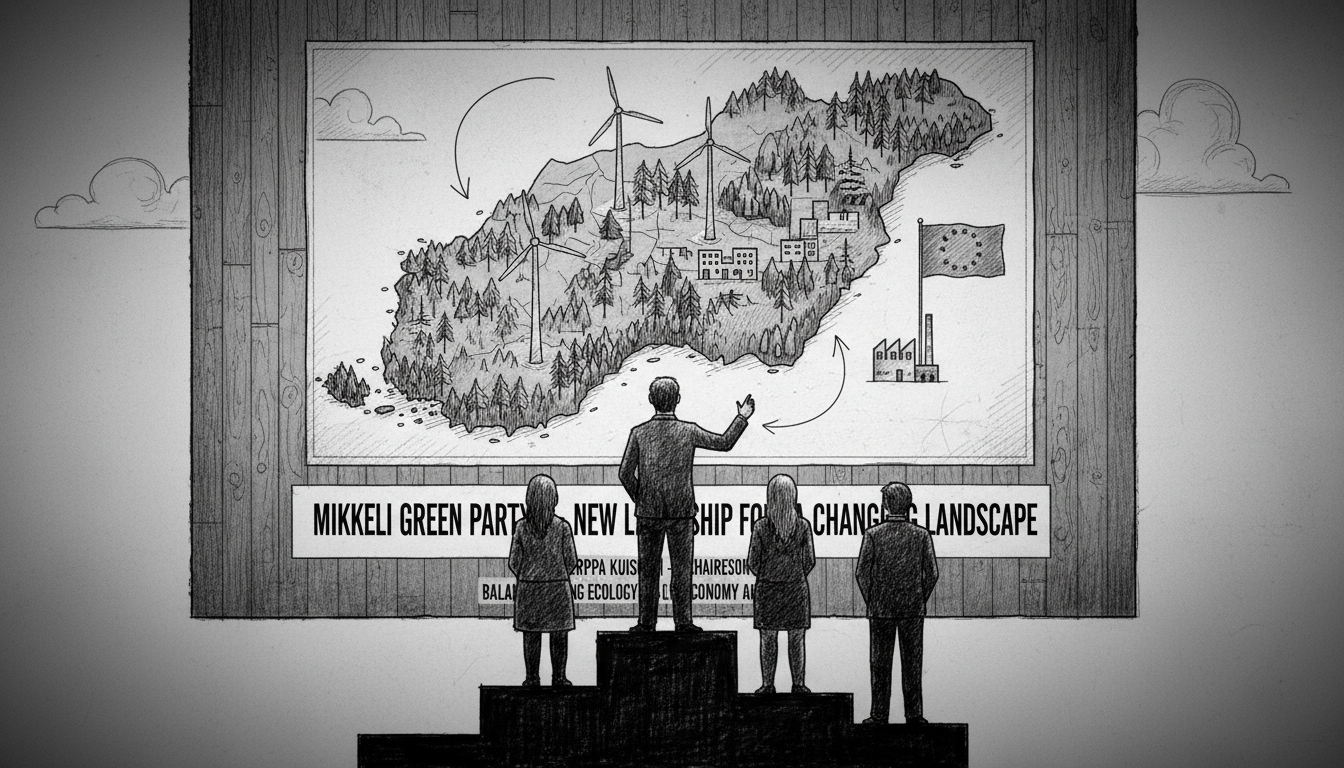
The Green Party in Finland's Mikkeli region has elected Terppa Kuismin as their new chairperson during their autumn conference. Kuismin currently serves as vice president of Student Union Kaakko and previously campaigned in municipal elections. He received ten votes but did not secure a seat on the municipal council. The party also welcomed three new board members: Anna Forsström, Emmi Syrjä, and Annikki Mattsson. Several existing board members will continue their terms, including Paula Mäkeläinen, Jarmo Lautamäki, Leena Kontinen, Kauko Väisänen, and Tuisku Pylvänäinen.
This leadership transition occurs during a pivotal period for Finnish environmental politics. The Green Party has faced challenges in recent parliamentary elections while maintaining influence in municipal governments across Eastern Finland. Mikkeli's location in the South Savonia region positions it as an important agricultural and forestry area where environmental policies directly impact local economies. The new leadership will need to balance ecological priorities with regional economic concerns.
Finnish political parties typically undergo regular leadership rotations during autumn conferences. These changes help refresh party strategies and bring new perspectives to local political discourse. The Green Party's structure includes regional chapters that operate with considerable autonomy while aligning with national policy directions. This decentralized approach allows regional branches to address local environmental issues more effectively.
Terppa Kuismin's background in student politics suggests the party may focus on engaging younger voters. Student unions in Finland maintain substantial political influence and often serve as training grounds for future political leaders. His election could signal a strategic shift toward youth engagement in a region where demographic challenges affect many rural Finnish communities.
The new board faces immediate challenges including implementation of European Union biodiversity regulations and national climate targets. Finland's commitment to carbon neutrality by 2035 requires cooperation across all government levels. Regional Green Party chapters play crucial roles in translating national environmental policies into local action plans. Their success often depends on building coalitions with other parties in municipal governments.
Eastern Finland presents particular environmental challenges with its extensive forest coverage and numerous lakes. Sustainable forestry practices and water protection measures remain priority issues for Green politicians in the region. The new Mikkeli leadership will need to navigate these complex environmental-economic balances while maintaining party principles. Their approach could influence Green Party strategies in other rural regions facing similar challenges.
Political observers will monitor how the refreshed leadership influences the party's direction in upcoming policy debates. The Green Party's performance in municipal governments often predicts their national electoral success. These local leadership changes matter beyond immediate organizational updates because they shape the party's future trajectory and policy priorities.