
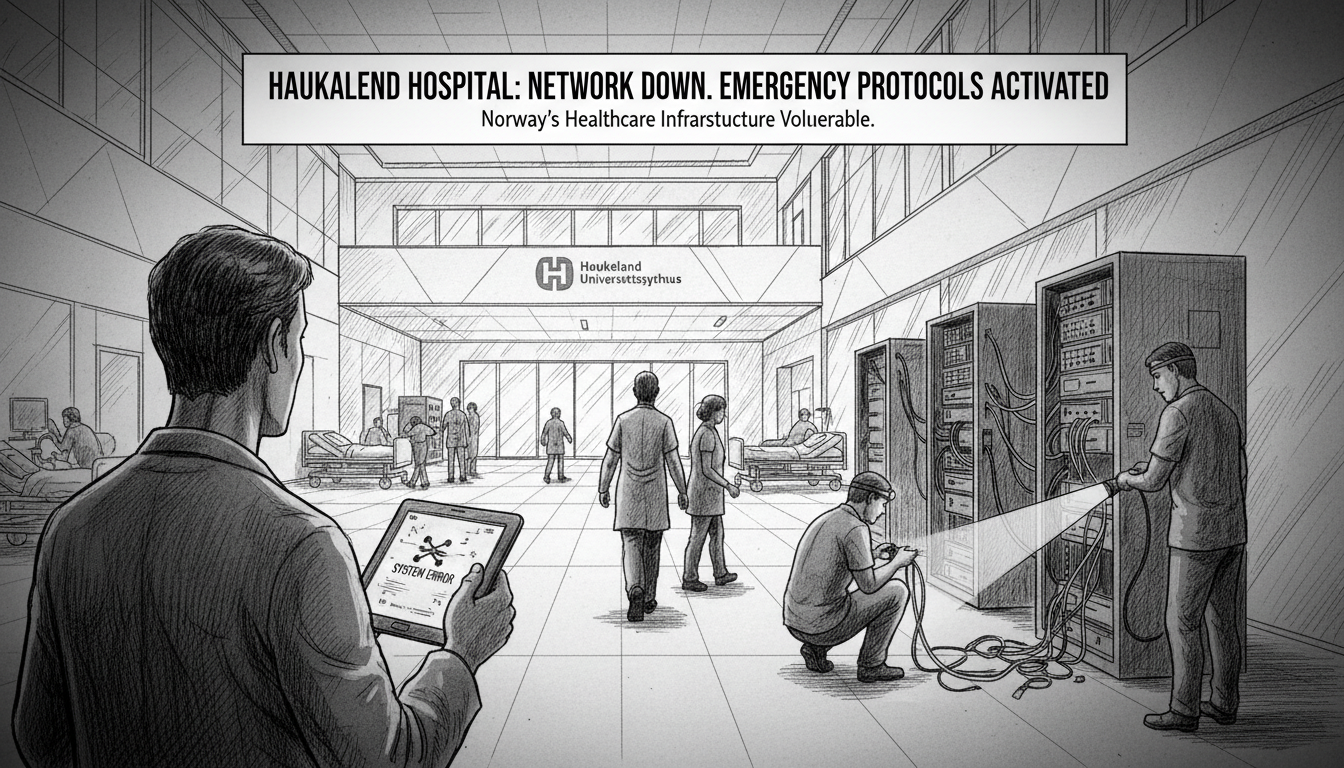
Haukeland University Hospital in Bergen has shifted to emergency procedures following a major network system failure. The hospital confirmed the transition to backup protocols after technical problems disrupted normal operations. Communications chief Eirik Vigander acknowledged the situation in a public statement. Hospital staff implemented manual documentation systems and emergency communication channels to maintain patient care standards.
This incident highlights Norway's ongoing challenges with digital infrastructure resilience in critical public services. The Western Norway Regional Health Authority oversees Haukeland, one of the country's largest university hospitals serving nearly 1 million residents. Network failures in medical facilities create immediate patient safety concerns and operational complications. Hospital administrators must now balance technological dependencies with reliable emergency preparedness systems.
Norway's healthcare system has invested heavily in digital transformation over the past decade. The country leads in electronic health records adoption and telemedicine implementation. This technological advancement brings corresponding vulnerabilities when systems experience unexpected failures. The Haukeland situation demonstrates how even brief network disruptions can trigger cascading effects across hospital departments.
Healthcare technology experts note that Norwegian hospitals maintain robust backup systems specifically for such scenarios. The quick activation of emergency protocols shows the system's built-in resilience. Still, any disruption to hospital operations raises questions about infrastructure redundancy and fail-safe mechanisms. Patient data accessibility and communication between medical teams represent immediate priorities during such technical failures.
The Bergen area has experienced several infrastructure challenges recently, including power outages and transportation disruptions. These incidents collectively test the region's emergency response capabilities. For international observers, this event provides insight into Norway's approach to maintaining critical services during technical failures. The country's high-tech healthcare system must continuously balance innovation with reliability.
What does this mean for patients currently receiving treatment? Hospital officials assure that emergency care continues uninterrupted, though some non-urgent appointments may experience delays. The situation remains fluid as technical teams work to restore full system functionality. This incident serves as a reminder that even the most advanced healthcare systems must maintain comprehensive emergency protocols for when technology fails.