
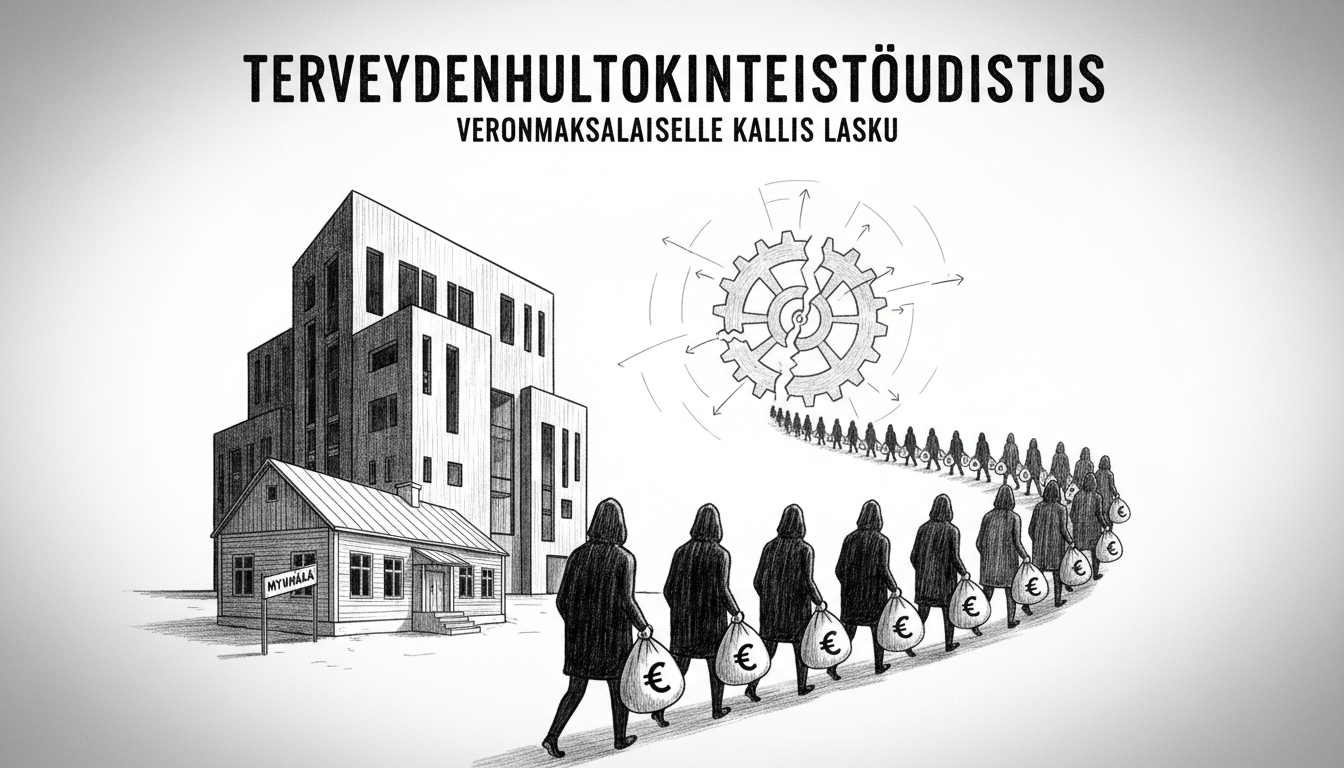
Finland's healthcare reform promised better services and cost savings three years ago. The reality now shows exploding costs and growing bureaucracy. A new property system threatens to become the next financial burden for taxpayers.
Municipalities must incorporate their healthcare property rentals starting next year. This means they must operate as profit-making businesses rather than charging cost-based rents. Meanwhile, regional health authorities want lower rents and shorter contracts to save money.
If health authorities rent properties elsewhere, municipal buildings could sit empty. The Finnish Municipal Federation estimates 30-50% of current healthcare properties might become vacant. Well-maintained buildings could face demolition, turning publicly funded constructions into waste.
In Ostrobothnia, the problem already appears with emptying healthcare properties. Vaasa struggles with incorporating its main health station, while the welfare district seeks new premises. In South Ostrobothnia, planners propose a €60 million healthcare center for Alavus despite a functional health center sitting empty just 20 kilometers away in Ähtäri.
Seinäjoki city resists welfare district demands for rent reductions. If no agreement emerges, the facilities will remain unused and taxpayers will cover the costs.
Common sense suggests using existing buildings before constructing new ones. Long-term rental agreements could provide negotiation flexibility instead of annual contracts. Old facilities could be renovated competitively with savings shared fairly.
The core issue remains straightforward: Finland needs functional healthcare services that taxpayer money can sustain, not additional administrative complications from incorporation requirements.