
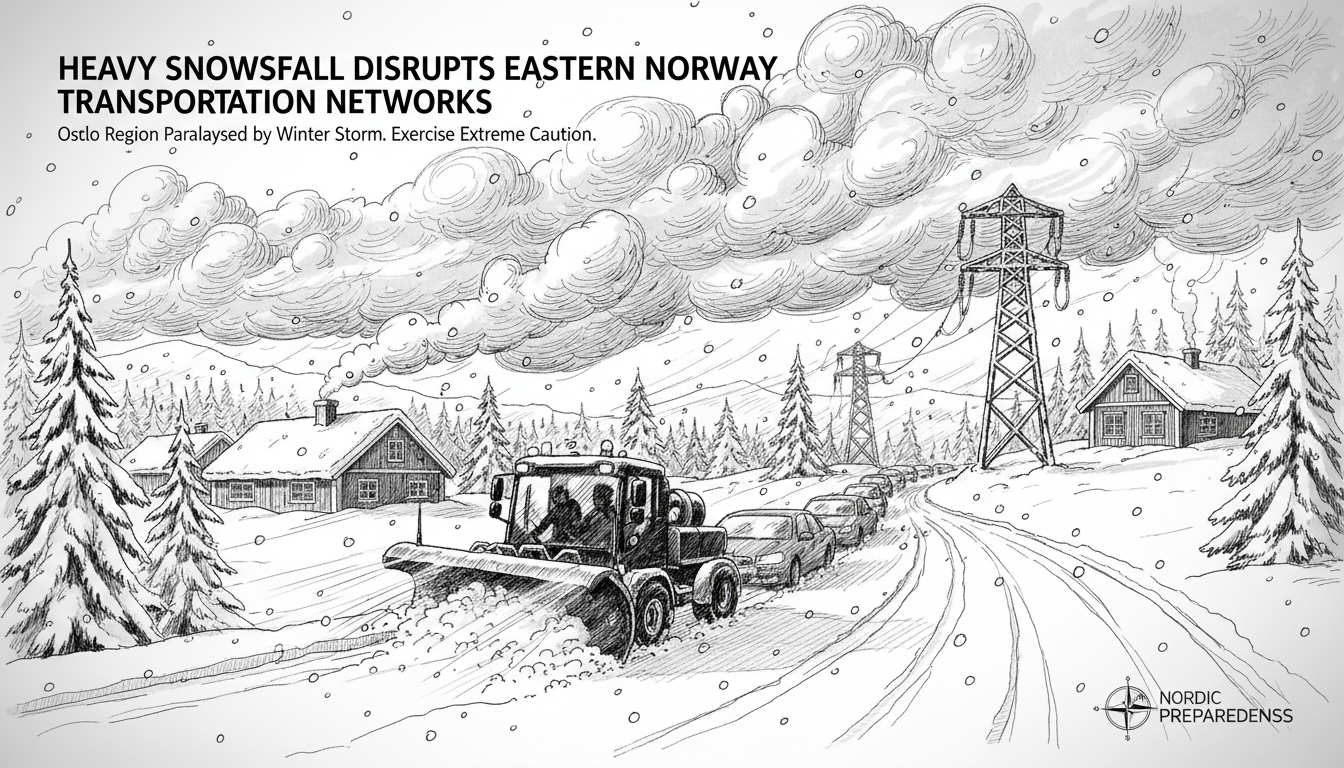
Eastern Norway faces major transportation challenges as heavy snowfall blankets the region. Up to 20 centimeters of snow accumulated across the Oslo area Sunday morning, creating hazardous driving conditions on key transportation corridors. Road authorities issued urgent warnings to motorists as visibility decreased and surfaces became slippery.
Gunnar Dovland from the Eastern Traffic Center confirmed the deteriorating situation. "Roads are turning white particularly west of Oslo toward Drammen and north toward Gardermoen," Dovland said in a statement. The Meteorological Institute has activated a yellow warning for snow across eastern districts, indicating potentially dangerous travel conditions throughout the day.
Norwegian transportation infrastructure faces its first major winter test this season. The sudden weather shift demonstrates how quickly conditions can change in Scandinavian climates. Dovland emphasized that winter tires should already be installed on all vehicles. "The weather is changing dramatically," he noted, advising drivers to allocate extra travel time and maintain safe following distances.
The timing creates particular concern for Monday morning commuters. Road maintenance crews work continuously to clear major arteries like the E6 highway connecting Oslo to Gardermoen Airport and the E18 toward Drammen. These routes serve as critical economic corridors for both passenger and commercial traffic.
Norway's approach to winter road management reflects the country's extensive experience with harsh weather conditions. The national road administration maintains sophisticated monitoring systems and rapid response protocols. Still, officials acknowledge that sudden heavy snowfall can overwhelm even well-prepared systems.
International visitors and new residents should understand that Norwegian winter driving requires specific preparations. Proper winter tires with adequate tread depth are legally mandatory during winter months. Many locals also use studded tires for additional grip on icy surfaces. The government provides real-time road condition updates through multiple digital platforms.
This early winter event serves as a reminder that Norway's challenging geography demands respect from all travelers. Mountain passes and coastal roads can experience dramatically different conditions within short distances. Drivers must remain alert to changing weather patterns and adjust their plans accordingly.
The economic impact of such weather events extends beyond immediate transportation delays. Shipping logistics, supply chains, and business operations throughout the Oslofjord region face potential disruptions. Companies with just-in-time delivery systems may experience inventory challenges if road conditions persist.
Norwegian authorities maintain that preparedness remains the best defense against winter's unpredictability. Their systematic approach to winter road management has evolved through decades of experience with similar weather patterns. Still, nature occasionally delivers reminders about who ultimately controls transportation schedules in Scandinavia.