
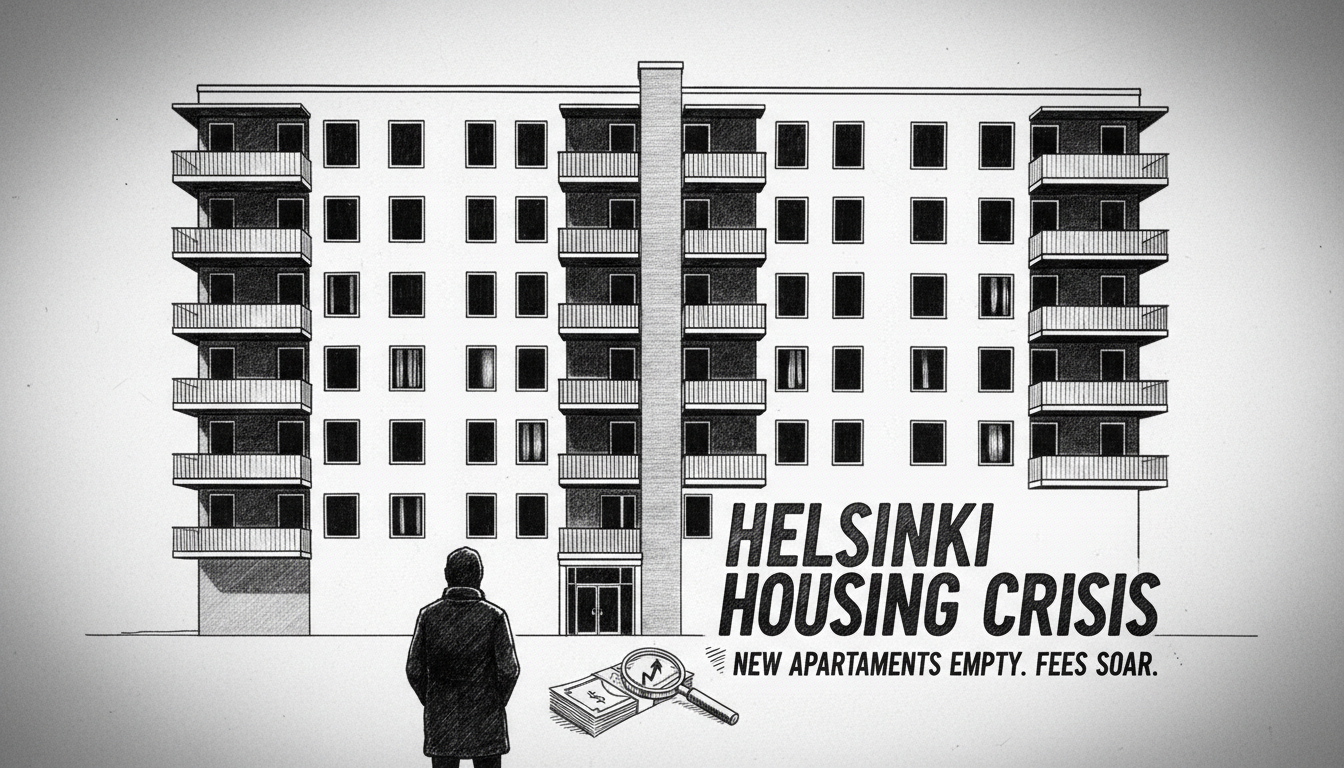
A flagship affordable housing program in Helsinki is experiencing a severe crisis of demand, with newly constructed buildings remaining almost entirely vacant despite aggressive marketing campaigns. The city-owned Haso corporation, which produces cost-price right-of-occupancy apartments, reports that in a newly completed 40-unit building in Mellunmäki, only two apartments have been reserved. Similar situations exist in upcoming developments in Vuosaari and Myllypuro, where 47 and 38-unit buildings have secured reservations for merely two apartments each. This startling vacancy rate emerges just as the company prepares to implement substantial fee increases for existing tenants at the start of the next year.
The impending fee hike, averaging 7.9 percent but reaching nearly 15 percent in some buildings, is justified by Haso as necessary to balance its finances and achieve profitability by 2027. For current residents, particularly those on fixed incomes, the repeated increases are becoming unsustainable. Heidi Björklöf, a 69-year-old pensioner living in a Haso apartment in Koskelantie, states her monthly fee will be 46 percent higher after the new year compared to when she moved in two years ago. She questions how such rapid increases are possible and openly wonders about the legality of the situation, noting she sees no possibility of remaining in her home if new hikes proceed.
The core issue lies in a shifting economic equation. The right-of-occupancy model, known as 'asuinoikeus' or 'aso,' was designed to guarantee affordable living and housing security outside the volatile rental market. Tenants pay a substantial upfront right-of-occupancy payment, often tens of thousands of euros, plus a monthly usage fee covering maintenance and costs. Historically, this was a sensible alternative when rental prices were high. Now, with rental market prices softening in parts of Helsinki while Haso's fees rise sharply, the financial logic for potential tenants has eroded. The model's cost-basis, rather than market-basis, for setting fees is now working against it in a cooler housing climate.
This crisis has direct implications for Helsinki's urban policy and social contract. The city government, through its wholly owned company, intended Haso to provide a stable, middle-ground housing solution. The program houses approximately 12,000 residents. The current vacancy and fee spiral suggest a fundamental mismatch between the program's cost structure and what the market will bear. It also raises questions about municipal finance and the pressure on city-owned enterprises to turn a profit, potentially at odds with their social welfare mandates. The situation in Verkkosaari, where fees have risen 49 percent over four years and a 60-square-meter apartment will soon cost over 1,000 euros per month, starkly illustrates how 'affordable' housing can quickly become unaffordable.
Analysts point to a perfect storm of high construction costs, rising interest rates, and a cooling rental market. Haso's aggressive metro advertising campaign for its 'end-of-year best offer,' promising immediate occupancy with fees deferred until February, appears as a desperate move to fill empty units rather than a stable business strategy. The political fallout is likely to reach the Helsinki City Council and could trigger debates about housing subsidies, municipal enterprise mandates, and the future of cost-price housing models in Finland's capital. For a system designed to provide security, the current volatility and lack of demand represent a serious policy failure that requires urgent municipal attention.