
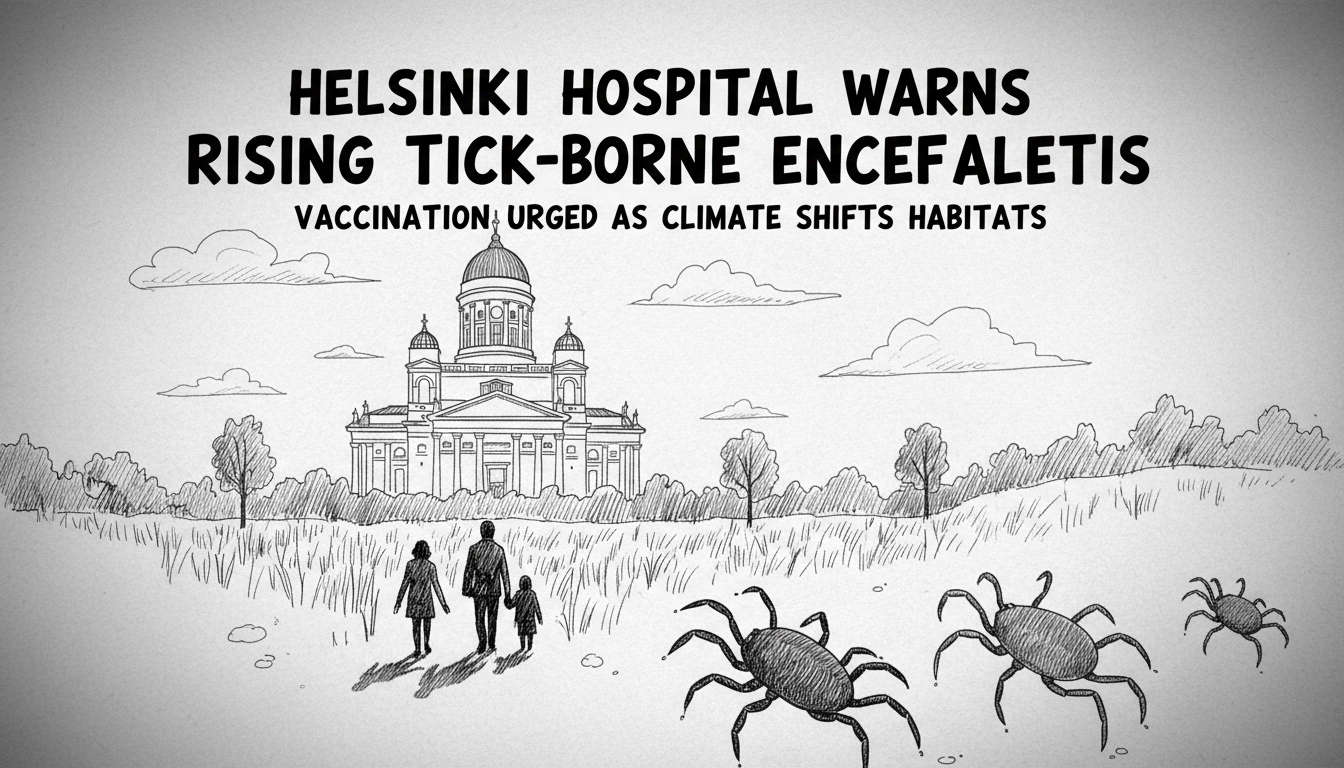
The Helsinki University Hospital (HUS) reports a clear increase in cases of tick-borne encephalitis (TBE) compared to the previous year. This surge is visible across emergency departments, neurology wards, and intensive care units. During the summer, up to one-third of patients on the neurological ward at Jorvi Hospital were being treated for TBE. The hospital authority states that TBE has overtaken herpesvirus as a leading cause of severe meningitis during the summer months, with incidence strongly concentrated in summer and early autumn. Within the HUS region, 14 percent of TBE patients have required intensive or high-dependency care, with some needing extensive rehabilitation before discharge. The mortality rate for diagnosed cases stands at 2 percent.
The virus transmits through a tick bite almost immediately after the tick attaches. Symptoms appear in only a portion of those infected, with approximately 20 to 30 percent developing actual encephalitis. Nationally, 228 cases had been reported to the infectious disease registry by the end of November, surpassing the total of 195 cases recorded for the entire previous year. While the Uusimaa region has historically seen many cases, HUS notes the number has grown particularly within Helsinki city limits, though some patients may have contracted the infection elsewhere.
Multiple factors drive the rising case numbers. The geographical range of ticks has expanded, their active season has lengthened, and climate warming strengthens tick populations. Ticks are now found in nearly all parts of Finland. Medical experts also suggest public awareness of TBE may have increased and diagnostic methods improved. A critical finding from HUS is that 69 percent of those who fell ill were completely unvaccinated, while 13 percent had incomplete or outdated vaccine protection.
The vaccine prevents illness in about 90 percent of those who receive it. For residents in specific risk areas defined by the Finnish Institute for Health and Welfare (THL), the vaccination is free of charge. These high-risk municipalities include Lohja, Kirkkonummi, Espoo, Sipoo, and parts of Helsinki. 'For those moving in nature in risk areas, it is important to seek the tick-borne encephalitis vaccine now for next summer, so we can reduce the number of people falling ill,' advises specialist physician Elisa Kortela from the HUS Inflammation Center. Full protection requires a series of three shots, with a booster after three years and subsequent intervals determined by age.
It is crucial to understand the TBE vaccine only protects against tick-borne encephalitis. It does not protect against Lyme disease (borreliosis) nor prevent a tick from attaching to the skin. The virus spreads through the tick's saliva early in the bite. Even early developmental stages of ticks, nymphs and larvae, can transmit the virus. Many tick bites go entirely unnoticed. For those who develop illness, symptoms can appear 4 to 28 days after the bite. The disease typically has two phases, starting with fever and malaise. In 20-30 percent of symptomatic cases, a second phase of actual brain inflammation occurs after a symptom-free interval, leading to potential long-term or permanent neurological sequelae like irritability, memory difficulties, hearing damage, or paralysis. No specific antiviral treatment exists, care is supportive, and encephalitis often requires hospitalization.
This public health alert underscores a tangible consequence of a warming climate in the Nordic region. The expansion of tick habitats from coastal archipelagos deeper inland represents a direct epidemiological shift. While national and municipal health authorities provide clear guidelines and free vaccines in risk zones, public uptake remains a challenge. The data presents a straightforward equation: increased exposure risk due to environmental factors meets suboptimal vaccination coverage in the population. For international residents and visitors to Finland, particularly those engaging in outdoor activities in southern coastal regions, this report serves as a critical, timely reminder to review vaccination status with healthcare providers well before the spring thaw.