
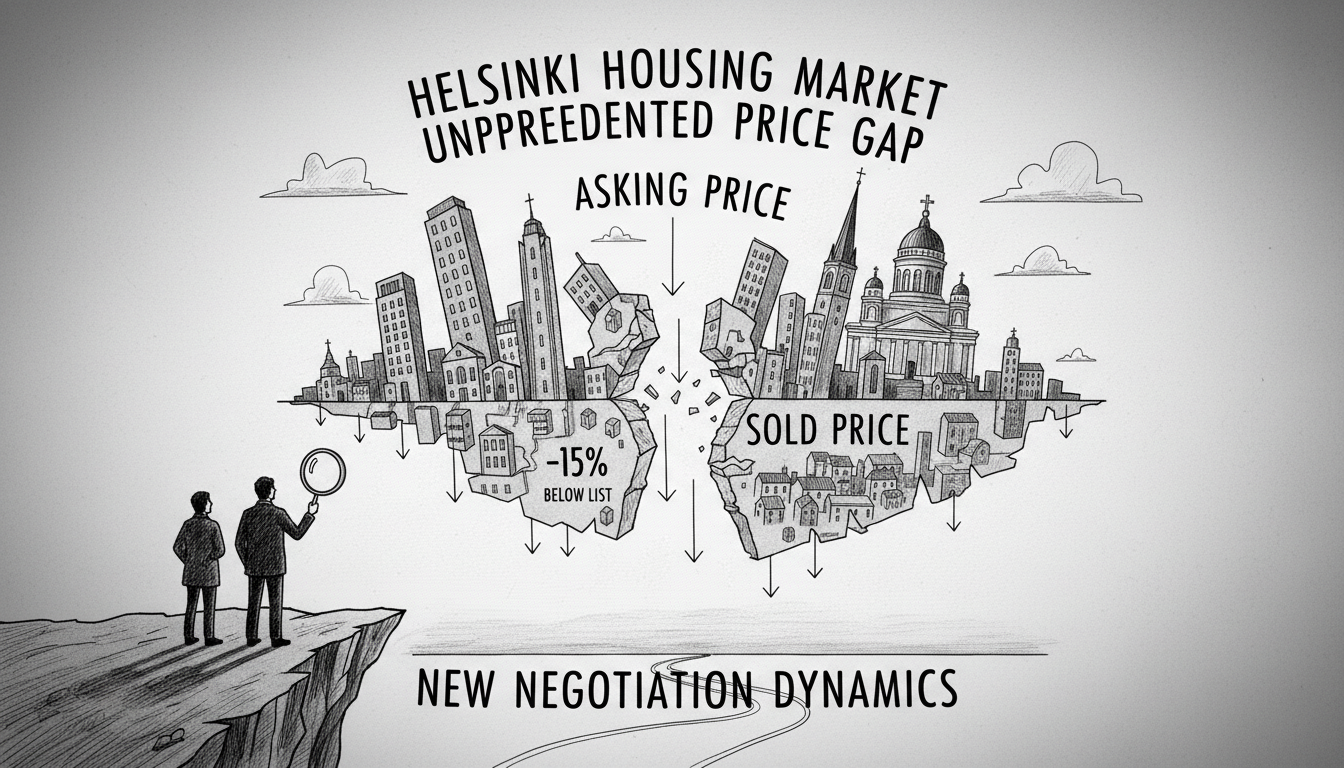
A concerning gap has emerged between asking prices and actual sale prices for apartments in Helsinki. New data reveals this difference has reached unprecedented levels in the Finnish capital. Property experts describe the situation as unusual and noteworthy for the Nordic housing market.
Research shows the gap between initial price expectations and final transaction amounts has widened substantially over recent years. For one-bedroom apartments, the difference now stands at approximately 14.2 percent below asking prices. This represents a dramatic increase from the beginning of the decade when one-bedroom units typically sold for just 4.7 percent below their listed prices.
The change amounts to nearly a 10 percentage point increase in the price gap over a five-year period. This development signals a significant shift in Helsinki's real estate dynamics. Buyers now have substantially more negotiating power than they did just a few years ago.
Helsinki's housing market has traditionally been one of Scandinavia's most stable. The current price discrepancies suggest changing buyer behavior and market conditions. Several factors may be contributing to this trend, including rising interest rates and economic uncertainty across European markets.
For international observers, Helsinki represents an important case study in Nordic urban development. The city has experienced rapid growth and urbanization patterns similar to other Scandinavian capitals. Understanding these market shifts helps predict trends across the broader Nordic region.
The widening gap between asking and selling prices indicates sellers may need to adjust their expectations. Real estate professionals note that properties priced realistically continue to sell, while overpriced listings remain on the market longer. This creates a two-tier market where savvy buyers can find genuine value.
Helsinki's situation reflects broader European housing market adjustments. Many urban centers are experiencing similar corrections after years of rapid price appreciation. The Nordic markets, while generally stable, are not immune to these continental trends.
What does this mean for potential buyers and investors? The current environment offers opportunities for those with patience and negotiation skills. However, market participants should conduct thorough research and understand local conditions before making purchasing decisions.
The Helsinki housing market remains fundamentally strong despite these pricing adjustments. The city continues to attract both domestic and international interest due to its high quality of life, strong economy, and stable political environment. These underlying strengths suggest the current price gap may represent a temporary market correction rather than a long-term trend.