
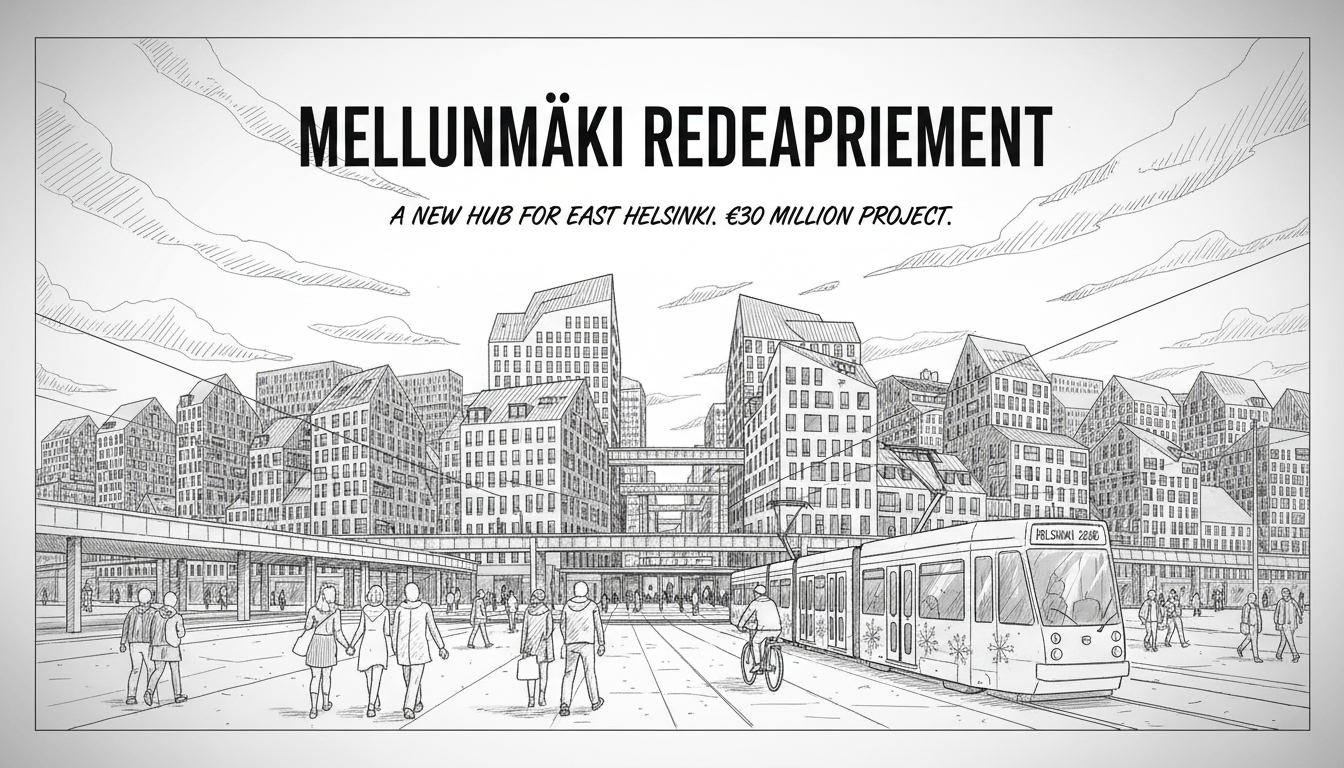
Helsinki city officials have unveiled ambitious plans to transform Mellunmäki's metro station area into a vibrant urban center. The proposed development would replace a student housing building and supermarket with four densely built city blocks featuring six to eight-story buildings. This substantial urban renewal project represents Helsinki's ongoing efforts to modernize its eastern districts and improve housing density near transit hubs.
The city government plans to demolish the Helsinki Region Student Housing Foundation dormitory and K-supermarket Masi to make way for new residential and commercial buildings. A new bus terminal, public squares, and improved street spaces will create what urban planners describe as a comprehensive transportation and service hub. The redesign aims to address what officials call an underdeveloped area around the metro station that has failed to reach its potential since the 2012 zoning plan allowed for hybrid city blocks that were never constructed.
Finland's capital city will invest approximately thirty million euros in the infrastructure improvements while expecting to recover about thirteen million euros through building right sales. The redevelopment would increase the area's resident population by nearly four hundred people and create around ten additional workplaces. This density increase aligns with Helsinki's broader strategy of concentrating development around public transportation nodes to promote sustainable urban growth.
Urban development commissioner noted that the Mellunmäki metro station serves as a crucial public transportation junction for Eastern Helsinki. Beyond metro connections, the area hosts several heavily used trunk bus lines and will eventually become the terminal stop for Vantaa's light rail system. The commissioner emphasized that creating a diverse, lively, and safe neighborhood remains the primary objective, with significant improvements planned for square and street space quality.
The proposed buildings would primarily range from six to eight stories, though the city would permit construction of a sixteen-story tower building. During zoning preparation, discussion has focused particularly on construction efficiency and building height considerations. The entire area belongs to the city, which has initiated the zoning process.
This development continues a pattern of transformation around Mellunmäki metro station, where several apartment buildings have previously been demolished and replaced with new constructions. Several years ago, some residents actively opposed similar redevelopment projects, expressing concerns about neighborhood character changes and displacement. The current plan demonstrates Helsinki's continued commitment to urban density despite occasional public resistance.
From a broader perspective, this project reflects Finland's approach to urban planning that prioritizes public transportation accessibility and mixed-use development. The Mellunmäki initiative represents typical Nordic urban development strategy where municipalities actively shape city growth through strategic land use planning and public investments in infrastructure. Such projects typically balance municipal leadership with careful consideration of community impacts and environmental sustainability standards.
The redevelopment will likely proceed through standard Finnish zoning processes involving public hearings and administrative reviews. Helsinki's city planning department will coordinate with various stakeholders including housing organizations, transportation authorities, and community representatives. The project timeline remains uncertain pending necessary approvals, but the substantial investment indicates strong municipal commitment to transforming this Eastern Helsinki district.