
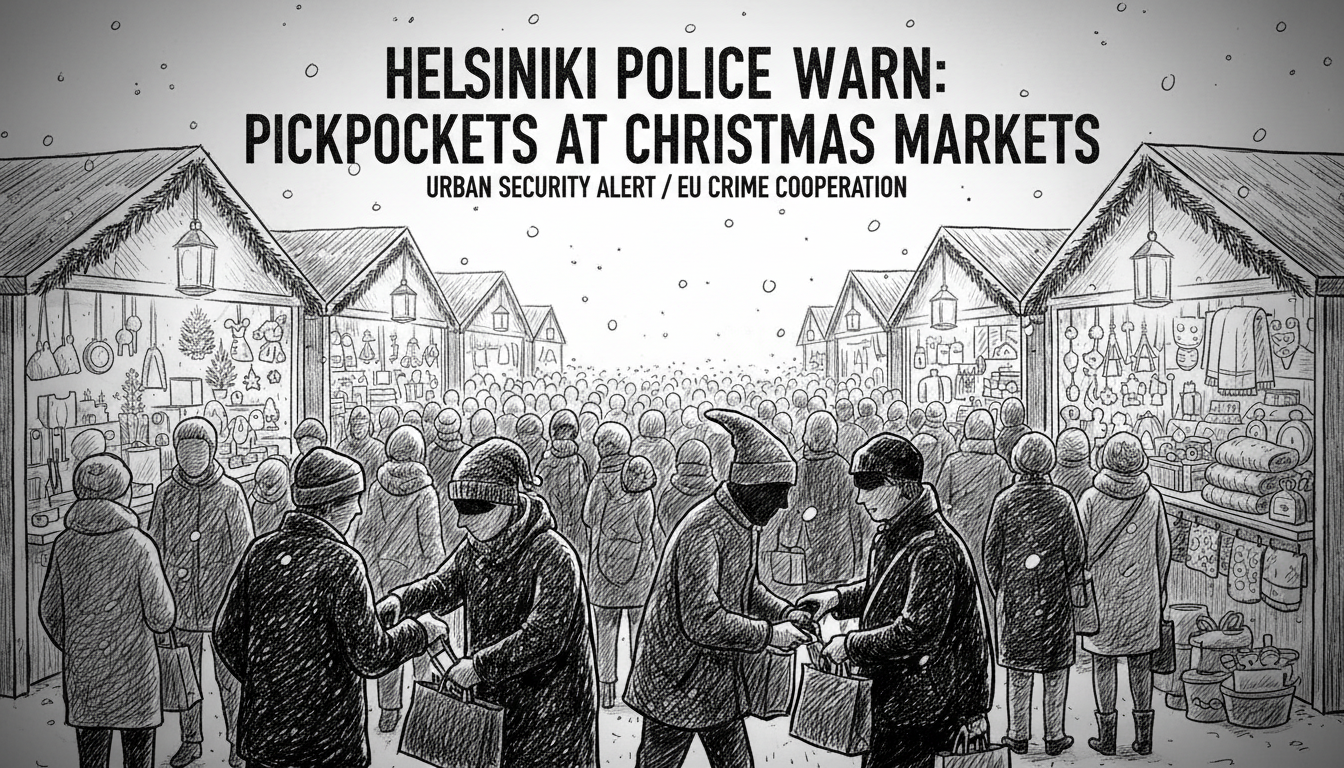
Helsinki police have issued a public warning about organized groups of professional pickpockets operating at the city's traditional Christmas markets. The advisory specifically mentions the Tuomaan Markkinat event at Senate Square, a central holiday attraction drawing thousands of locals and international tourists. Officers report that a portion of market visitors have already noticed security concerns in the crowded festive environment.
This development challenges Finland's long-standing reputation as one of Europe's safest nations. The country consistently ranks highly in global safety indexes, making such targeted criminal activity notable. The warning suggests a shift in seasonal crime patterns, potentially linked to increased international travel and economic pressures. Police are urging visitors to remain vigilant with personal belongings in dense crowds.
Jenny Heljanko, a market visitor, described keeping her hands in her pockets to protect her phone. She cited a previous theft experience at age fourteen, where a thief used a newspaper to obscure her view and stole her mobile device. Her companion, Laura Linna, noted the challenge of enjoying the Christmas atmosphere while managing security concerns. Their experience reflects a broader tension between public celebration and personal safety in urban spaces.
From a policy perspective, this situation tests municipal security coordination. The Helsinki Police Department operates under the Ministry of the Interior, with local precincts managing event security. Christmas markets require cooperation between police, city event organizers, and private security firms. The incident may prompt review of crowd management protocols during major seasonal gatherings in the capital region.
The European Union context is relevant through its law enforcement cooperation mechanisms. Finland participates in Europol, which tracks organized crime networks across member states. If these pickpockets are part of transnational groups, information sharing through EU channels becomes crucial. The Schengen Area's open borders facilitate both tourism and criminal mobility, presenting a continuous challenge for national police forces.
Historically, Helsinki's Senate Square has been a secure public space. The neoclassical architecture and open layout typically allow for good visibility. The Christmas market, however, introduces temporary structures and dense crowds that alter the security dynamic. This mirrors challenges seen in other European capitals like Berlin and Vienna, where holiday markets also attract opportunistic crime.
For international visitors, the warning serves as a practical reminder. Finland remains statistically very safe, but basic precautions in crowded tourist areas are wise. The police advice includes using inner pockets, securing bags, and maintaining awareness of surroundings. These measures align with standard travel security recommendations worldwide.
The political implication touches on resource allocation. The Finnish Parliament, or Eduskunta, debates police funding annually. Increased seasonal crime in Helsinki could influence budget discussions for urban police units. Opposition parties might question whether current resources match evolving security needs in public events.
Looking forward, market organizers may enhance visible security presence. This could include more patrols, better lighting, and public announcements. The balance between festive ambiance and security is delicate. Over-policing could dampen the holiday spirit, while under-policing risks visitor safety and Finland's tourist reputation.
This incident, while localized, reflects a broader European trend of professional theft targeting seasonal events. It underscores that even the safest societies must adapt to changing criminal tactics. The Helsinki police's proactive warning demonstrates responsive public communication, aiming to prevent incidents before they occur through community awareness.